"UM : Science" [S04-ep07]: Artificial Intelligence in the Service of Debate
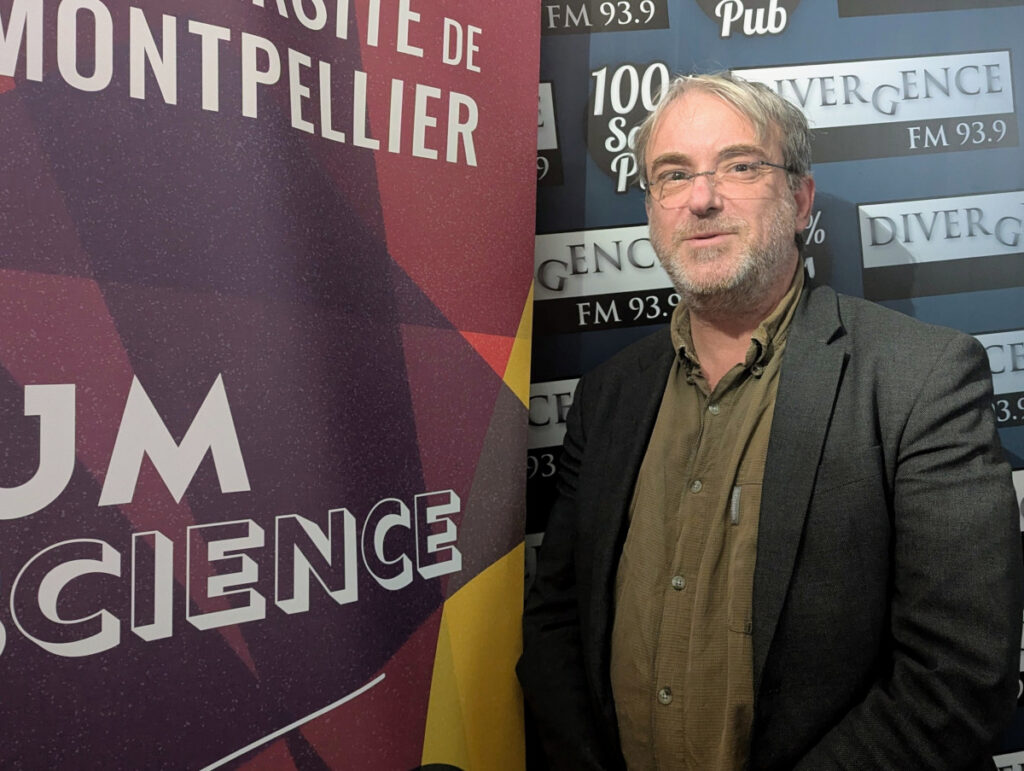
This week on *A l’UM * science, Mathieu Lafourcade, a researcher at the Montpellier Laboratory of Computer Science, Robotics, and Microelectronics (LIRMM), talks to us about the Aren digital debate platform. Benoit Ildefonse, director of the Géosciences Montpellier (GM), will present “Journey into Geosciences”, a roundtable discussion organized by Oreme and GM at La Panacée on November 12, 2024. A program broadcast every Wednesday at 6 p.m. on Divergence FM 93.9.
Debate is, it seems, a French passion. In any case, it is an essential element of a vibrant and healthy democracy. In a representative system like ours, its most powerful embodiment is the National Assembly. But how much room is there for direct debate, for citizen debate? Consultations held at the local level—whether in villages, towns, or cities—are often criticized for the limited decision-making power granted to the community. More often than not, the focus is on choosing the color of a streetlight rather than discussing whether the streetlight is actually needed.
Yet the desire is certainly there, as evidenced by the success of the “Great National Debate” launched by Emmanuel Macron in 2019 at the height of the Yellow Vests movement. 10,000 meetings were organized throughout France, 16,000 complaint logs were opened, and nearly 2 million contributions were recorded on the website. So many resources devoted to nothing—or so little.
So how can we revive this possibility of an agora on the scale of a city, a country, or an organization without being directly dependent on politics? Perhaps through artificial intelligence. At LIRMM, the Montpellier laboratory for computer science, robotics, and microelectronics, researchers have been working for several years on a debate platform based on technology that uses natural language processing.
Since 2016, they have partnered with Lirdef, the interdisciplinary research laboratory for didactics, education, and training, to make this platform available to middle and high school students with the goal of developing their argumentative skills and critical thinking. This project, initially called Aren and later renamed Aren Dia, will conclude in 2025. The platform is also available to local governments and organizations to support public debate.
So what does this platform look like? How does this natural language processing technology work? What role does AI play in all of this? And, of course, what value does it add to the emergence of new public forums? We discuss this with Mathieu Lafourcade, a researcher at Lirmm and co-leader of this project alongside Manuel Bachtold of Lirdef.
For more information:
- Read the article " A Collaborative Machine Learning System for Debate Practice"
- Visit the AREN platform
Finally, our last-minute guest will be Benoit Ildefonse, director of the Géosciences Montpellier laboratory, who will introduce “Voyage en géosciences,” a roundtable discussion organized by Oreme and Géosciences Montpellier on the topic “From a Habitable Planet to Critical Mineral Resources.” The event will take place at La Panacée on November 12, 2024.
At "UM : Science," here's the lineup—let's get started!
Co-production: Divergence FM / University of Montpellier
Host: Lucie Lecherbonnier
Interview: Lucie Lecherbonnier / Aline Périault
Director: Tom Chevalier
Listen to the show “A l’UM la science” on Divergence FM 93.9