UM atUM [S04-ep15]: A Brain with a Bite
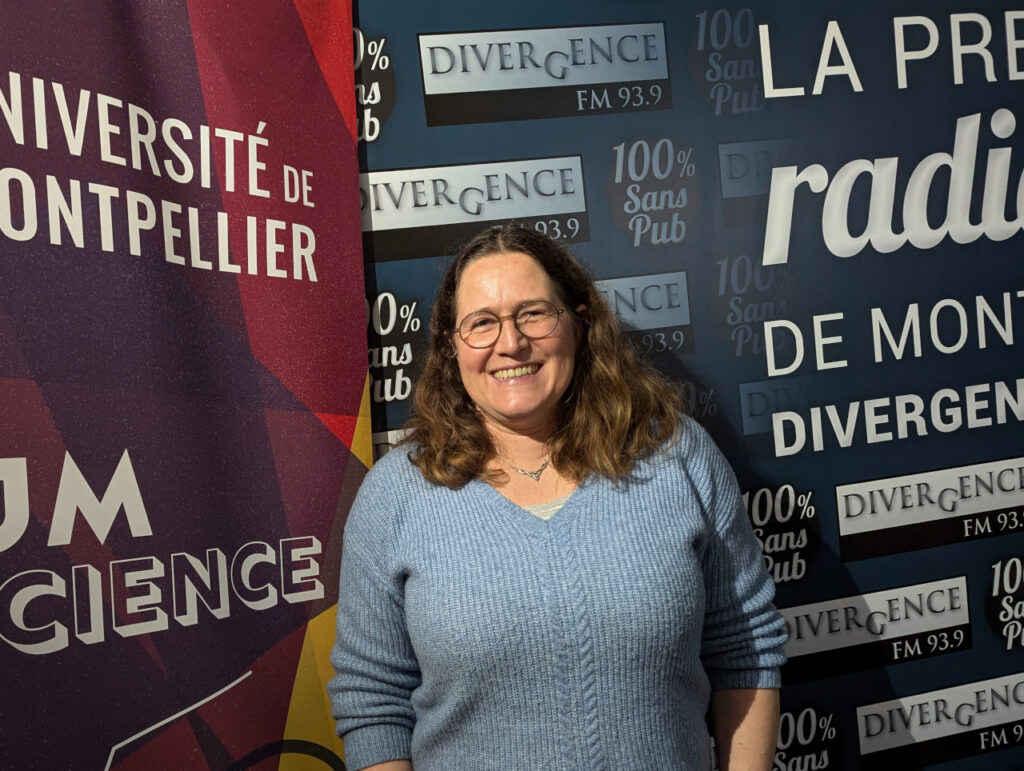
This week on *AUM science*, Allowen Evin, a researcher at the Montpellier Institute of Evolutionary Sciences ( ISEM), talks to us about the intracranial volume of dogs based on their breed and functions. The segment takes us on a tour of theUM zoology collectionUM Audrey Théron. The show airs every Wednesday on Divergence FM 93.9.
Whether they’re Huskies, Spaniels, Staffordshire Terriers, Boxers, or rather Chihuahuas, Dachshunds, and Poodles, the dog population in France now exceeds 9 million, according to journalist Mylène Bertaux, author of the 2024 investigative report *Toutoute*.
In this book, the happy owner of a French bulldog observes and highlights how the role of dogs in our lives and in our cities has evolved, even going so far as to discuss a new status: “dog parents.” And it’s true that dog parks are starting to resemble kindergartens, where it’s not uncommon, around 6 p.m., to hear some people worrying about their Labrador’s digestive or skin problems while others extol the incredible learning abilities of their Australian Shepherd, who is likely gifted.
And yet, 15,000 years of living alongside humans have had a very clear effect on our Leika, Mabrouk, Snow, and other dogs like them: it has caused their brains to shrink. Since dogs ceased to be wolves, their intracranial volume has decreased by 20%. This phenomenon is observed in all domesticated species compared to their wild relatives.
But is this intracranial volume correlated with other characteristics, such as a breed’s function, temperament, or greater ability to cooperate with humans, for example? That is what Allowen Evin and Ana Balcarcel, researchers at the Montpellier Institute of Evolutionary Sciences (ISEM), set out to investigate. They published a study titled“Breed Function and Behavior Are Correlated with Intracranial Volume in Domestic Dogs,” which appeared in November 2024 in the journal *Biology Letters*—a study Allowen Evin discusses with us today.
In the second half of the program, we invite you to rediscover the University of Montpellier’s zoology collection with Audrey Théron, museum collections curator, who takes us on a tour through the long corridors of the Institute of Botany.
AtUM , you’ve got the schedule—let’s get started!
Co-production: Divergence FM / University of Montpellier
Host: Lucie Lecherbonnier
Interview: Lucie Lecherbonnier / Aline Périault
Reporting and editing: Lucie Lecherbonnier
Director: Alice Rollet