“Go beyond regulatory requirements by identifying areas that promote quality of life at work”
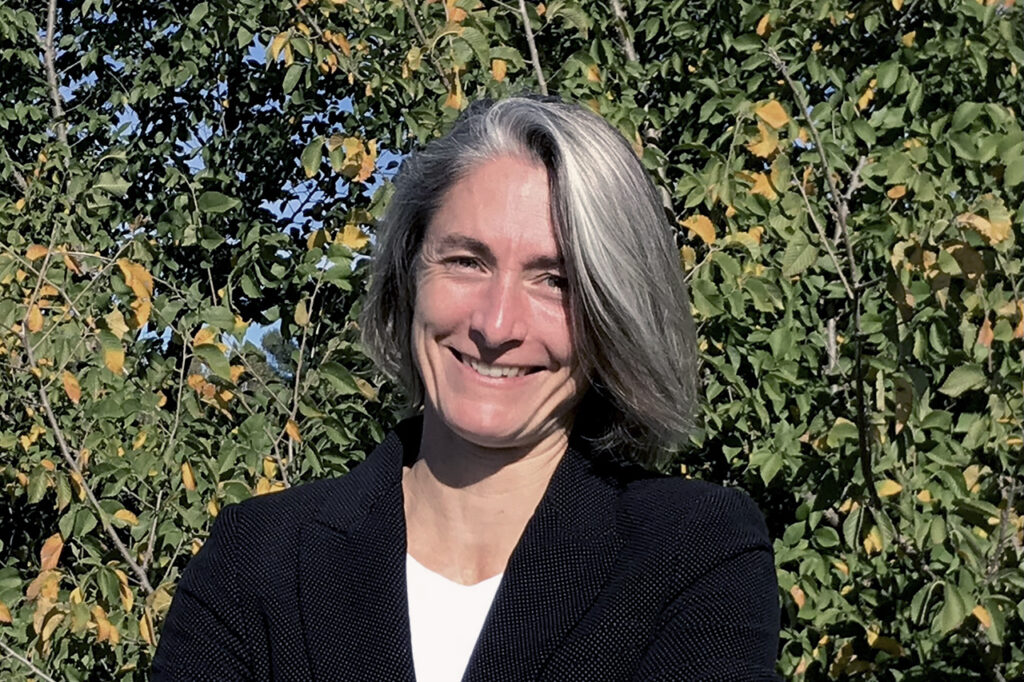
With its new 2025–2026 program, “Improving Quality of Life at Work and Preventing Psychosocial Risks,” the University of Montpellier reviews the action plan implemented on campus for the 2023–2024 period and outlines its plans for the next two years. Julie Boiché, Vice President for Social Responsibility, explains.
Why was this program designed to improve quality of life at work and prevent psychosocial risks (PSRs)?
This approach dates back to the institution’s founding, as initiatives in this direction were already underway as early as 2016. The philosophy behind these plans is to go beyond regulatory requirements by identifying areas that can improve the quality of life at work within the institution and prevent psychosocial risks as much as possible. This approach involves careful consideration of the priorities and specific needs of the university’s staff.
Our approach today is to build on previous plans to ensure consistency in our core initiatives—while adapting them based on the assessments we conduct—and to identify new areas for improvement based on the needs, concerns, or challenges we have identified among our staff.
This 2025–2026 program is organized around five key areas, the first of which is risk analysis. How did you go about conducting this analysis, and what indicators did you examine or establish?
Today, we are able to track common indicators over a period of 5 to 6 years—for example, employee absenteeism. These figures actually change very little, which is quite reassuring because it reflects stability within the institution. Discussions within the steering committee are encouraging us to go further by not only looking at these fundamental indicators but also by trying to expand on them and cross-reference different sources of information.
For example, we rely on the EVRP (Occupational Risk Assessment) software, which provides information on psychosocial risks. The growing expertise of prevention officers—who have received specialized training—allows for better documentation of information on this type of risk.
While all of this quantitative data is valuable, the expertise and day-to-day work of the support staff also played a significant role in developing the plan. They are all represented on the steering committee and help ensure an approach that takes into account realities that indicators do not always capture.
The second focus area is titled “Promoting Quality of Life at Work Throughout the Organization,” with a key challenge concerning remote locations: How can initiatives related to quality of life at work be implemented everywhere?
We aim, as much as possible, to provide remote locations with the same level of information and services as those available in Montpellier. Currently—and this was already part of the previous plan—we are systematically considering all initiatives related to quality of life at work, regardless of format (whether in-person—in Montpellier or elsewhere—or remote), in order to reach a wider audience.
We will also finalize the development of a toolkit that will, for example, allow users to access recordings of webinars and the materials used during events that some staff members were unable to attend. This toolkit will be available to all staff members, and it will be specifically designed for researchers, female researchers, and Professors , whom we sometimes find difficult to “engage” in certain types of events.
Finally, after a few initiatives of this kind—which have received very positive feedback—we hope to establish a presence for certain support professionals at various remote locations. This local presence is important for relaying information and effectively referring staff to the appropriate services.
Another aspect of this program focuses on training and communication. What measures has the institution implemented to incorporate these aspects?
When it comes to training, teaching and non- Professors al staff often make less use of existing programs; we will therefore step up our communication efforts so that they can become more familiar with what’s available and take advantage of these opportunities.
Another initiative focuses on communication regarding the support hotline and the reporting system. While many staff members view this system as useful and satisfactory, it appears to be known primarily as a resource for cases of gender-based and sexual violence (VSS). Plans are therefore in place to roll out specific communication materials so that the system is also used in cases where staff members consider themselves victims or witnesses of violence, harassment, or discrimination—whether racist, homophobic, or otherwise.
Priority Area 4 is titled “Prevent, Detect, Support.” It’s a priority area with a wide range of initiatives. Could you explain in detail what this program plans to do to achieve these goals?
Several initiatives focus on the onboarding of staff, which we sought to improve—in particular by creating a guide that lists all the main services and resources available within theUM. Going forward, we will ensure that it is distributed to all staff members, including those who join during the year, and that an English version is provided. Another project involves preparing a memo for supervisors, summarizing what needs to be done to properly welcome someone who is joining a team.
We are also working on the return of employees who have been absent for an extended period, particularly due to a serious health issue, which requires our close attention. What should we do in these cases, as managers or as a team? How should we go about it? Can we maintain contact with them beforehand, during their absence? How can we prepare for their return and best welcome them back once they’re back on the job? The goal will be to formalize possible answers to these questions to help teams navigate these types of situations.
For teachers, faculty members, and research- Professors —who are sometimes unaware of certain policies that directly affect their careers—the Human Resources Department plans to provide “quick reference” sheets
Finally, with regard to prevention, we are building on the previous plan by continuing our efforts to address addiction and physical inactivity. While we will continue to raise awareness about these issues, we will also go a step further to provide staff with the tools they need to take concrete action in their work environments.
Finally, the program includes a component focused on formalizing procedures. Why is this important, and how will it be implemented?
These procedures cover two very different situations. The first, which is very rare, involves employees who are unreachable without having submitted a leave request. A flowchart has been developed to determine who should take action and in what order; it has been distributed to the network of HR liaisons. The other, more common procedure outlines the steps to take in the event of an accident or medical emergency, particularly in intermediate situations that do not require intervention by the fire department. Since this procedure is likely to be used more frequently, it is intended for wider distribution.