[LUM#18] Stop at the port
These are small patches of ocean unlike any others, home to inhabitants unlike any others. Frédérique Viard, a researcher at ISEM* is interested in the biodiversity of port environments, where pressures are high and evolutionary processes can sometimes be rapid.
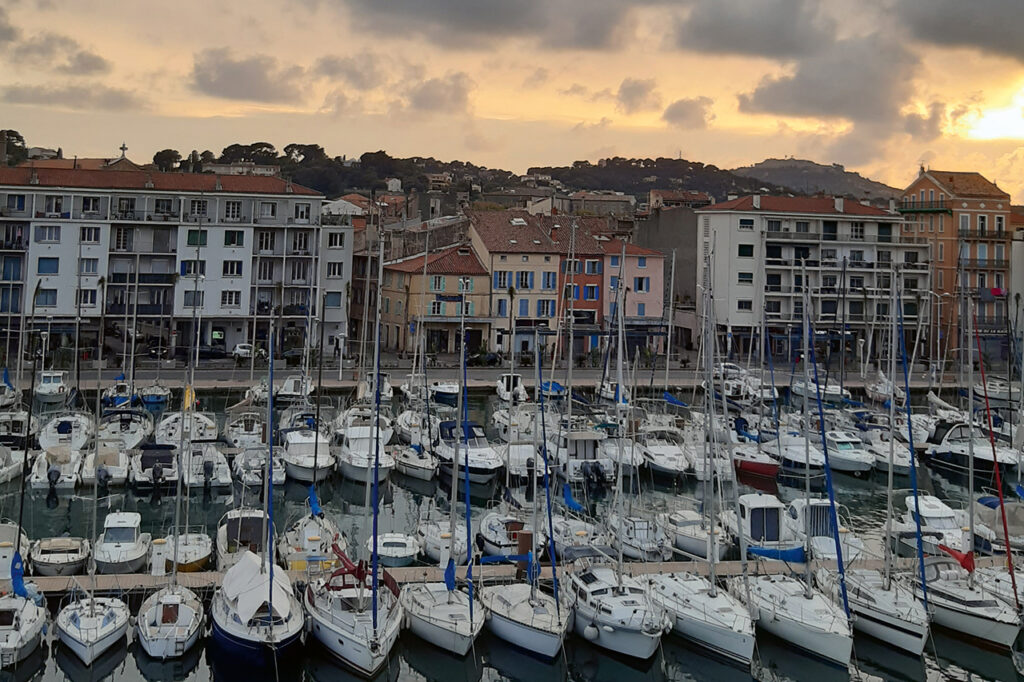
Concrete, noise, artificial light, hydrocarbons—a ring-road-like atmosphere that actually describes… a port.“A truly unique marine habitat,” notes Frédérique Viard. A unique ecosystem that the biologist from the Montpellier Institute of Evolutionary Sciences is studying to better understand its inhabitants.“Ports constitute a new urbanized marine habitat that will encourage the establishment of unique assemblages of species adapted to these particularly selective environments,” emphasizes the specialist, who bridges the fields of ecology and evolutionary biology.
Because this seemingly hostile environment represents a“hotspot for introduction,”where species from elsewhere arrive to settle.“This phenomenon accelerated during the20th century with the globalization of maritime trade, ”notes Frédérique Viard. “In ports today, for certain taxonomic groups, up to 20% of species are introduced, compared to well under 1% innatural ecosystems.” Ballast water, the hulls of merchant ships as well as recreational boats—even the smallest crevice on a vessel—can serve as a potential refuge for these stowaways. “Ships are veritable floating islands; Canadian scientists have counted up to 175 different species on the hull of a single merchant ship!”the biologist points out.
Shuffle the cards
Once they reach their destination, these non-native species intermingle with local species, creating“eclectic assemblages of native and introduced species that could never have formed naturally, without human intervention.” But once brought together, they can reshape the landscape of species richness and genetic diversity.“Some species are distant cousins of local species, separated for millions of years, which now find themselves together in ports and sometimes manage to interbreed, giving rise to new lineages,” explains Frédérique Viard, who describes, for example, the unlikely union of two peculiar underwater creatures that were not supposed to meet: the Asian sea urchin and its European cousin, which can produce hybrid offspring. Other researchers have also observed genes in a species of fish that provide protection against the toxicity of hydrocarbons—a trait that proves quite useful, to say the least, when living in a polluted environment; however, these genes were transmitted by a closely related introduced species in which this adaptation had previously emerged.
Biodiversity in the Making
“These changes can occur rapidly, because selection pressures are strong in portsand the populations are genetically diverse,” the biologist points out. These characteristics make ports veritable open-air laboratories for ecologists and evolutionary biologists. And to better identify new species introduced into these unique “labs,” researchers use environmental DNA: they recover DNA left behind by living organisms in seawater samples and compare it with data from reference databases to determine which species it belongs to.“Numerous ports along the English Channel, Atlantic, and Mediterranean coasts have been sampled as part of the MarEEE project,” explains Frédérique Viard, who views ports as“the crucible of a new, emerging biodiversity.”
Check out:
- In *A l’UM * *la science*, Nicolas Bierne, a researcher at ISEM, talks to us about the strange underwater fauna found in harbors.
- Find the podcast on your favorite platform.
*ISEM (CNRS, UM, IRD, CIRAD, EPHE, INRAP)
Check out theUM podcasts, now available on your favorite platform (Spotify, Deezer, Apple Podcasts, Amazon Music, etc.).