Charm-EU: From Montpellier to Utrecht, Shaping the Future of Research
Organized by the universities of Montpellier and Utrecht (Netherlands), the first edition of a pilot research-based course concluded on December 11, 2024, with a pitch session featuring student projects. These future researchers aim to place patients at the center of their therapeutic solutions.
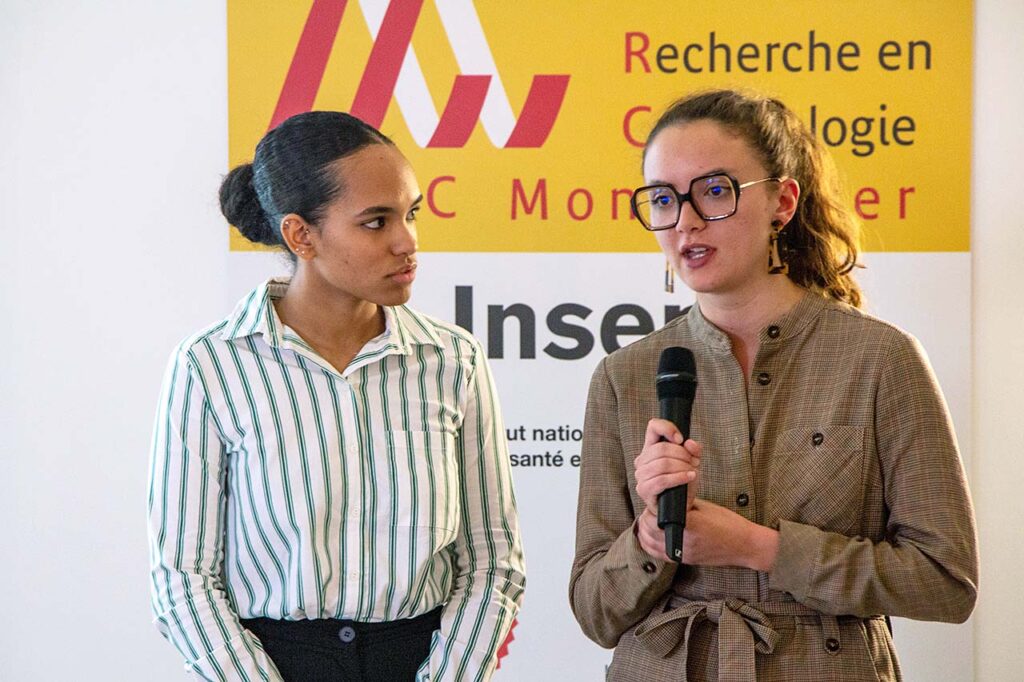
Five groups, five minutes per group, five scientific proposals for colorectal cancer screening or treatment. On December 11, 2024, about 20 students from Montpellier and Utrecht (Netherlands) pitched their research project proposals at the Montpellier Cancer Institute (ICM). The jury consisted of clinicians, representatives from patient organizations, andProfessors s from both universities. These s are overseeing the first edition of a course developed as part of the European Charm-EU alliance. This took place just three months after the inaugural conference , “Integrated approaches to fight colorectal cancer: all together to break down barriers,” which brought them together in Montpellier in late September.
Therapy or screening?
Meanwhile, students worked in international and interdisciplinary teams (biochemistry, materials chemistry, biology, pharmacology, biotechnology, etc.) on various research avenues. Some focused on the therapeutic aspect, while others focused on screening for this disease, the second deadliest form of cancer. In Montpellier, they were able to draw on the expertise of numerous specialists at the I-site (SIRIC Montpellier Cancer, Montpellier Cancer Institute,Montpellier Cancer Research Institute, Max Mousseron Institute of Biomolecules). Integrated into the curriculum of the participating master’s programs, this module— “Tackling Challenges Through International Research Linked Research Hub” —harnesses the excellence of international research networks while allowing students to experience a challenge-based learning approach and to gain practical preparation for drafting a research proposal.
Three projects were recognized at the end of this pitch session. Among them was the jury’s first prize, which was awarded to a project focusing on“a bacterium in the microbiome as a therapeutic solution to reduce the negative effects of chemotherapy while enhancing treatment responses,” explain Thaïs, Pierre, Naël, and Laura. This is a highly interdisciplinary team, as Thaïs and Pierre are master’s students in cancer biology (University of Montpellier), Naël is a master’s student in materials chemistry for health (University of Montpellier), and Laura is a master’s student in drug innovation (University of Utrecht).
“At first, we didn’t know how much of an impact we’d have, ”they add. “We wanted to take direct action on something that would have a more or less long-term effect on patients’ well-being. It’s also very exciting to be able to collaborate internationally on a project like this!”
Biotherapies
This program is recognized by ECTS1 within the relevant degree programs, trains students in research methodology while promoting intercultural and interdisciplinary approaches. The involvement of patient organizations has enabled future researchers to fully take patients’ perspectives into account and to place them at the center of treatment strategies.
Four students in this pilot program will continue this international experience through a six-month research internship at laboratories in Montpellier (IBMM and IRCM) and Utrecht.
Building on the success of this first edition, plans are in place to expand this module to other degree programs and partner universities within the CHARM-EU alliance starting next fall. This will allow for a focus on other health issues, such as autoimmune diseases, and other treatment modalities, particularly biotherapies.
- ECTS, or the European Credit Transfer and Accumulation System, facilitates the recognition of degrees within the European Higher Education Area and thus promotes student mobility. ↩︎