How Synthetic Amphetamines Became Widespread
In an interview published on April 18, 2021, French President Emmanuel Macron called for “launching a major national debate on drug use.” The interview focused primarily on the law enforcement aspect of drug control policy, and the effectiveness of the proposed measures immediately became a subject of controversy.
Edouard TUAILLON, University of Montpellier
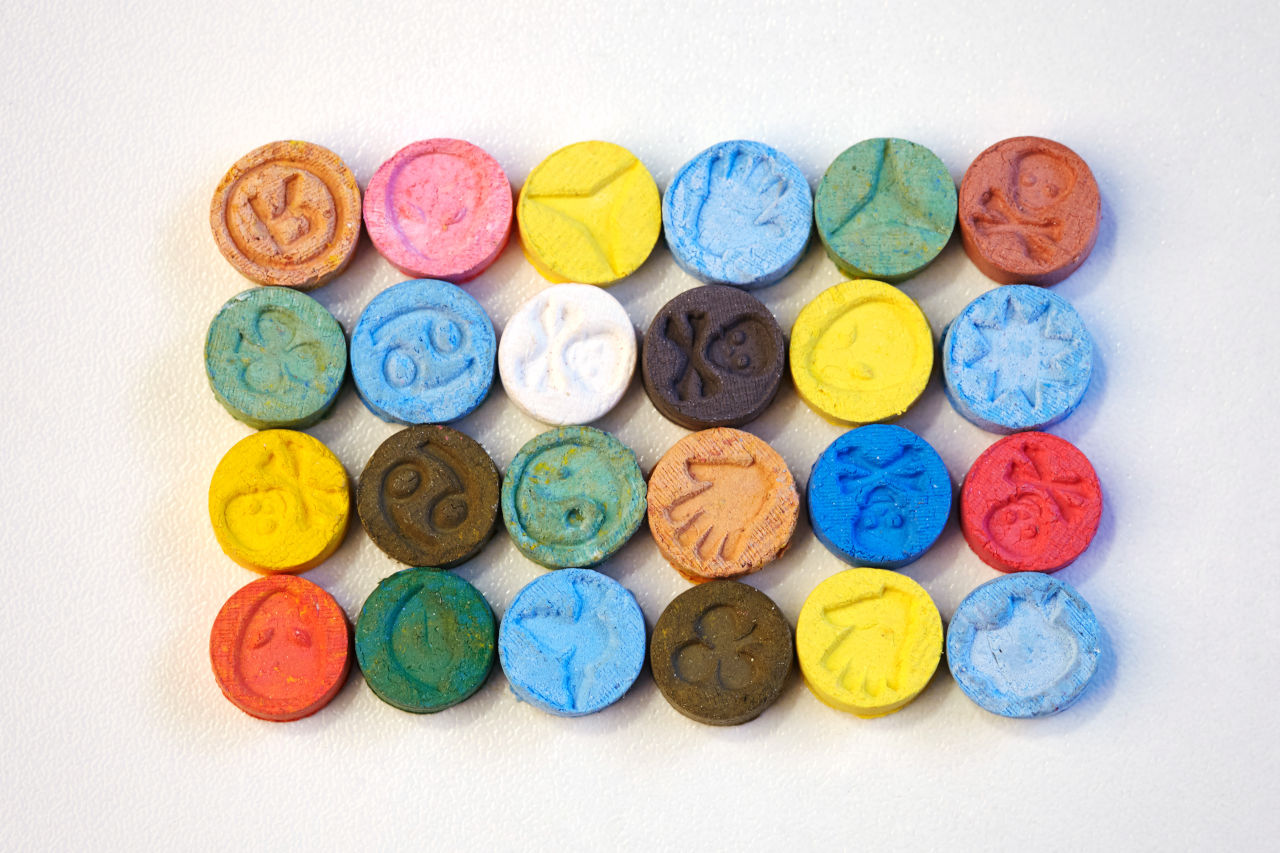
Nevertheless, the debate should lead to a consensus on recognizing addiction as a major public health risk.
The use of amphetamines (stimulant psychotropic drugs), which has been documented for over a century, should not be overlooked in this context. Indeed,the emergence of new forms of substance abuse associated with amphetamines in the cathinone family has now become a cause for concern in France.
A Brief (Medical) History of Synthetic Amphetamines
The first chemical purification of an amphetamine (ephedrine) is attributed to Nagai Nagayoshi, a Japanese pharmacist, and is believed to have taken place in 1885. The synthesis of ecstasy (or MDMA, short for 3,4-methylenedioxy-N-methylamphetamine) by Merck Laboratories dates back to 1912, while the first synthesis of a cathinone (β-ketoamphetamine) dates back to 1929.
In the first half of the20th century, the effects of these synthetic molecules captivated chemists and sparked interest in the medical community.
Their sympathomimetic (stimulant), anorexigenic (appetite suppressant), and psychostimulant (performance-enhancing) effects led to the introduction of the first amphetamine-based drugs: a bronchodilator called Benzedrine® in 1934 in the United States (an amphetamine sulfate), an appetite suppressant with Obetrol® as early as the 1950s, also in the United States (a combination of amphetamine salts), and an energy booster with Pervitin® (methamphetamine) in Germany in the late 1930s.
A potent form of methamphetamine, this compound was available over the counter at pharmacies and widely distributed to German troops during World War II. Thanks to its long-lasting stimulant effect, it is said to have played a decisive role early in the conflict in the success of theblitzkrieg strategy, enabling soldiers to march and fight without sleep for several days.
The medical use of amphetamine derivatives continued after the war. By the end ofthe 20th century, psychostimulants were being prescribed to treat attention deficits, such as Ordinator® (which was withdrawn from the market in 1997), as well as appetite suppressants like Isoméride® and Mediator® (prescribed for metabolic disorders, particularly diabetes). These drugs were withdrawn from the market in 1997 and 2009, respectively, due to serious adverse effects that led to several convictions against Servier Laboratories.
Today, the following remain available but with significant prescribing restrictions: Zyban®, as an aid for smoking cessation, and Ritalin® for attention-deficit disorder in children and narcolepsy in adults. This latter medication, whose medical benefits have been confirmed by the Haute Autorité de Santé, is likely the one that has been most medically beneficial to date.
From the natural role to the first uses
The use of amphetamines did not begin with their discovery through synthetic chemistry. These compounds occurnaturally in certain plants, where they serve as defense mechanisms against herbivores, just like other plant alkaloids.
Thus, ephedrine was purified from a plant used in traditional Chinese medicine— Ephedra sinica. However, the best-known plant, and the one with the greatest societal and economic significance, is khat, whose Latin name is Catha edulis, whose freshly harvested leaves contain β-ketoamphetamine or cathinone (which degrades rapidly after harvest).
Khat is believed to be native to Ethiopia, where it grows wild in temperate regions at altitudes of more than 1,500 meters that receive ample rainfall. These growing requirements, which are similar to those of Arabica coffee, have allowed khat cultivation to spread to certain areas of the Arabian Peninsula, East Africa, and Madagascar.
Khat use may date back to before the year 1000, although it appears to have become more widespread beginning in the15th century. In Yemen, where about 60% of the population uses khat (30% in Ethiopia and Somalia), its cultivation accounts for nearly 6% of the gross domestic product and employs 14% of the workforce.

DEA
For consumers, accessing the psychotropic effects of cathinones is not easy. First, they must obtain freshly cut twigs and then chew the bitter leaves for a long time to extract the active ingredient. A 500-gram bundle of twigs—equivalent to about 150 grams of leaves—requires two hours of chewing.
Consuming khat in the traditional way therefore takes time, but it also costs money—at the expense of children’s health or education.
From Ecstasy to Synthetic Cathinones
Compared to khat, synthetic amphetamines have significantly stronger psychotropic effects, while being easier to produce, transport, store, and consume.
In France, amphetamines have been classified as controlled substances since 1967. The rise in their use as a recreational drug beginning in the 1990s is linked to the emergence of electronic music and rave parties: ecstasy (MDMA) was then used as a party drug, for its energizing effects and its ability to facilitate social interaction.
The turn of the 2000s, meanwhile, was marked by the emergence of the online market for synthetic drugs—or new psychoactive substances (NPS). This market includes various forms of psychotropic substances, primarily: cannabinoids, opioids, amphetamines, ketamines, and, starting in the 2010s, synthetic cathinones—the “muscle-bound” cousins of the alkaloid found in khat.
With these substances, amphetamines would move beyond occasional and marginal use by a small number of experimenters to reach a large, socially well-integrated population of regular users.
A drug that activates the reward system
To understand the dangerous popularity of cathinones today, we need to examine how amphetamines affect our brains.
The structure of cathinones is similar to that of dopamine, a neurotransmitter that plays a major role in the reward circuit. The reinforcement/reward system is present in many animals (fish, birds, mammals), where it promotes behaviors essential to the survival of the species: eating, learning, reproducing, and socializing. Cathinones act directly on this system.
After ingestion, inhalation, or injection, cathinones—which are small in size—easily cross the blood-brain barrier that protects the brain. They then interact with dopamine neurons, preventing dopamine reuptake and promoting its release. Through these mechanisms, cathinones cause a significant increase in dopamine levels. In rats, 40 minutes after administration of a standard dose of cathinone, the increase in dopamine levels is approximately 500%.

E. Tuaillon, Provided by the author
This surge of dopamine activates the reward system’s circuits. It is these stimulating and entactogenic effects (which alter the desire for physical contact) that users seek, particularly when using the substance for sexual purposes.
If no further dose is taken, dopamine levels drop rapidly and return to normal after about 180 minutes. A brief withdrawal syndrome (come-down) is frequently reported by users 24 to 48 hours after use; it is characterized in particular by fatigue and a general feeling of unease (dysphoria).
Amphetamine use inthe 20th century was thus characterized not only by greater accessibility, thanks to chemical synthesis, but also by the temptation to enhance one’s physiological abilities—often in a festive setting.
In this age of augmented reality and instant gratification, cathinones have come to embody a deceptive promise of easily satisfying our desires…
Edouard TUAILLON, University Professor and Hospital Physician. Areas of expertise: infectious diseases, virology, sexual health, University of Montpellier
This article is republished from The Conversation under a Creative Commons license. Readthe original article.