Dietary supplements, meditation, osteopathy: How effective are alternative therapies?
Alternative medicine is all the rage these days. A diet here, a dietary supplement there. Herbal teas, tai chi, hypnosis techniques, psychotherapy, manual therapies, video games, connected health devices, ergonomic pillows…
Gregory Ninot, University of Montpellier
The list of products and methods offered as alternatives to conventional treatments seems endless. Alternative therapies are now available in hospitals and in the offices of general practitioners and specialists. More than 100 million people in Europe use them, according to a survey conducted by the CAMBrella European program in 2012.
These solutions to our health problems are most often presented as effective and safe. However, not all of them are created equal. Researchers around the world have set out to evaluate their health benefits and risks. Already, solid results.
To make this knowledge more accessible, our team from the universities of Montpellier launched in February the very first search engine dedicated to these “non-pharmacological interventions” (NPI), named Motrial. A sort of “Google for alternative medicine research.” Intended for researchers, it also helps doctors determine what to recommend, for example, to a patient with back pain.
Complementary Medicine or Alternative Medicine?
The call for a rigorous evaluation of alternative medicine has become increasingly urgent over the years . In 2011, the French National Authority for Health (HAS) called for the “wider use of validated non-pharmacological therapies.” In 2013, the French Academy of Medicine called for a more appropriate use of “complementary therapies.”
The public is also concerned about this, as shown by a survey published in 2014 by Eurocam, a foundation for complementary and alternative medicine.
There are many questions that arise: What are the real benefits of these interventions? What risks do they pose to their users? Are they supplements or alternatives to conventional treatments? Do they open the door to abuse—such as financial scams, psychological manipulation that leads people to refuse conventional care, or recruitment by cults? Should they be prescribed by a doctor?
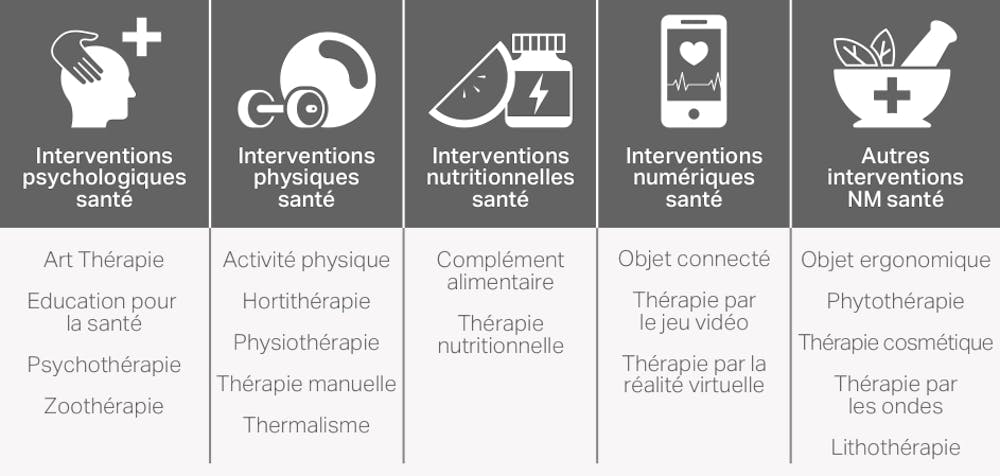
CEPS Platform, Universities of Montpellier
An Effective Osteopathic Program for Back Pain
Because it would be easier for everyone, we’d like science to be able to provide a comprehensive and definitive answer on the effectiveness of each discipline. Take osteopathy, for example. This technique for manipulating joints and muscles is now well known. So, we’re asked, does it work, or doesn’t it?
There is no definitive answer to such a question. However, we can attest to the positive effects of a specific osteopathic method for a given condition—in other words, a “non-pharmacological intervention.” For example, a British study involving two months of sessions for people suffering from low back pain showed a reduction in pain intensity.
Similarly, rather than discussing “dietary supplements” in general, we should focus on a specific product, taken at a specific dosage over a specific period of time, in relation to a specific health issue. A team of Iranian researchers, for example, studied aloe vera gel. They observed that a 300-mg capsule taken every two hours for two months by people with type 2 diabetes improved their blood sugar levels—but not their blood lipid levels.
Alternative Medicine… Based on Evidence
Today we are witnessing the rise of evidence-based medicine, with practices supported by science. This trend encourages us to move away from the vague category of “alternative medicine.” Non-pharmacological interventions (NPIs) must be studied with the same rigor as medications. Ultimately, each NPI will be accompanied by a globally recognized designation, a description of its content, objectives based on health indicators, a target population, an explanatory theory, qualified professionals ready to implement it, and scientific publications validating it.
Researchers evaluating these interventions already rely on clinical trials—just as they would for a future cancer chemotherapy treatment. A clinical trial is an experimental study that compares the health benefits and risks of a treatment in one group of people to one or more other groups known as control or placebo groups. This helps dispel the magical thinking, fads, and marketing hype that all too often accompany alternative medicine.
The number of such trials has been steadily increasing in the INMs since the beginning of the century. Each year, more than 50,000 new publications concern clinical studies not involving drugs. Their methodological quality is also improving, driven in particular by research consortia. In France, the Interdisciplinary University College of Integrative Medicine and Complementary Therapies (CUMIC) was established for this purpose in 2018, under the coordination of two professors of medicine, Julien Nizard and Jacques Kopferschmitt.
A Meta-Analysis on Physical Activity and Breast Cancer
Another tool for evaluating NITs is the meta-analysis. This involves a systematic review of the scientific literature, combined with statistical techniques. By combining data from all relevant studies, these meta-analyses provide more reliable estimates of the effects of a treatment or prevention strategy than those derived from a single study. Health authorities, national agencies, and scientific societies rely heavily on these meta-analyses to issue their recommendations.
For example, the meta-analysis published in 2013 by our laboratory, Epsylon, focused on the amount of physical activity needed to reduce fatigue during breast cancer treatment. This study shows a reduction in fatigue experienced by women if their physical activity is less than 2 hours per week. This meta-analysis is based on 17 studies involving a total of 1,380 patients.
Still on the topic of breast cancer, another example concerns psychotherapy. A meta-analysis published in 2017 by a German team examined mindfulness meditation practiced as a complement to biological tumor treatments. This refers to the method developed by American John Kabat-Zinn, an 8-week program designed to reduce stress (Mindfulness-Based Stress Reduction, or MBSR). Conclusion: Compared to standard care alone, this program provides additional benefits by addressing anxiety and depression. This meta-analysis was based on 10 studies involving a total of 1,709 patients.
Behavioral therapy is more effective against depression than light therapy
This tool also allows for the comparison of INMs with one another. For example, a meta-analysis by a Dutch team published in 2017 included 11 studies (involving 1,041 patients) examining different approaches to treating depression in primary care. Choosing among cognitive-behavioral therapy (CBT), a physical activity program, problem-solving psychotherapy, a behavioral change program, and light therapy, the authors conclude that CBT appears to be the preferred option—while encouraging further studies to confirm this finding.
This meta-analysis, however, proves to be particularly time-consuming and difficult to conduct when it comes to NIMs. That is why we launched the Motrial meta-search engine, with the aim of saving researchers time.
Motrial sorts and organizes scientific publications by identifying the main publication, the ethics committee approval number, the protocol registration number with the relevant authorities, the funding sources, the sponsor’s name, and the country where each study was conducted. It automatically completes this process in six minutes—a task that can take up to six months to do manually.
 As a result, scientists are gradually developing tools to help them distinguish fact from fiction regarding the effectiveness of various alternative therapies. The hopes these therapies inspire are immense. For this reason alone, they must be evaluated with the same rigor as drugs or other biotechnological treatments.
Gregory Ninot, Professor of Health, Psychology, and Sports Science, University of Montpellier
The original version This article was published on The Conversation.