[LUM#19] Quitting Lithium
Lightweight, self-sufficient, durable, clean, and made in Europe. There are numerous areas of research in the highly competitive battery sector, which is a key focus of the green transition. Research conducted at the Charles Gerhardt Institute in Montpellier1 places the laboratory well ahead in this race for better batteries.
What do a phone, a car, an MP3 player, and a bicycle have in common? All of these objects—which have become indispensable, along with many others—run on batteries. And the essential energy contained in these little black boxes is, above all, chemistry. “Inside a battery, there is a positive electrode and a negative electrode, between which ions flow. It is the electrons associated with these ionic exchanges that provide the energy, ” explains Laure Monconduit.
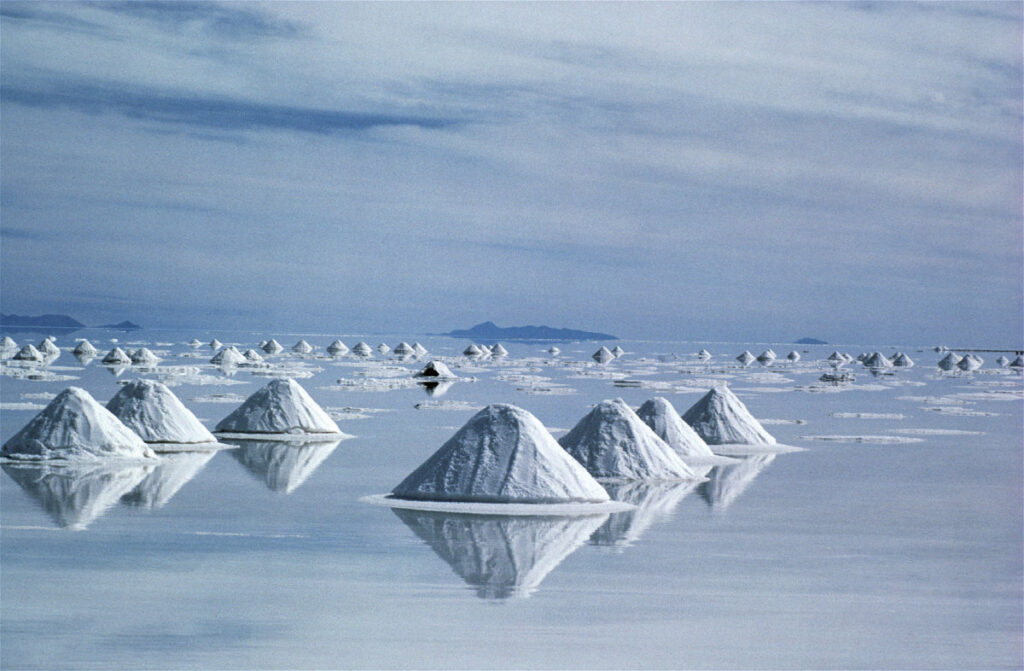
And the ion in question is most commonly lithium. “Small, mobile, and light, it’s the ideal element for this purpose, ” explains the head of the Batteries team at ICGM. The lithium-ion battery represented a true revolution, so much so that its designers were awarded the 2019 Nobel Prize in Chemistry. But today, this revolution faces a major hurdle: the challenge of materials. Some are already pointing to a potential lithium shortage that could loom in a few decades.
Recycling
How can we break free from dependence on lithium in the battery sector? “At ICGM, several researchers are pooling their expertise to advance battery recycling. This process not only reduces demand by allowing these metals to be recovered and reused, but also cuts down on the significant pollution caused by these elements, whose extraction—which is extremely energy-intensive and water-intensive—represents an environmental and humanitarian disaster, ” explains the researcher.
While the virtuous cycle of recycling is “feasible,” the researcher and her team are also exploring other avenues for advancing battery technology. “One of the questions at stake is whether lithium can be replaced by other ions. Other elements, located near lithium on the periodic table, have similar properties and can replace lithium without significantly compromising performance. ” Among the potential candidates are potassium, magnesium, and calcium. But above all, sodium—an element a thousand times more abundant than lithium in the Earth’s crust. “Our team was also involved in the research to develop the first sodium-ion batteries, which are now nearly in production,” explains Laure Monconduit.
Energy Self-Sufficiency
This is an issue that goes beyond the technological challenge, at a time when energy independence is a major concern. While the recent discovery of a lithium deposit in the Massif Central offers the prospect of a future local supply, the bulk of this mineral still comes from the major producing countries: Australia, Chile, China, and Argentina. “Beyond the issue of materials, we are completely dependent on Asia, which has a virtual monopoly on battery manufacturing. We have very few batteries made in France or even made in Europe, even though we’re at the cutting edge of research, ” laments Laure Monconduit.
A full-scale race for battery technology is underway around the world, and this research is particularly strategic in the context of the energy transition, “because the goal now is to store energy cleanly, without relying on fossil fuels, which will help combat global warming, alongside a growing collective—and, above all, political—awareness, ” the researcher concludes.
- ICGM (CNRS, UM, ENSCM)
↩︎
Check out theUM podcasts, now available on your favorite platform (Spotify, Deezer, Apple Podcasts, Amazon Music, etc.).