Tomorrow, Water
Collaborating with universities in the Global South to help African students learn about water management: that is the idea behind a new project called MAREMA[1]. This “Erasmus+” program, led by the University of Montpellier, will be launched on November 16.
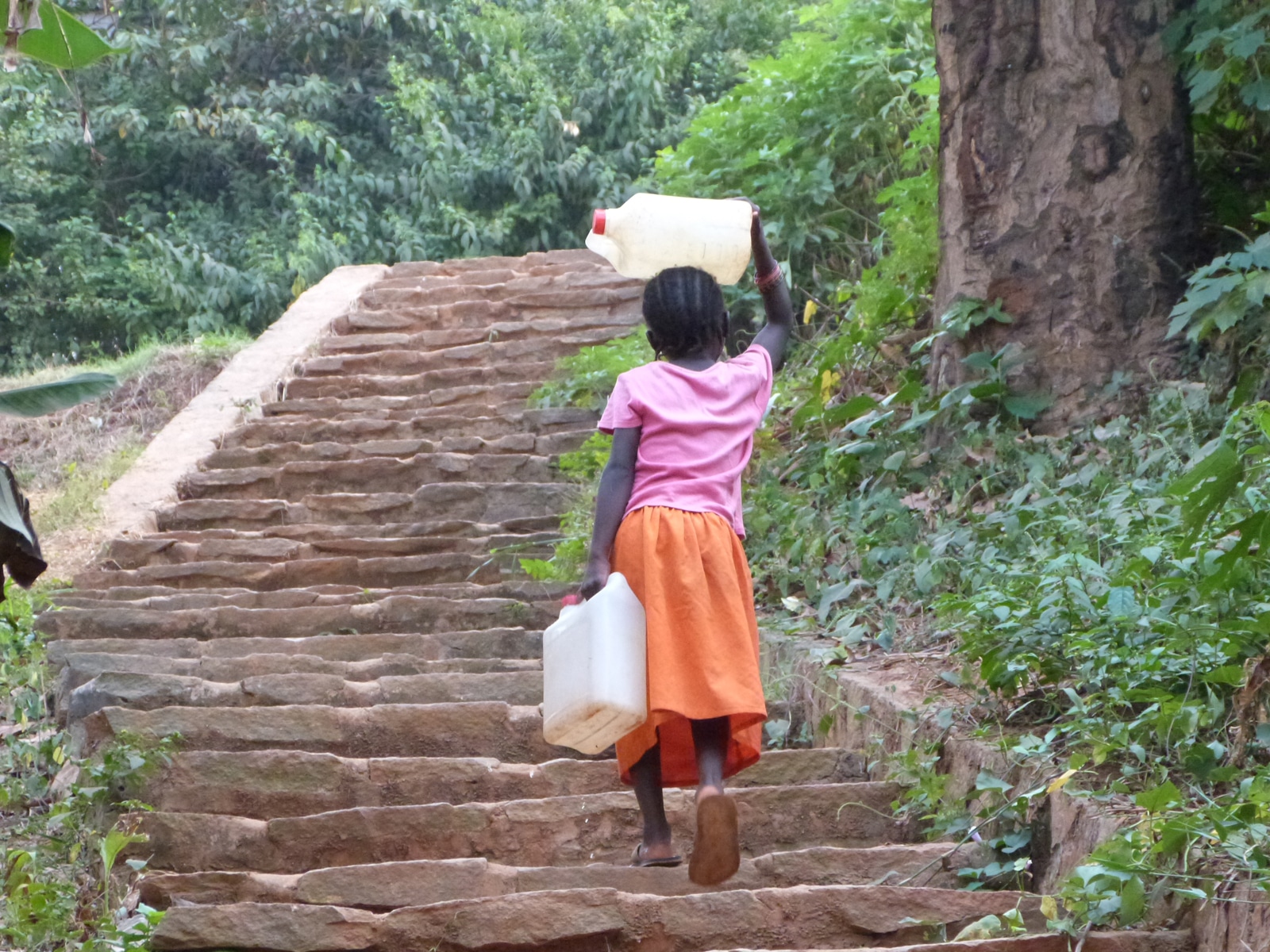 By 2030, more than half of Africa’s population will live in cities. The main thing these megacities have in common is a very high demand for water… “In large cities, drainage systems are sometimes inadequate. The poorest populations are generally the most vulnerable. Lacking the means to do otherwise, they occupy urban spaces that have been left vacant because of the risks involved (gullies, low-lying areas prone to flooding, steep slopes).” explains Professor Bamory Kamagaté of Nangui Abrogoua University (Ivory Coast).
Precious and Capricious
Water and Africa: a story as old as time. On this continent, the birthplace of humanity, water is not merely a problem by default. For while risks may stem from limited access to water, they can also arise from an excess of it. ““The countries we work with in Central and West Africa experience very intense rainfall, and consequently periods of severe flooding,” explains Valérie Borrell Estupina, the MAREMA project coordinator from the University of Montpellier, who cites as an example the streets of Yaoundé (Cameroon), which are regularly transformed into veritable torrents.
Other problems related to water management include environmental pollution and the risks faced by riverside communities. Sanitation, wastewater management and treatment, poorly controlled discharges, and the spread of agricultural chemicals via flooding… All in all, the technical and scientific challenges related to water management are as numerous as they are complex. And they present a very concerning outlook for the development of major African cities…
Montpellier's expertise in water sciences
The MAREMA project aims to adapt an educational program that has proven successful in France to the African context. ““The interdisciplinary ‘Water Sciences’ master’s program at the University of Montpellier brings together a very broad range of diverse disciplines: hydraulics, of course, but also physics, biology, chemistry, the humanities and social sciences, and even geology. It is, in fact, the only program in France authorized to bear this title,”, continues Valérie Borrell Estupina, director of the program.
This is an extremely attractive project for universities in the Global South, which have been fully involved in its development from the outset. “It’s also generating a lot of interest in the north,” says Eric Servat, director of the Montpellier Institute of Water and the Environment, which represents the laboratories involved in this project. “We are, in fact, offering European researchers a new frontier for discovery: constantly evolving, the master’s program in water sciences draws on a wide range of research.”
Benin, Ivory Coast, and Cameroon
Supported by research teams and informed by an analysis of labor market needs, the MAREMA project builds on existing master’s programs at partner universities in the Global South: these programs will be gradually adapted to create a common curriculum in Benin, Côte d’Ivoire, and Cameroon.
With a budget of nearly €800,000, the program is set to continue through the end of 2019. The end result will be a fully operational master’s program in water sciences, along with economic benefits for the participating countries: “These programs address a pressing need in the African job market in the face of major environmental and societal challenges. The project also involves numerous industry partners. We can be confident that students in this new program will have no trouble finding a job,” says David Sebag, an expert on the project.
Key Partners
- Agence Universitaire de la Francophonie, Belgium
- Research al Institute for Development, France
- Houphouët Boigny National Polytechnic Institute, Ivory Coast
- Abomey-Calavi University, Benin
- Catholic University of Louvain, Belgium
- University of Barcelona, Spain
- University of Montpellier, France
- University of Grenoble Alpes, France
- Nangui Abrogoua University, Ivory Coast
- Ngaoundéré University, Cameroon
- Yaoundé I University, Cameroon
[1] Master’s Program in Water Resources and Environmental Risks in African Metropolises
Photo credit: Floriane Celle