Detecting declines in fish stocks would help prevent the collapse of fisheries
The degradation of marine ecosystems is a major cause for concern for both ecological and food security reasons. However, assessments of the health of fish populations often overlook the possibility of a rapid and sudden decline in stocks. A new study examining the productivity of marine fish stocks worldwide since themid-20th century has revealed a strong link between the rate of ocean warming, abrupt declines in productivity, and stock collapse. This research, led by Mathieu Pélissié—then a doctoral student at the University of Montpellier—along with Vincent Devictor and Vasilis Dakos, researchers at the Institute of Evolutionary Sciences in Montpellier (ISEM), was published in the journal *Science Advances* on Wednesday, September 2, 2026.
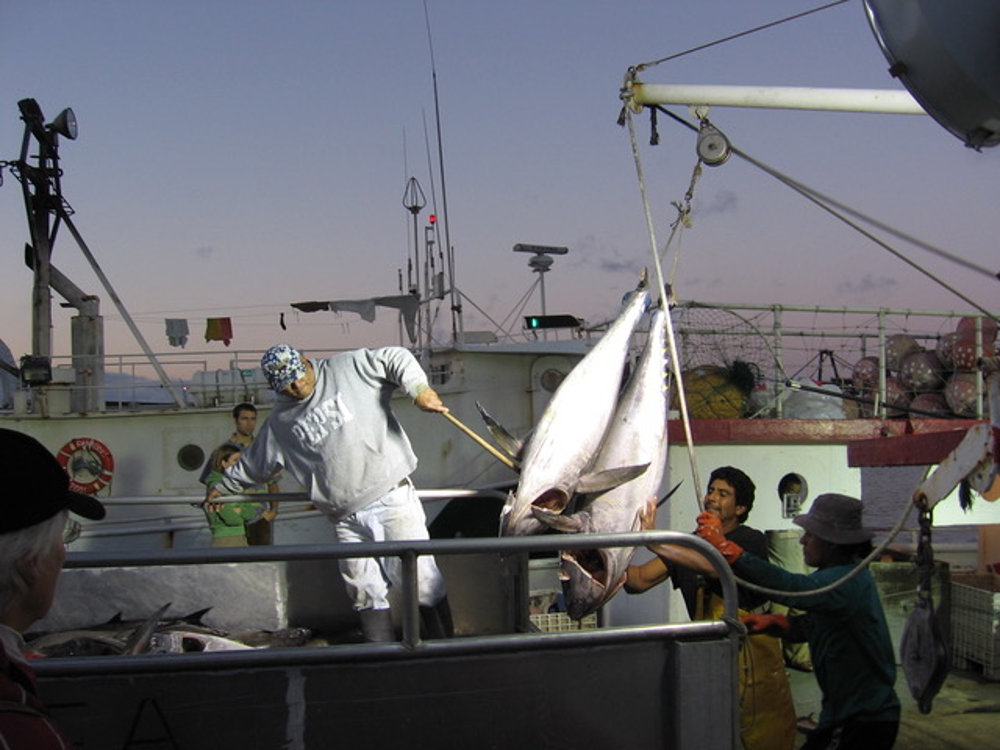
The history of fisheries is replete with examples of fish populations (or stocks) that were once abundant but collapsed within a few years and never recovered to their former levels. Yet these dramatic events—which affect both the species involved and the local economy—remain difficult to predict and are rarely factored into the models used for fisheries management. This study, which demonstrates that the scale of the phenomenon is far from anecdotal, sets out to trace its causes and identify its consequences.
To do this, the scientists drew on the most comprehensive global dataset, which compiles annual estimates of biomass and catch for 315 marine fish stocks fished worldwide between 1950 and 2020. They then estimated the productivity of the stocks—that is, the growth rate the fish populations would have had in the absence of fishing. By developing a methodology that allows them to distinguish, with a high degree of confidence, abrupt changes from more gradual variations, they found that more than 25% of the stocks analyzed experienced abrupt changes in productivity, more than half of which were declines.
Some fish are more affected than others, particularly the family to which Atlantic cod belongs, many of whose stocks have collapsed since the 1980s. Even more surprising, the results show that the proportion of abrupt declines is higher in ocean regions that have experienced the greatest warming. When considering the characteristics of the studied species, along with changes in temperature and fishing pressure, the rate of warming was indeed found to be the primary factor explaining the occurrence of abrupt declines in productivity.
Detect Decline to Prevent Collapse
Beyond the causes, the consequences of these declines in productivity for the sustainable management of fish stocks have also drawn the attention of researchers. Indeed, a stock is considered to have collapsed when its biomass falls below a critical threshold that compromises its ability to replenish itself. However, by cross-referencing this information with productivity trends, scientists found that a stock was twice as likely to collapse if it had experienced a sharp decline in productivity. This decline occurs, on average, 12 years before the stock is considered to have actually collapsed. This lead time would allow fisheries managers to intervene to prevent a collapse, provided that the decline in productivity is detected in time.
The identification of this new link between ocean warming and its impact on ecosystems calls for a rethinking of fish stock management models. These models remain focused today on exploitation at the limits of sustainability, whereas changes that take environmental shifts into account appear necessary to ensure their reliability. The methodology developed in this study can also be applied to many other biological contexts where the identification of abrupt, rather than purely gradual, processes may have an importance that has been underestimated until now.
Finally, this research demonstrates the importance of sharing data on a global scale and making it available to the scientific community. Collecting high-quality data requires funding for long-term field campaigns, which are often only possible with the support of public institutions. Otherwise, we run the risk of finding ourselves in a situation where this valuable information is lacking—as is unfortunately the case in regions particularly vulnerable to the consequences of climate change—when the long-term viability of these monitoring efforts is not directly threatened by political decisions.
Abrupt declines in fish productivity often precede stock collapses in marine fisheries Mathieu Pélissié, Vincent Devictor, Olaf P. Jensen, and Vasilis Dakos, Science Advances, September 2, 2026, Vol. 12, Issue 36 DOI: 10.1126/sciadv.aed7911