Recommendations for Extreme Heat / Heat Waves
During periods of intense summer heat, simple precautions can help prevent accidents. Here are the recommendations to follow and the steps to take.
(A business continuity plan for extreme heat is available on the intranet for staff.)
We would like to remind you of some general precautions to take during heat waves:
- Drink water regularly without waiting until you’re thirsty (1 glass every 20 minutes). Avoid soda and other sugary drinks. Avoid drinks high in caffeine (which act as diuretics) and do not drink alcohol. The body needs at least 2.5 liters of water per day.
- During the day, close the shutters, curtains, and windows if possible. Air out the room during the coolest hours of the day.
- Be sure to wear a hat and light clothing when you go out
- Limit your physical activities.
- If you know any older adults, people with chronic illnesses, or people who are isolated, check in on them or visit them twice a day. Take them to a cool place.
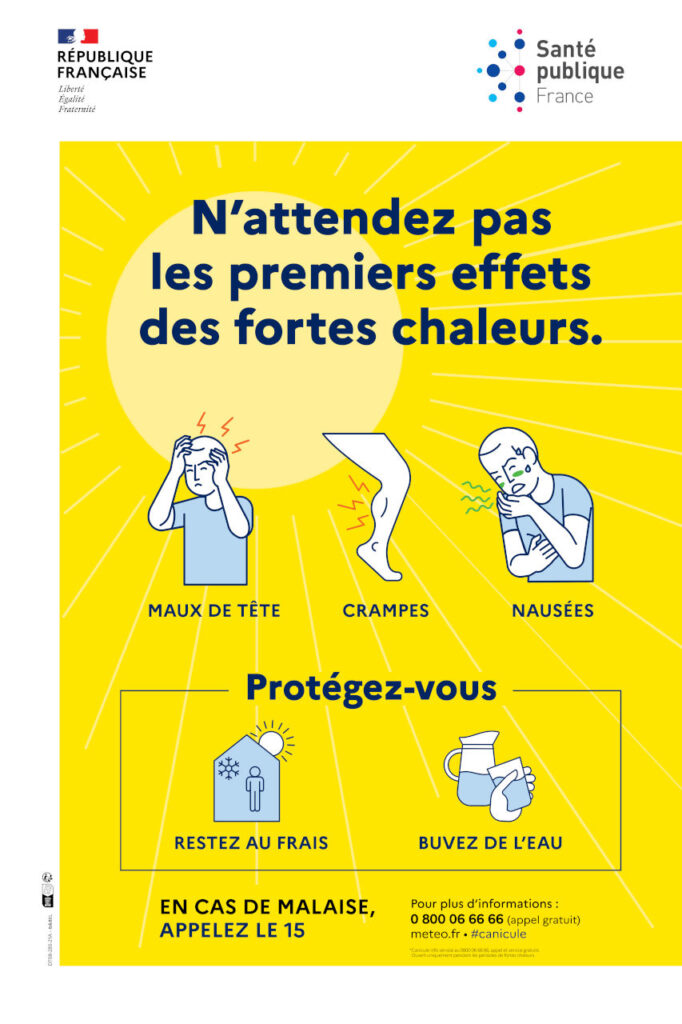
Symptoms of heatstroke
- hot, red, and dry skin; a fever higher than 40°C,
- headaches, nausea, drowsiness, intense thirst,
- behavioral disturbances, confusion, seizures, and loss of consciousness.
Anyone can experience dehydration or heatstroke
The risk is higher for:
- older adults, people with chronic illnesses or mental health conditions, people who take medication regularly, people who are isolated, and children.
- athletes,
- people who work outdoors (see the government website).
In case of illness, behavioral problems, or heatstroke:
- Call 911 (15)
- If you are at the university, please contact your local SCMPPS office:
- Downtown: 04 34 43 30 87
- Triolet Site: 04 67 14 30 73
- Richter Site: 04 34 43 24 26
- Occitanie Branch (Montpellier University Institute of Technology): 04 34 43 30 70
- Nîmes University Institute of Technology (IUT): 04 66 62 85 73
- Nîmes School of Medicine: 04 66 02 81 96
- Administer first aid:
- Move the person to a shaded or cool area;
- take all necessary measures to ensure that their clothing does not interfere with the drop in their body temperature;
- sprinkle the person with cool water;
- Ventilate as much as possible;
- Give small amounts of cool water if the person is conscious and able to drink;
- Place the person in the recovery position if they are unconscious.
Preventive Measures to Be Implemented
Work organization measures to be implemented when a risk assessment identifies a hazard to employees’ health or safety due to heat:
- adjusting work schedules to avoid the hottest parts of the day,
- the temporary suspension of the most strenuous tasks during heat waves,
- increasing the frequency and duration of breaks, which should be taken in shaded or cool areas,
- the design of workstations to limit exposure to the sun and heat buildup (installation of sunshades, ventilation, misting systems),
- improving access to fresh drinking water, with a minimum of three liters per day per employee, particularly in the absence of running water.
- moving between nearby air-conditioned spaces (offices, meeting rooms, etc.)
- Use of telework days (rescheduling of fixed telework days, submission of floating telework days)
Please note that employees may also visit the SCMPPS if their health condition requires it and, if necessary, request a special work schedule for health reasons.
With regard to chemical hazards:
When temperatures exceed 40°C, laboratories are advised to shut down distillation units and stop using substances with low boiling points. Examples: ether, dichloromethane, acetone, …
Finally, it is important to ensure that chemicals are stored in cool, well-ventilated areas, in accordance with applicable regulations.