Diphtheria: What You Need to Know About a Disease We Thought We’d Left Behind
More than twenty years after its last outbreak, Senegal is once again facing a diphtheria epidemic. In late July 2026, at the Kédougou Regional Hospital in eastern Senegal, several children under the age of five died, exhibiting symptoms consistent with respiratory diphtheria. On August 1, the Pasteur Institute in Dakar confirmed the diagnosis.
Alpha Kabinet Keita, University of Montpellier; French National Research Institute for Sustainable Development (IRD); Guinea Center for Research and Training in Infectious Diseases (CERFIG)
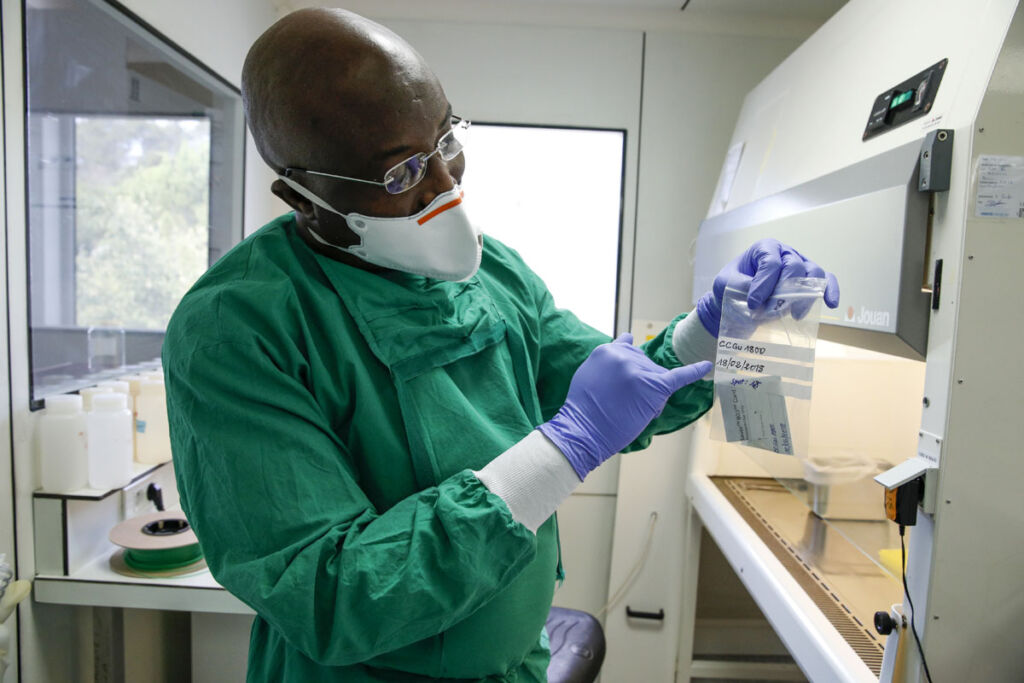
According to the latest national report from the Ministry of Health, as of September 20, 2026, the country had 114 confirmed cases and 11 deaths across 31 health districts and 12 of the 14 regions, ranging from Kédougou (33 cases) to Louga, Dakar, Diourbel, and Thiès.
A week earlier, there were 76 cases and 9 deaths. The response coordination team at Senegal’s Ministry of Health stated that “the epidemic is spreading rapidly, ” citing a case fatality rate of about 10 percent—that is, one death for every ten patients. However, this disease is treatable, and a vaccine can prevent it.
As a researcher specializing in infectious diseases, my team and I have been studying the epidemic that has been ravaging Guinea since 2023. Our findings could shed light on the situation in Senegal.
What is diphtheria?
Diphtheria is caused by a bacterium, Corynebacterium diphtheriae. This bacterium is dangerous primarily because it produces a toxin—that is, a toxic substance that it releases into the body. This toxin destroys tissues in the throat, among other things. It can also enter the bloodstream and reach the heart and nerves.
Its name comes from a Greek word meaning “membrane.” It refers to the “false membrane, ” a grayish or whitish layer of dead tissue that forms in the throat. The disease primarily affects the nose and throat; more rarely, it affects the skin, where it causes lesions.
How can you recognize it?
Symptoms usually appear two to five days after infection. This is known as the incubation period. At first, there is nothing to really distinguish diphtheria from a common sore throat: a sore throat, fever, fatigue, and swollen lymph nodes in the neck.
The warning signs then appeared. Among the 90 laboratory-confirmed cases in our Guinean study, 91% had a sore throat. Ninety percent had a fever, 89% had difficulty swallowing, and 83% had a whitish membrane. This membrane and breathing difficulties (what doctors call “dyspnea”) were the most telltale signs.
The disease can progress very quickly: in Guinea, patients died on average two days after admission. The membrane can block the airways and cause asphyxia. The toxin can also cause inflammation of the heart (myocarditis) or affect the nerves.
Without proper treatment, diphtheria kills up to 30% of unvaccinated people. Young children are most at risk.
Ways the disease is transmitted
The bacteria spread from person to person through droplets expelled when an infected person coughs or sneezes. It can also be transmitted through direct contact with an infected person. Some people may carry the bacteria without being sick. These are known as “asymptomatic” carriers, who can spread the bacteria without realizing it.
Close contact therefore facilitates the spread of the disease: within families, at school, at markets, and on public transportation. In Guinea, contact with an infected person was associated with an approximately threefold higher risk of becoming infected, and the epidemic, which began in Siguiri, in Upper Guinea, spread along National Highway No. 1 as people traveled.
How is the disease treated?
Diphtheria can be treated, provided it is treated early. Treatment consists of two components.
The first is diphtheria antitoxin, a serum that neutralizes the toxin circulating in the blood. It does not repair damage that has already been done, which is why it must be administered immediately.
The second is antibiotics, which kill the bacteria, reduce toxin production, and prevent the patient from infecting others. The World Health Organization (WHO) recommends, first and foremost, those in the macrolide class, such as azithromycin.
A major challenge: the antitoxin is in short supply in many countries. According to the WHO, in places where it is difficult to obtain, up to 40% of patients may die. This underscores the need to seek medical attention promptly and avoid self-medication, as health ministries regularly recommend.
The family members and close contacts of a patient must also be monitored. They are given antibiotics as a preventive measure, and their vaccination status is checked so that any missing doses can be administered if necessary.
Vaccination: The Best Form of Protection
The vaccine is safe and effective. It contains an toxoid—that is, a toxin that has been rendered harmless—which teaches the body to defend itself without making it sick.
In Senegal and Guinea, the standard primary vaccination schedule for diphtheria is part of the “hexavalent” vaccine, which protects against six diseases. It is administered free of charge to infants at 6, 10, and 14 weeks, and a booster dose is scheduled starting at 15 months.
The WHO recommends three doses in early childhood, followed by three booster shots during childhood and adolescence, as protection wanes over time.
Why does the illness come back?
Diphtheria is making a comeback because high national vaccination coverage can mask pockets of children who have never been vaccinated—so-called “zero-dose” children—or who are under-vaccinated, especially in rural, border, and isolated areas.
Among Senegalese children aged 15 months to 15 years affected by the outbreak, 67.9% were unvaccinated or had an unknown vaccination status. Only 24.7% had received at least three doses.
In Guinea, out of 90 confirmed cases, only three had been vaccinated, and none of the eight children who died had been vaccinated.
In 2025, the WHO reported more than 20,000 suspected cases and 1,252 deaths in eight African countries, including Guinea, Mali, and Mauritania.
Families are therefore advised to check their children’s immunization records and ensure that any missing doses are administered. Diphtheria had not disappeared; it had simply been forgotten or neglected.
This is a disease that can be prevented through vaccination, and today, it is unacceptable for our communities to bear the burden of child deaths linked to this infection. Because we know how to prevent it, every child’s death weighs just as heavily.
Alpha Kabinet Keita, physician and microbiologist, researcher at the Center for Research , and Training in Infectious Diseases in Guinea and at the TransVIHMI Unit (University of Montpellier, IRD, INSERM). Rector of Gamal Abdel Nasser University in Conakry, University of Montpellier; Research Institute for Development (IRD); Guinea Center for Research and Training in Infectious Diseases (CERFIG)
This article is republished from The Conversation under a Creative Commons license. Readthe original article.