“Be Proud of Our Diversity”
At home, he takes care of five children. At work, he manages an entire IT infrastructure. Laurent Barrère isn’t just a busy man—he also has a disability that’s impossible to detect at first glance. What’s it like to work every day when you’re deaf? Follow along…
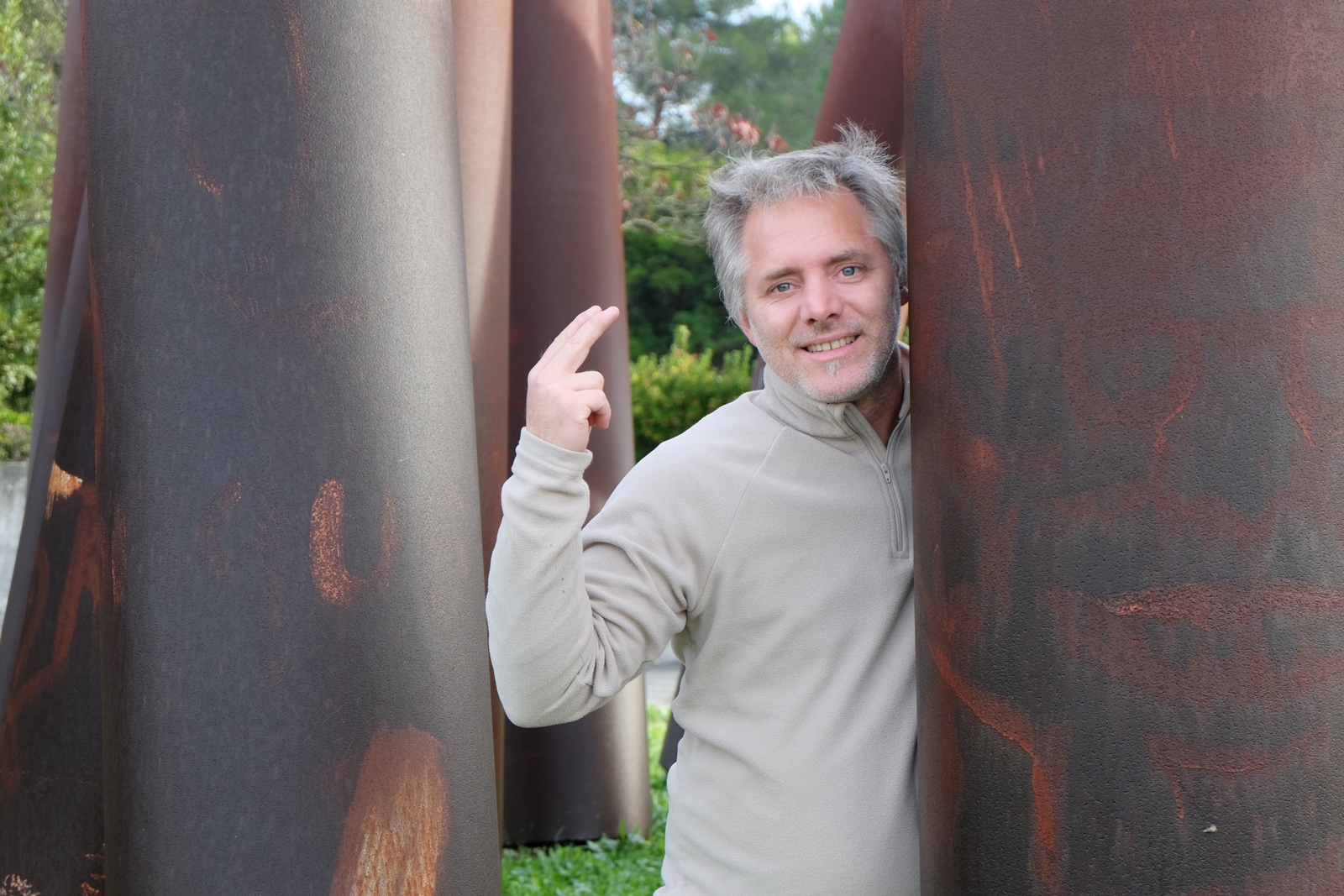 The interpreter is here. My first interview in sign language: a three-way interview, where the gestures soar, light as air. A universal language takes hold between us, as beautiful as a dance… With azure eyes, a pirate’s look, and a radiant smile, Laurent arrived at the university in September 1998. He now works at the Faculty of Sciences in Montpellier.
“Things are going well with my coworkers. We have a good time! But no one knows sign language. So sometimes I give little lessons… At lunchtime, we go to the staff cafeteria; I try to follow the conversations but I often end up giving up: it takes a lot of concentration… In my professional practice, I’m also in contact with students and teachers. It’s a little more complicated with students—especially with international students who don’t speak French. It’s not always easy to communicate in those situations… “
“Awareness-raising efforts are needed”
How can weimprove daily life?
“Ideally, I’d like to see more people learning sign language. We could give each other advice, talk about life at work, and share our professional strategies. Being able to discuss our challenges would lift a weight off my shoulders. It can be tough sometimes to be around hearing people without saying anything, struggling to follow the conversations. Communication difficulties often stem from a kind of fear—the fear of reaching out to others. There’s still work to be done to raise awareness and better understand people with disabilities.”
Raising awareness—but how?
“Yes, it’s not easy! We shouldn’t be afraid to reach out to others and talk to them. That’s the only way we’ll come to better understand what disability is. In the case of the deaf, there’s a language barrier that must be overcome. But this is a broader issue that goes beyond the university setting. Society as a whole needs to make an effort to educate itself: How can we bridge the gap? How can we communicate more effectively?”
Do we need more communication?
“Of course! Very often, it’s out of ignorance that people don’t dare to reach out to people with disabilities. We shouldn’t be afraid to make contact. Communication is possible. For example, people often talk about ‘deaf-mutes.’ That’s not true: Deaf people aren’t mute! I speak, and people can understand me.”
“Proud of Our Diversity”
At the university, has the creation of the Handiversité office made a difference?
“That was 5 or 6 years ago. Yes, quite a few things have changed. When the office was created, I was able to make my voice heard and express my needs. Some important accommodations were put in place: flashing lights for fire alarms, for example. The most important thing for me was the ability to have interpreters for meetings—that didn’t exist before. However, you have to give them three weeks’ notice…”
What still needs to be done?
“A lot of things. I’d like to see universities hire more deaf and hard-of-hearing people, since they have a hard time finding jobs in the private sector. And we shouldn’t be afraid of differences. I believe it’s up to each of us to roll up our sleeves and help make the university accessible and welcoming. The university is a place of learning and knowledge. For me, it’s a source of pride to work here and to do a job that adds significant value. I’d like to work toward raising awareness about disability and educating people. If deaf people weren’t present at the university, a whole segment of society would be missing. We should be proud of our diversity. I’d like to help make that happen.”