Students on the Loose
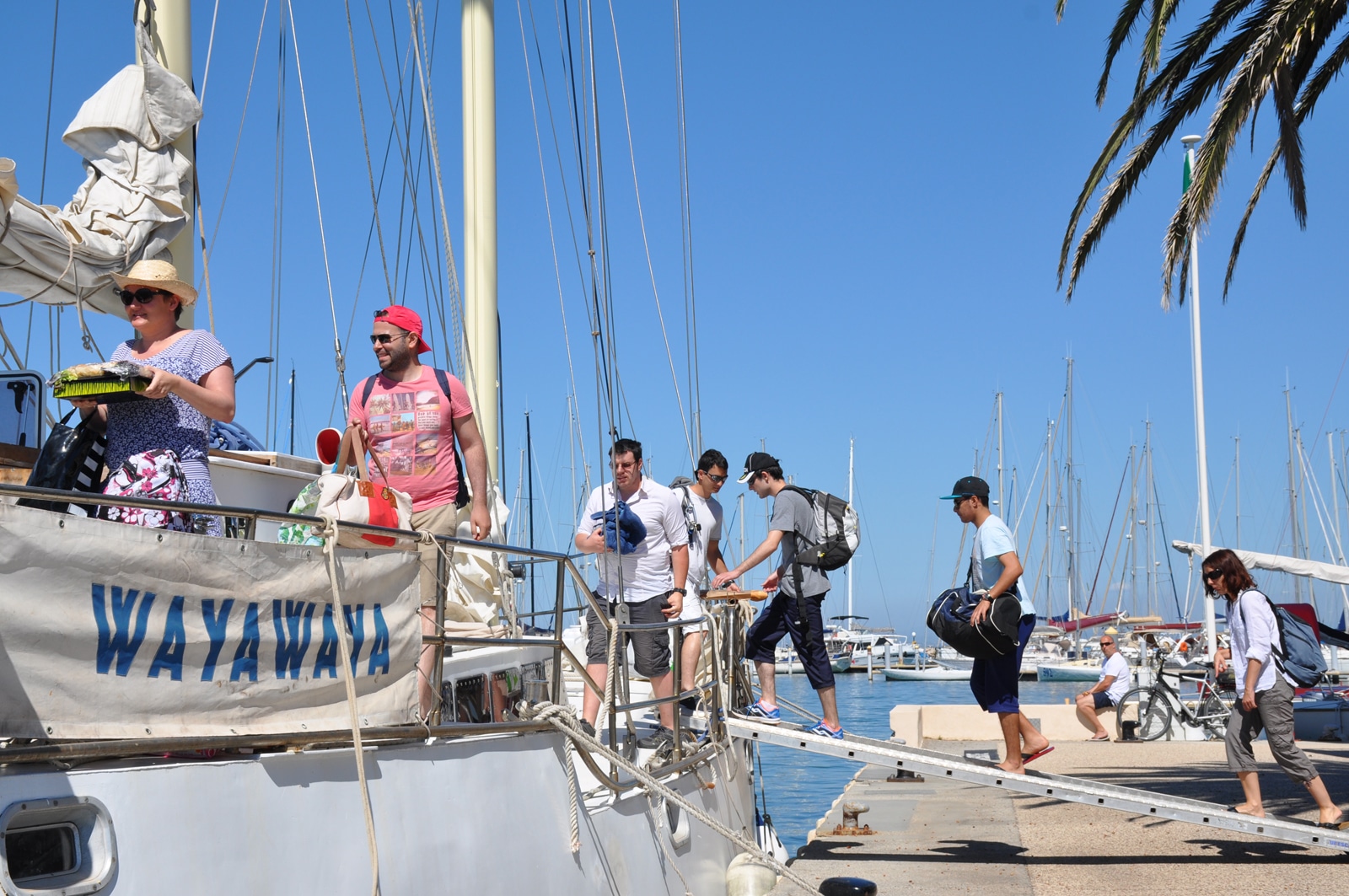
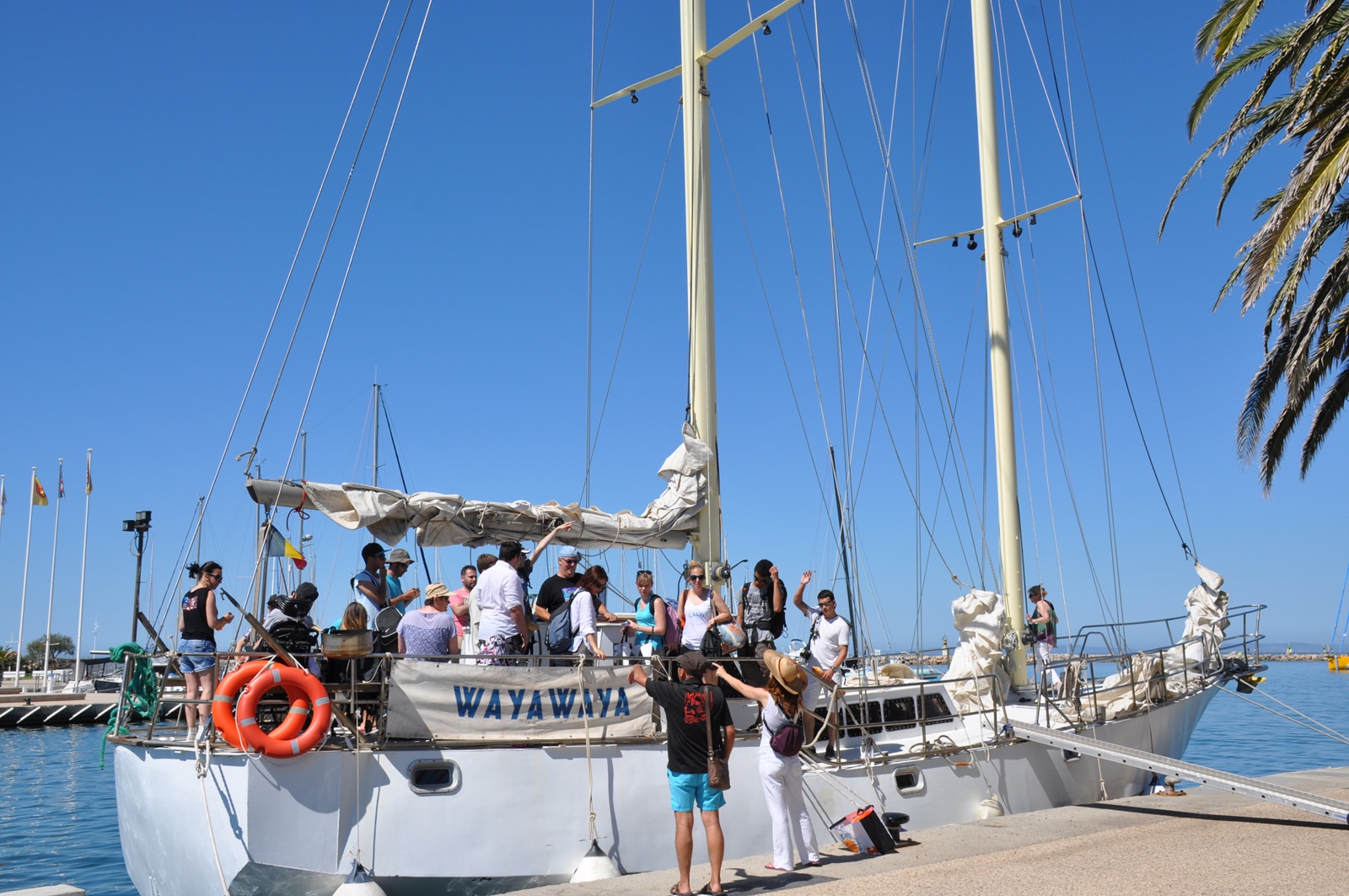
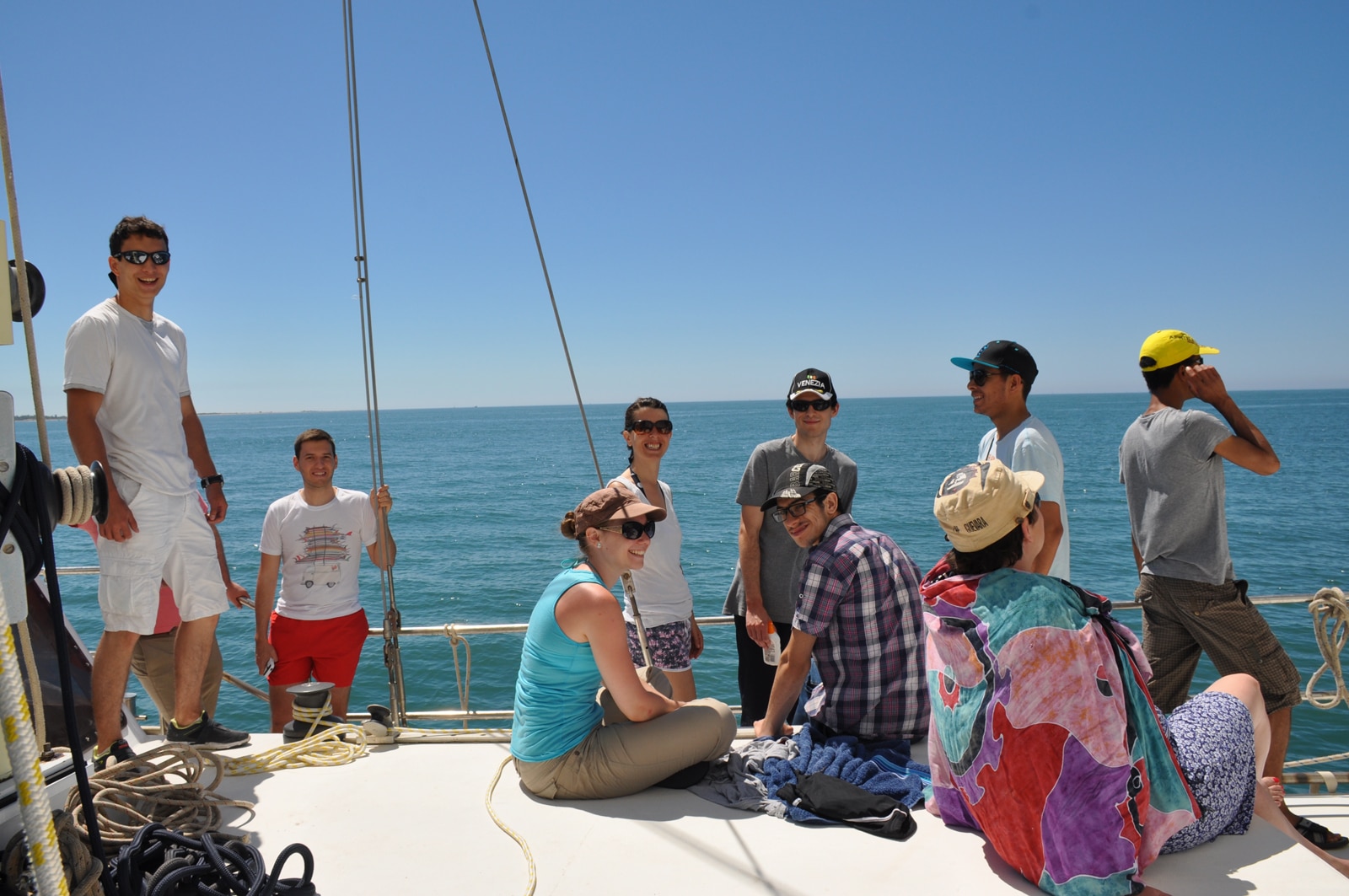
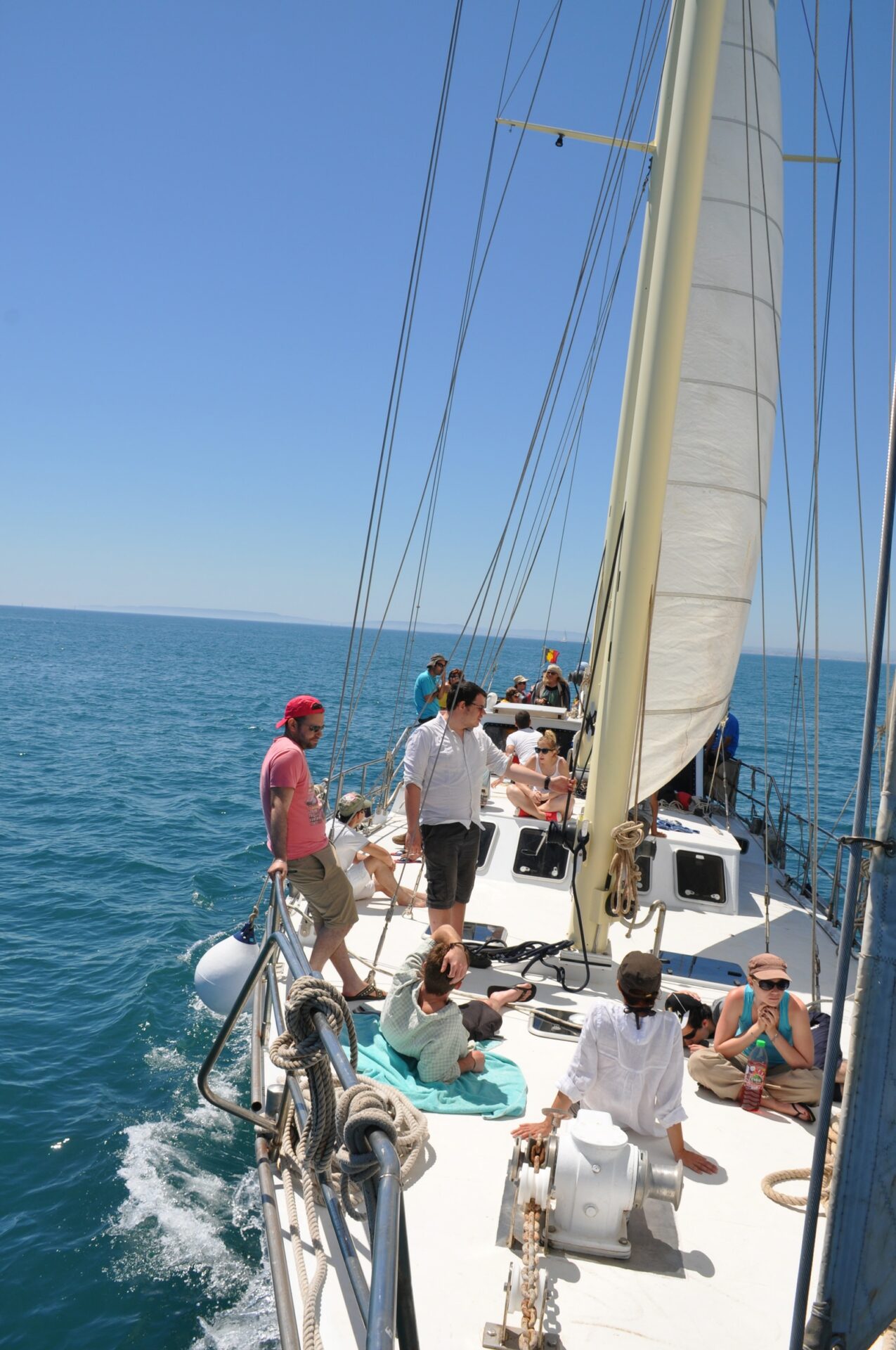
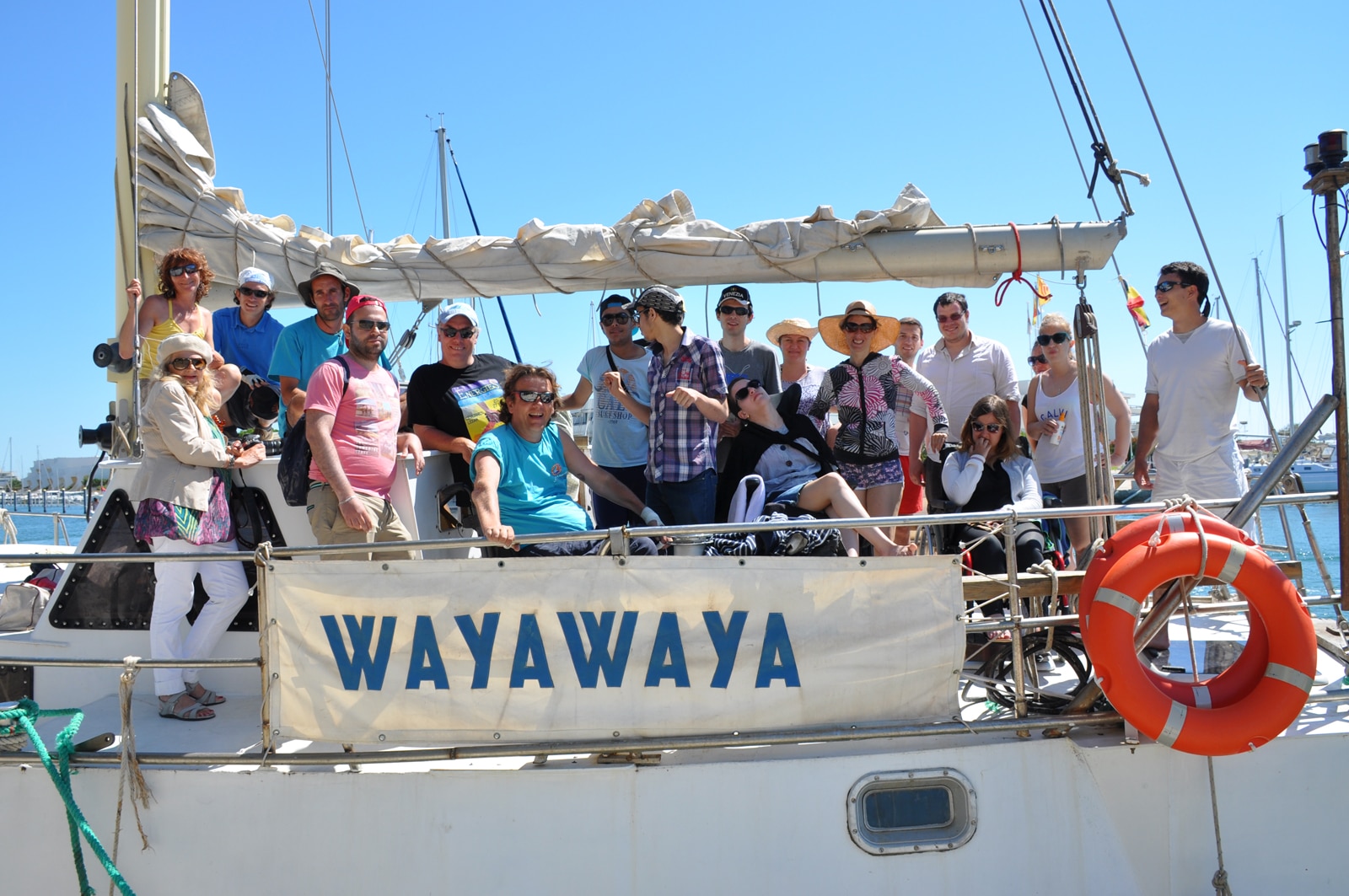
Taking a break from their studies for a sea voyage: a moment away from it all for 15 students with disabilities from the University of Montpellier. Welcome aboard the Wayawaya. With all sails set, the schooner resembles a black-headed gull, despite its sturdy 22-meter steel hull.
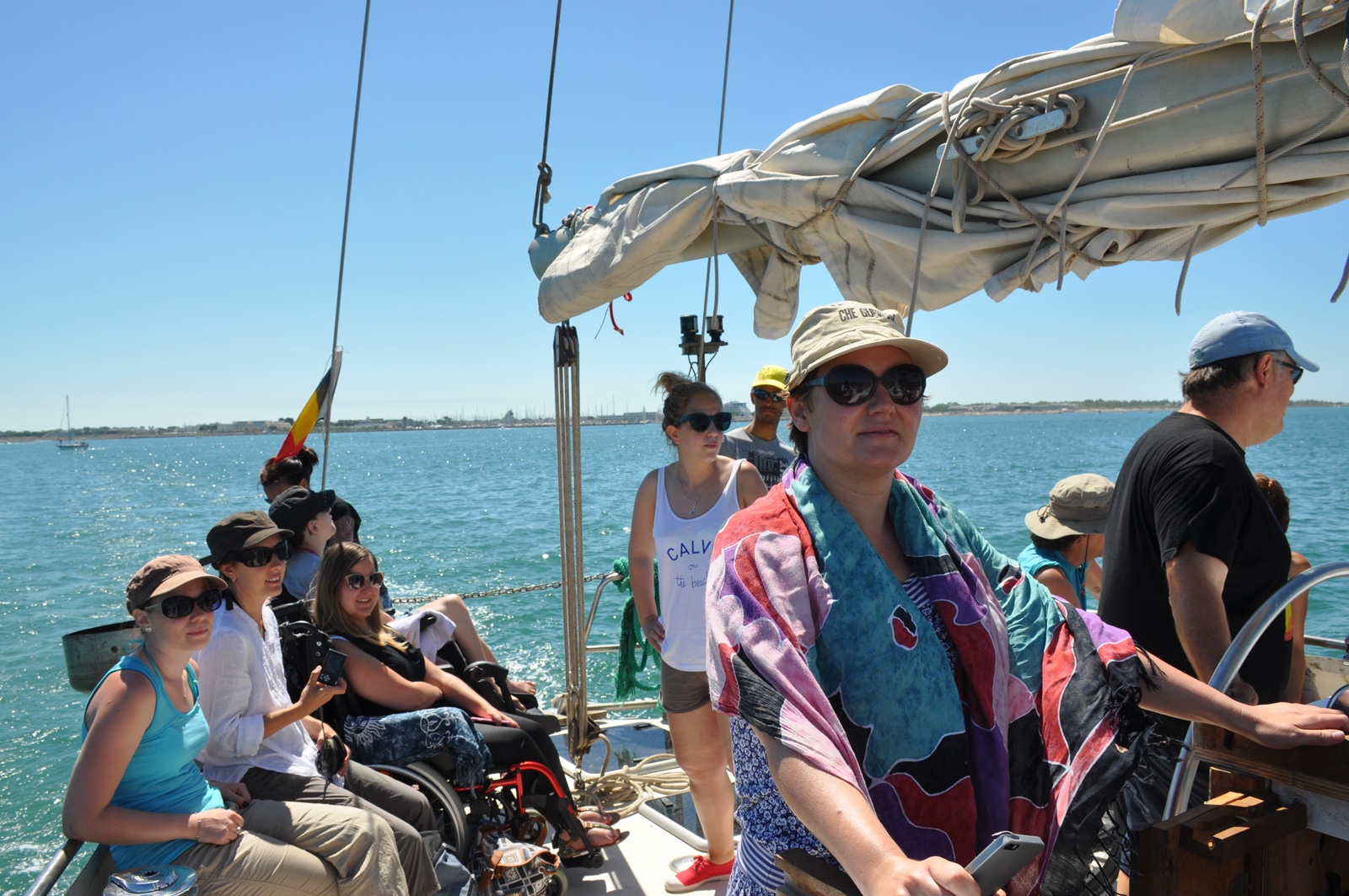
 She sets sail under ideal conditions: from the south, a light thermal breeze brings a hint of summer. Beneath the hull, the Ligurian current flows at barely a knot—a whisper from Italy, a reminder that the Gulf of Genoa is not far away. A quiet joy settles in.
First Sailing Trip
Setting sail from Le Grau-du-Roi, the Wayawaya points its bow toward the hill of Sète: ghostly and misty in the distance, bathed in bright sunlight. For many, this is their very first sailing trip.“It feels like we’re alone in the world as soon as we’re far from the coast,” remarks Maxime, sitting on the deck. Mohamed lets out a sigh of wonder:“The sea… it’sa unique feeling,” he describes. “It’s good to get away from the pressure of school, to escape from everyday life.”
Maxime is pursuing a DUT in chemistry in Sète, while Mohamed is working toward a bachelor’s degree in computer science at the Faculty of Sciences. For both of them, the Handiversité[1] service has proven to be an invaluable resource.“To succeed, you have to work hard,” explains Mohamed. “Programming, systems, databases… computer science is a complex field that underpins our entire daily lives.”
The Handiversité service has provided him with a teaching assistant who supports him during lectures and lab sessions. During exams, the assistant is also there to write down whatever Mohamed dictates. That assistant is Tahar.“It’s a role that requires very specialized skills,” explains this doctor of optoelectronics. “It would be difficult for me to assist a biology student, for example. With Mohamed, we understand each other—especially since we’ve been working together all year.”
Daily Support
Everyone gets the support they need, because every situation is different. For both Majid and Yohan, the Handiversité service helped arrange special accommodations for their exams. Both are given extra time during exams—a measure offered to students who have difficulty paying attention or concentrating.“I often have to speed up toward the end of the exam. Luckily, the teaching assistant is there to tell me, ‘Hey, Yohan, come back down to earth!’” Yohan concludes with a laugh.
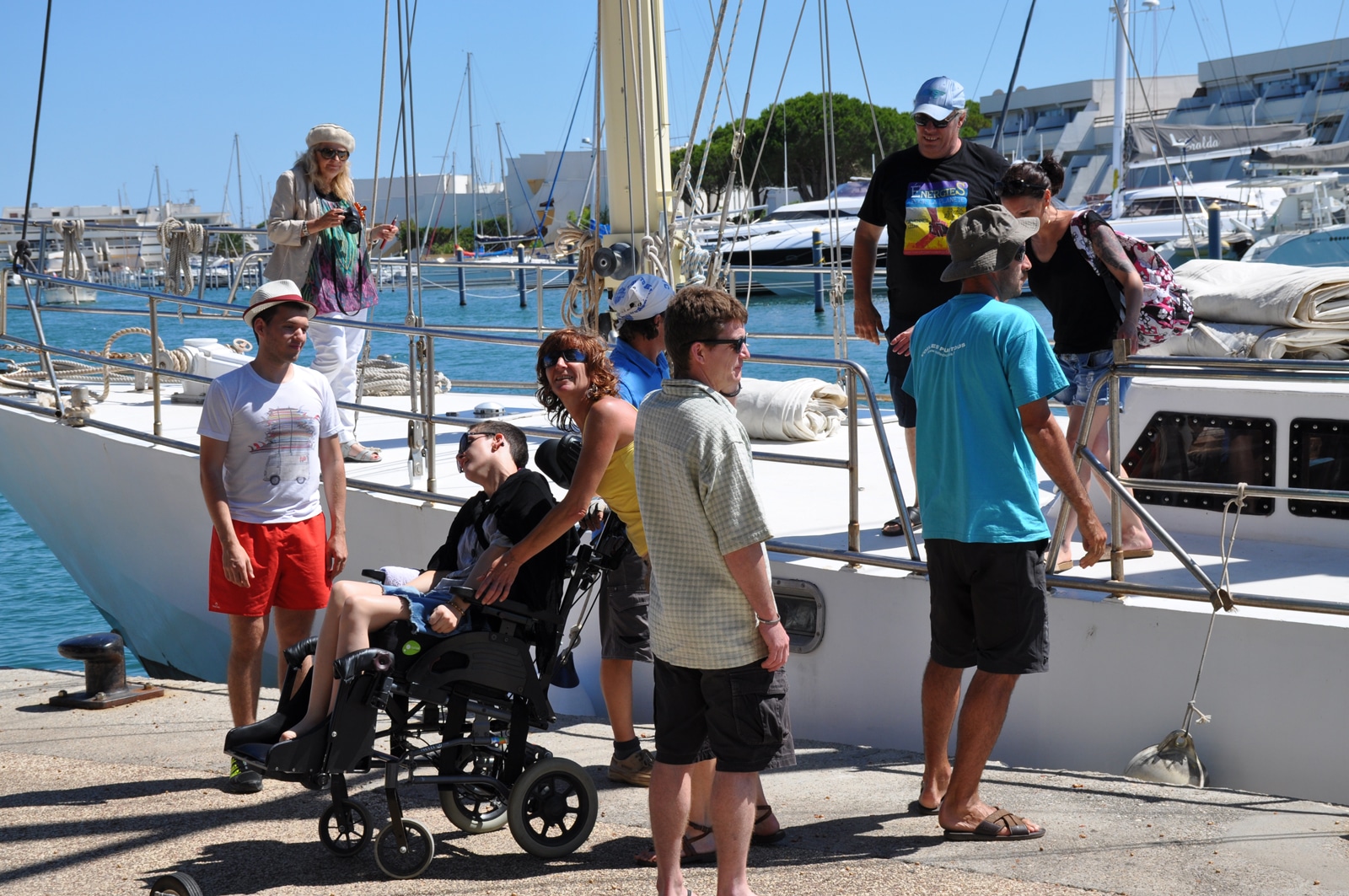
Chartered by the association Voiles pour tous, the Wayawaya cuts through the glassy sea. The boat is equipped to accommodate everyone on board: the gangways, in particular, have been widened to allow wheelchairs to pass through. Such accommodationsare quite rare, explains Christophe, the association’s president.“Accessible cruising options are practically nonexistent. There are standards on land, but they’re much rarer at sea. Very few boats are accessible to people with disabilities!”
Once a year, the Handiversité service at the “UM ” organizes this outing for the students it supports throughout the year. The idea, explains Isabelle, who oversees student support at the “UM ,” is“to get together outside the university setting . It’s about taking a break from daily life and giving people a chance to meet and build connections.”
Back to Le Grau-du-Roi. But we’ll set off again on the Wayawaya or another “white seagull.” Wayawaya? It means “Over there, over there” in a distant Latin American language. Or “Heavenly Beggar,” in Bambara this time. Quite a name…
[1] The Handiversité service welcomes and supports students with disabilities throughout their academic careers. Its mission is to enable every student to pursue their studies under the best possible conditions and to support them in developing their academic and career plans.