ERC Horizons: Pushing the Boundaries of Research
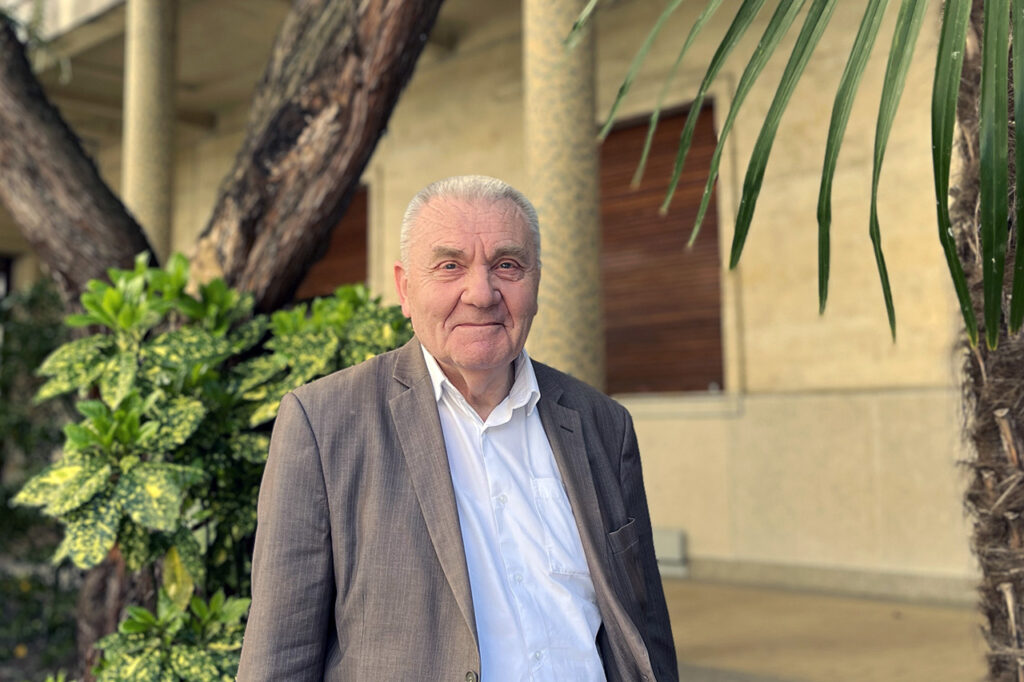
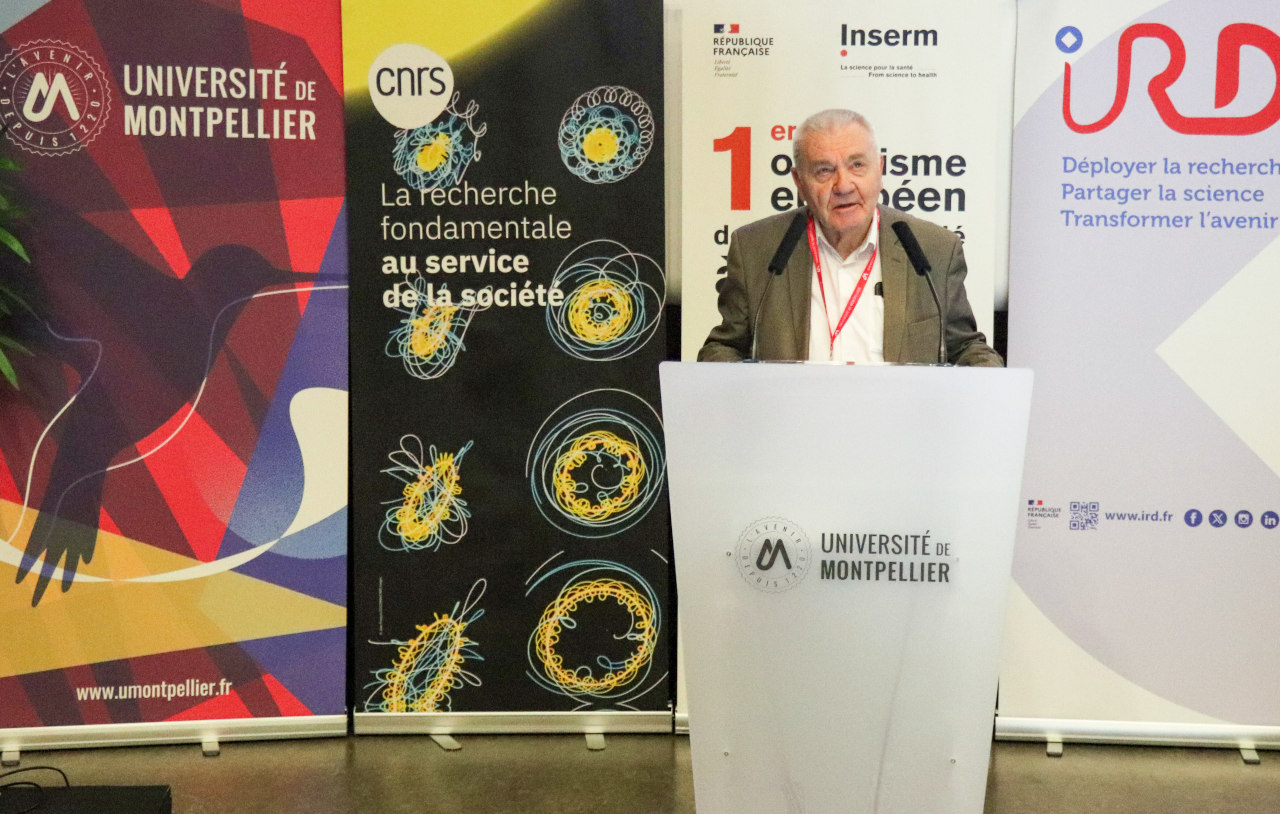
Between 2014 and 2021, mathematician Jean-Pierre Bourguignon served for seven years—including one year on an interim basis—as head of the prestigious European Research Council (ERC). On March 31, he participated in the event “ERC Horizons in Montpellier: European Research Meetings, ” organized by the University of Montpellier in partnership with the CNRS, INSERM, and the IRD. On this occasion, he shared his experience and reflections on the programs coordinated and funded by the European institution to support exploratory and bold research. He is convinced that more of our researchers—both men and women—must apply and overcome their doubts at all costs!
Can we say that ERC grants are intended to fund scientific projects “at the frontiers of knowledge”?
We’re talking about “exploratory” research projects, which means that the topic of your project isn’t yet well-defined—and, more importantly, that you’ll be taking risks. Because when you’re exploring, you can’t be sure you’ll be able to see your idea through to the end. On the other hand, you’re convinced that there’s great potential—that you’ve stumbled upon an idea that no one has yet thought through in depth. The panel members evaluating your project need to think to themselves as they read it: “This istruly a novel idea—I wish I’d thought of it myself! ”
For a researcher, it's not always easy to know if an idea is a good one…
That’s why I recommend testing your project with others—not just your immediate circle—before submitting it. That’s how you’ll find out if what you think is a good idea actually is one. On the other hand, if someone tells you , “You’re dreaming, ” don’t get discouraged. Especially if, at the same time, others are telling you , “That’s great!” In that case, don’t hesitate to go for it!
Let's not forget one important quality: the ability to overcome failure!
It’s very important not to get discouraged if you aren’t selected on your first try. On the contrary, review all the reports written by the panel members about your project—on average, 6 to 11 reports if the project was selected for a hearing. When reading a report, you may sometimes disagree with the reviewer and feel that the criticism is unwarranted. Be careful: even if you know exactly what you want to say, the panel members may read something different from what you had in mind. This underscores the importance of having different people read your proposal beforehand. Proofreading not only improves the quality of your writing but also eliminates ambiguities that could ultimately work against you.
Is boldness an essential element?
It’s truly encouraging. We’ve heard this from the testimonials of ERC grant recipients: many similar projects submitted to a national agency were rejected because they were deemed too risky. Yet, when submitted to the ERC, they succeeded on the first try! We see this not only in France but also in many other countries: ambitious and groundbreaking projects tend to be less readily accepted and receive less support than more routine and safe projects. The scientific community has a strong tendency to be conservative and to undervalue risk-taking. That is a fact. It is therefore vital that there be a program at the European level that does not have this negative bias against risk.
In your opinion, should our researchers be encouraged to apply more often?
France has a massive shortage of applications. If we don’t have enough successful ERC proposals in France, it’s precisely because the researchers working here aren’t submitting enough applications… We really need to resolve this long-standing problem. And it’s actually getting worse! Given that research funding in France has stagnated at 2.2% of GDP, securing more money from the European budget is essential to better fund research in our country. When I speak on this topic, I don’t talk much about the Nobel Prizes and Fields Medals won by ERC grantees. I prefer to highlight the roughly 10,000 researchers whom the ERC has enabled to establish research teams. Since France is one of the major European countries—at least in terms of size—we should be seeing a significant number of project proposals submitted, commensurate with the roughly 18% of the European budget that France contributes. Yet the percentage of applications originating from French institutions is only 12%, a figure barely offset by a success rate that is slightly above the European average.
Yet there are no age limits, no restrictions on fields, and no subject limits: anything is possible!
Absolutely. In fact, we’ve observed that the shortage of applications in France is greatest in the humanities and social sciences. Listening to the testimonials of the grant recipients, we can easily see just how much of a positive—and often radically positive—impact ERC support has on their careers. Not only does it enable them to carry out an ambitious project, but it also generates a much higher level of international visibility and appeal. With an ERC grant, you can attract higher-level collaborators than you would for a traditional project, which means the work you’ll do collectively will be much better.
Does getting an ERC contract also help you build your network?
Researchers have told me that presenting their projects to colleagues opened the door to new collaborations. Whether at the University of Montpellier or within other communities, it is very beneficial for people who don’t know each other to come together and discuss science. Fostering the development of a community of ERC grantees can promote interdisciplinarity by enabling them to share—both among themselves and more broadly—the lessons they have personally learned, and allow them to take full advantage of this extraordinary diversity.
In fact, you mentioned that a significant portion of the projects are interdisciplinary.
Monique Smaihi, head of the Call Coordination Unit at the ERC Executive Agency, spoke about the ERC’s anonymous evaluation, designed to measure the impact of the projects it funds. This evaluation is conducted annually on 250 projects selected at random two years after their completion. We discovered that interdisciplinary projects very often had a greater impact—both scientific and economic—than other projects. That was a real surprise! And yet another reason to encourage interdisciplinarity.
Any advice for project leaders?
An ERC project needs to be well thought out; I don’t think it’s something you can put together on the back of an envelope in a single evening—or even in a week. I know that the University of Montpellier has established support procedures, which is great because you absolutely must not censor yourself. It’s also very important to realize that ERC calls for proposals allow for many different formats. Before writing your proposal, I encourage you to read several proposals, regardless of the discipline, since the ERC posts an overview of all funded projects online. You’ll realize just how extraordinarily diverse they are. One last thing: I’ve often heard young researchers say , “I’m not good enough”… What matters is your project! You’re not being evaluated based on your resume, but on your ability to propose a bold project with a clear plan for developing it. It’s worth taking the risk. So if you have a good idea, go for it!
From “UM ” to “Moment-”UM
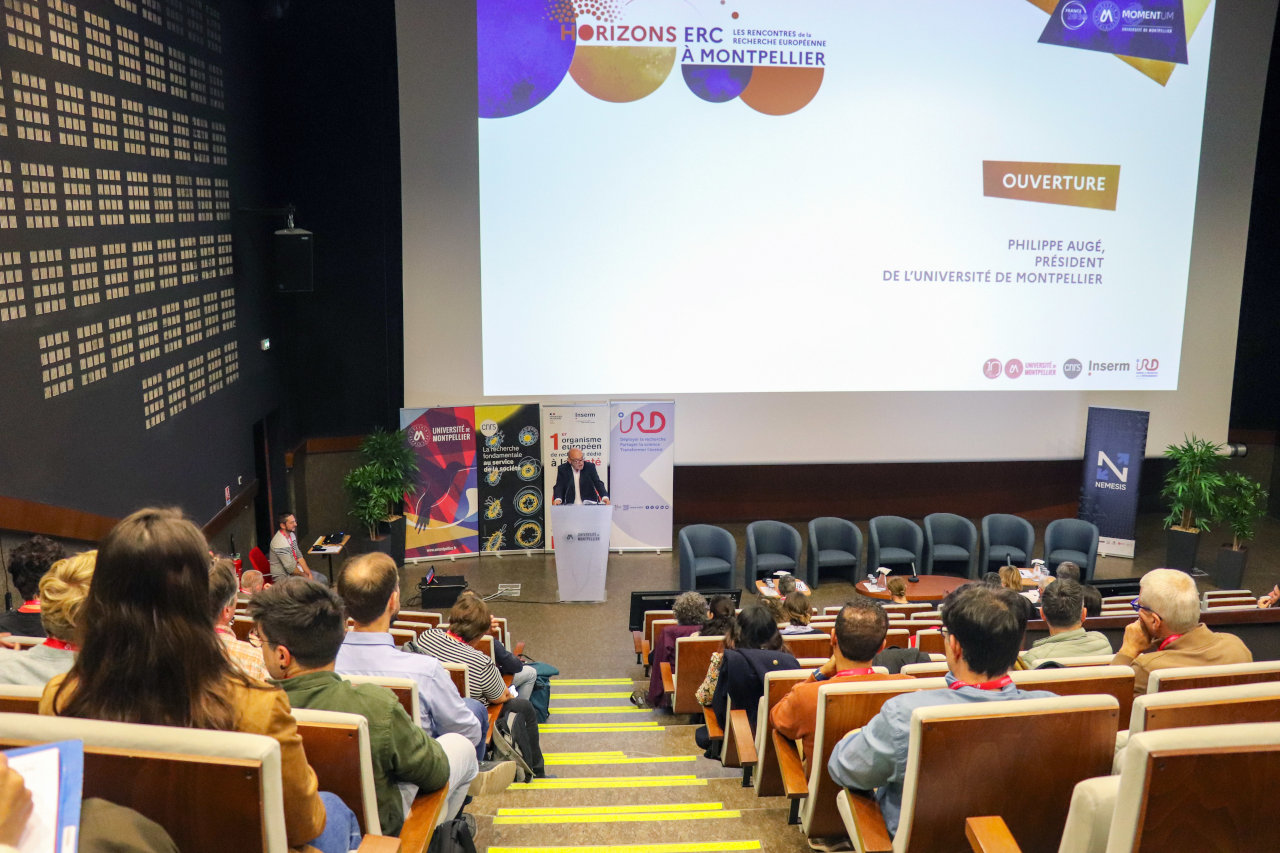
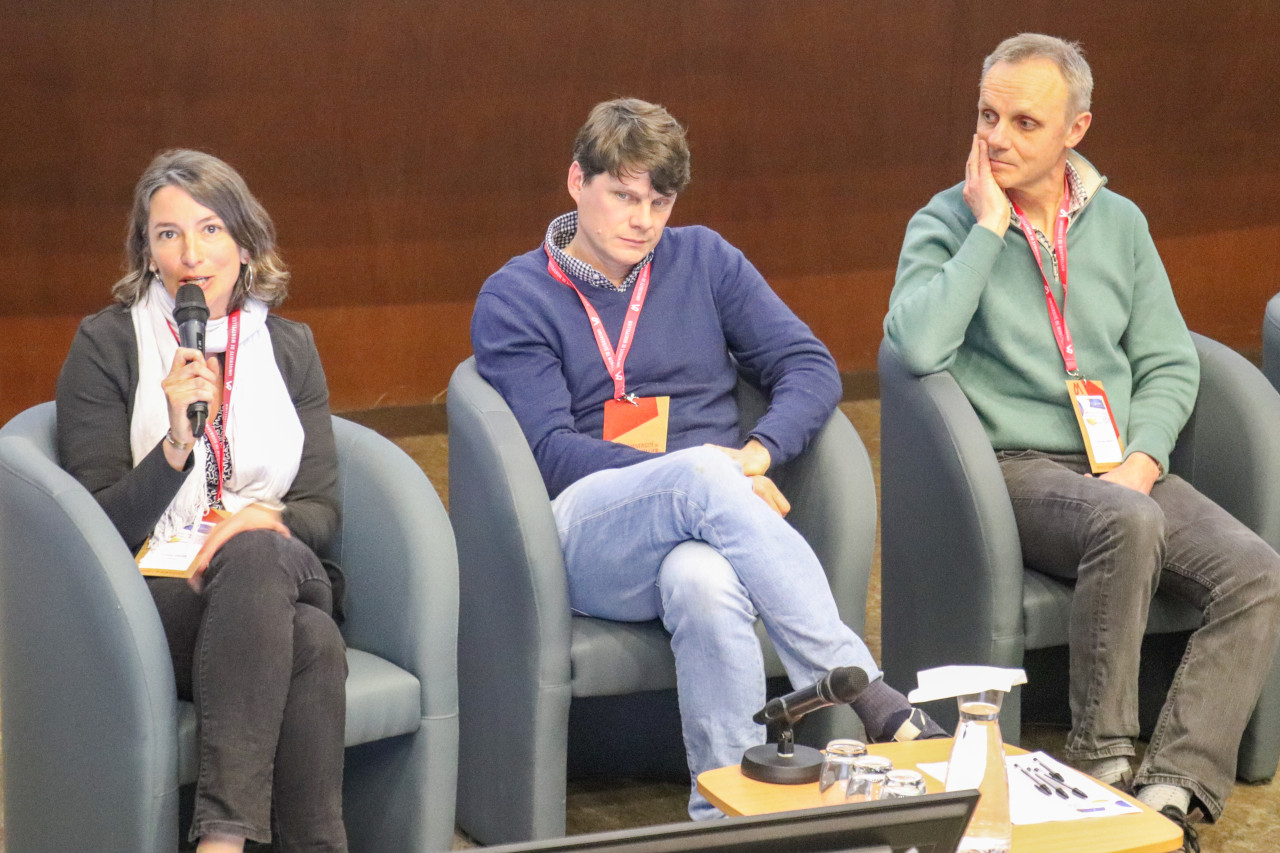
On March 31, a one-day event dedicated to the ERC schemes under the European Union’s Horizon Europe Framework Program for Research and Innovation was held for the first time in Montpellier, titled “Horizons ERC in Montpellier: European Research Meetings.” The event was organized by theUM, in partnership with the CNRS, INSERM, and IRD, with support from the ANR and France 2030 as part of the Moment-UM project—one of the major programs of theUM , which offers the Montpellier scientific community a dedicated support mechanism for the ERC program. With more than 15,000 grant recipients since its creation in 2007, this funding program enables researchers conducting exploratory, ambitious, and groundbreaking research projects to secure grants following peer review, across all disciplines, based solely on their scientific merit and originality. Various types of grants are available depending on the researcher’s stage of career: Starting and Consolidator Grants, Advanced Grants, Synergy Grants, and Proof-of-Concept grants.
For more information, please contact the Engineering and Project Support Department atUM.