IDIL: A Vibrant Summer School
The 2025–2026 session of the IDIL Summer School has just come to a close after an intense week of scientific discoveries, new encounters, and social gatherings that marked the arrival of new classes that are larger and more international than ever.
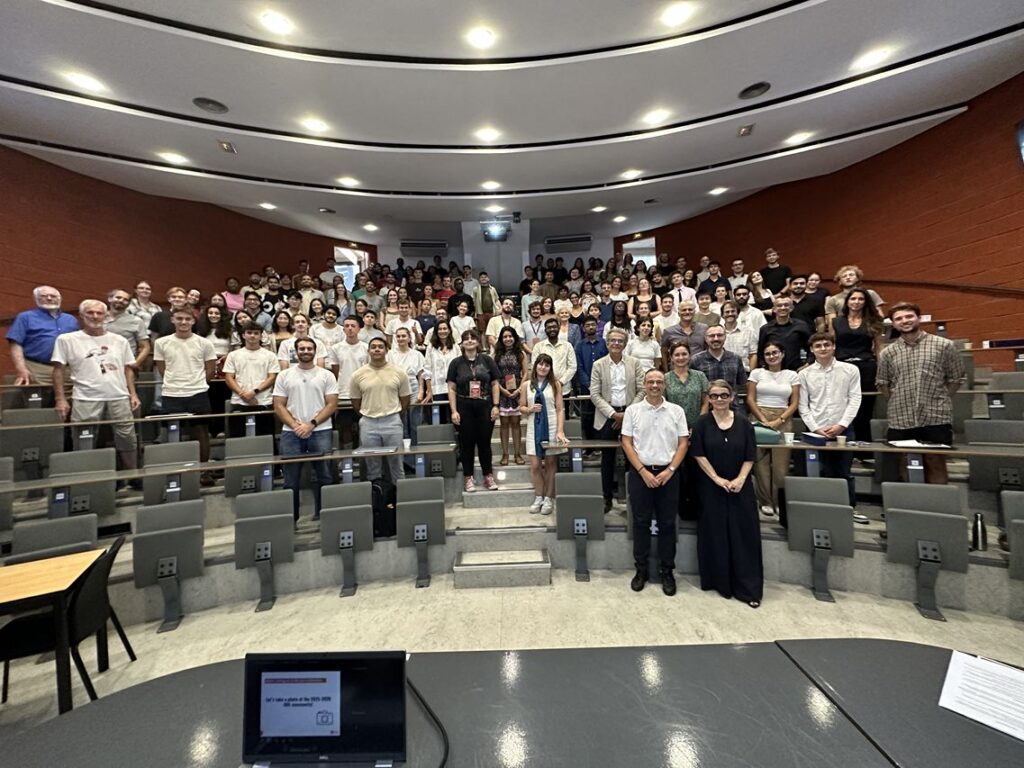
A week filled with conferences and discussions
Eight interdisciplinary lectures were featured throughout the event, offering participants a broad overview of the research fields pursued at the University of Montpellier and its partner institutions. Speakers from INSERM, the CNRS, the CSIC, and the University of Barcelona shared their work and opened up new perspectives for the students.
The official opening ceremony for this year’s program took place in the presence of Philippe Augé, president of the University of Montpellier, who was accompanied by the program coordinators, Agnès Fichard-Carroll and Mathieu Sicard, who were there to welcome the new classes.
Another highlight of the week was the Mentors–Mentees meeting, held outdoors in a friendly atmosphere. This opportunity for interaction allowed students not only to get to know the researchers who will be guiding them throughout their academic journey, but also to discover the diversity of scientific topics pursued by the university.
A gala to close out the event
The week concluded with a gala held at the Orangerie in Montpellier’s Jardin des Plantes. This festive event, now a staple of the IDIL summer school, brought together students, researchers, and faculty to celebrate the start of the 2025–2026 academic year.
An edition marked by growth and new routes
The 2025–2026 academic year confirms the program’s momentum with a 30% increase in the number of enrolled students. This year also marks the launch of two new master’s programs:
- DigiMove – Digital and Movement Sciences for Health (UFR STAPS Montpellier), focused on experimental research, human movement sciences, and data analysis.
- QBio – Quantitative Biology: Molecular Mechanisms of Life (Faculty of Science), offering a range of advanced courses in molecular biology, cutting-edge experimental techniques, and quantitative life sciences.
The program’s international scope is also growing: one out of every two students comes from a foreign country, representing four continents.