Infertility, Fibroids, and Endometriosis: Womed, a Startup Supporting Women
Based at the Center for Innovation and Technology Transfer (CIT) and in partnership with the Max Mousseron Institute of Biomolecules (IBMM), the startup Womed is continuing to develop and commercialize its first product, the Womed Leaf medical device, which is designed to prevent the formation of intrauterine adhesions. Already the recipient of numerous awards, the company is currently working on new technologies capable of treating fibroids, endometriosis, and uterine bleeding.
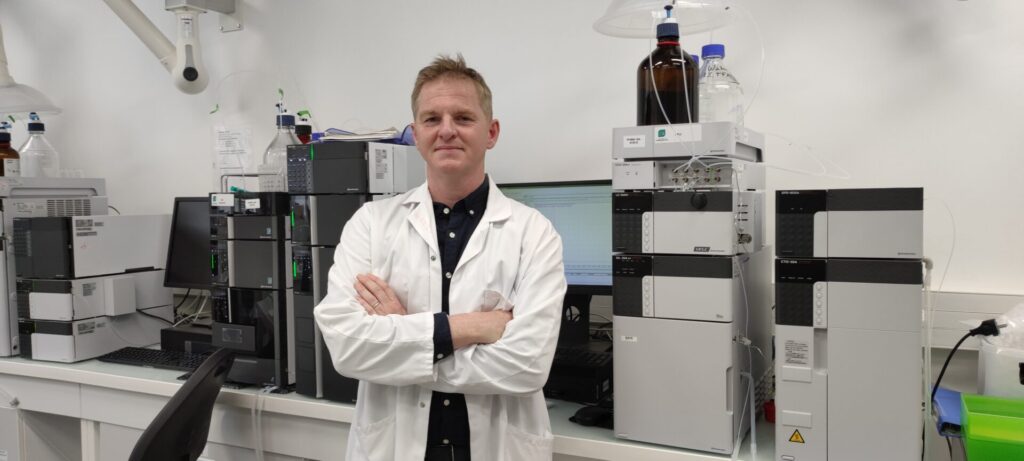
This is the story of a small company that’s on the rise, and rising, and rising… At the Innovation and Technology Transfer Center of the Balard Chemistry Cluster (research building), Womed is reaching a major milestone. Founded in 2018 under the auspices of the University of Montpellier, the CNRS, the Montpellier School of Chemistry, the SATT AxLR, and the Nîmes University Hospital, this startup has just raised 6 million euros to develop and market Womed Leaf. This innovative medical device uses a polymer film as a uterine dressing to prevent the formation of synechiae (or adhesions) and the infertility issues they can cause. Based on polymer technology developed in partnership with the IBMM’s Polymers for Health and Biomaterials department, this device could soon evolve into a sustained-release drug delivery system to treat various uterine conditions over the long term…
Adhesions that reform in nearly half of all cases
Launched in early 2024 after several years of research and promising tests, Womed Leaf is the result of a three-way collaboration. Stéphanie Huberlant (Nîmes University Hospital), Salomé Leprince (R&D Manager at Womed), and Xavier Garric (UM/Nîmes University Hospital) have been working on this polymer since 2013. At the time, their goal was to reduce the risk of synechia formation—these uterine adhesions that affect nearly 500,000 women worldwide each year. “A synechia is a kind of spiderweb that forms in the uterus—usually after surgery—and disrupts the uterus’s normal functioning,” explains Xavier Garric. In short, they lead to an increased risk of infertility, miscarriages, and even intrauterine pregnancies, but they can also complicate menstrual flow. And despite the possibility of reducing them through surgery, these adhesions reform in nearly half of all cases. In short, a real scourge that the medical world has so far been unable to eradicate.
Patented in 2016, the ultra-innovative device developed by Womed’s founders was created in collaboration with the gynecology department at Nîmes University Hospital. Composed of a polymer film capable of conforming to the uterine wall, Womed Leaf unfolds almost instantly upon contact with the mucous membranes. “Adhesions form within the first week after surgery. Until now, we used a hyaluronic acid gel, but its effect was far too short-lived before it dissolved. Womed Leaf remains in place for at least a week to act as a mechanical anti-adhesion barrier before being naturally shed,” explains the researcher.
A Significant Clinical Improvement
Founded in February 2018 by Gonzague Issenmann, Xavier Garric, and Stéphanie Huberlant, the startup quickly made a name for itself in the scientific and medical community. That same year, the team won the I-Lab Grand Prize, which came with a prize of several hundred thousand euros. This significant boost enabled the company to hire its first three employees and conduct all the necessary tests. In 2021, shortly after obtaining CE marking (European certification), Womed launched an international, randomized , “multicenter” study involving 154 patients, designed to demonstrate its effectiveness in gynecology departments treating the most severe cases of synechia worldwide.
During this phase, the device was tested in the Netherlands, Belgium, the Czech Republic, Italy, Spain, and China… And the results—obtained in January 2024—proved to be “excellent .” “We demonstrated that women were 2.4 times more likely to avoid adhesions when using the medical device after treatment. Womed Leaf is therefore the first intrauterine barrier to demonstrate a clinically significant improvement in this complex indication,” summarizes Xavier Garric. Already in use at the university hospitals in Nîmes and Montpellier, this device could soon gain traction in gynecology departments across France and Europe, before targeting the U.S. as early as 2025.
Fibroids, Bleeding, Endometriosis
But Gonzague Issenmann, Xavier Garric, and all the employees at Womed are already planning for the future. “We’ve gone back to research and development to create an intrauterine delivery system,” explains the researcher. This time, the goal goes far beyond a simple “mechanical” patch. The device could, in fact, transport and release molecules over an extended period. The idea? To facilitate the short-term treatment of fibroids, followed by that of uterine bleeding and endometriosis.
“Some orally administered drugs have significant side effects, and their systemic efficacy is insufficient. This system could help us solve these kinds of problems. “The goal here is to enable our device to last several months, releasing effective concentrations of medication while adapting to patients’ needs,” adds Xavier Garric. That’s why this fundraising effort is so important—it will allow the team to continue exploring this remarkable material. “In biotech, the sums involved are much larger,” confirms the co-founder of this company, which was recently awarded the highly selectiveEuropean Innovation Council prize last March. It was an opportunity to prove—if proof were still needed—just how spot-on this technological feat had been.