“I can count on a competent administration and services”
Since March1, Bruno Fabre, former vice chair of the board of trustees, has served as Chief Administrative Officer (CAO) at the University of Montpellier. This professor of management sciences—an unconventional choice for such a highly strategic role—took the time to explain his position to us.
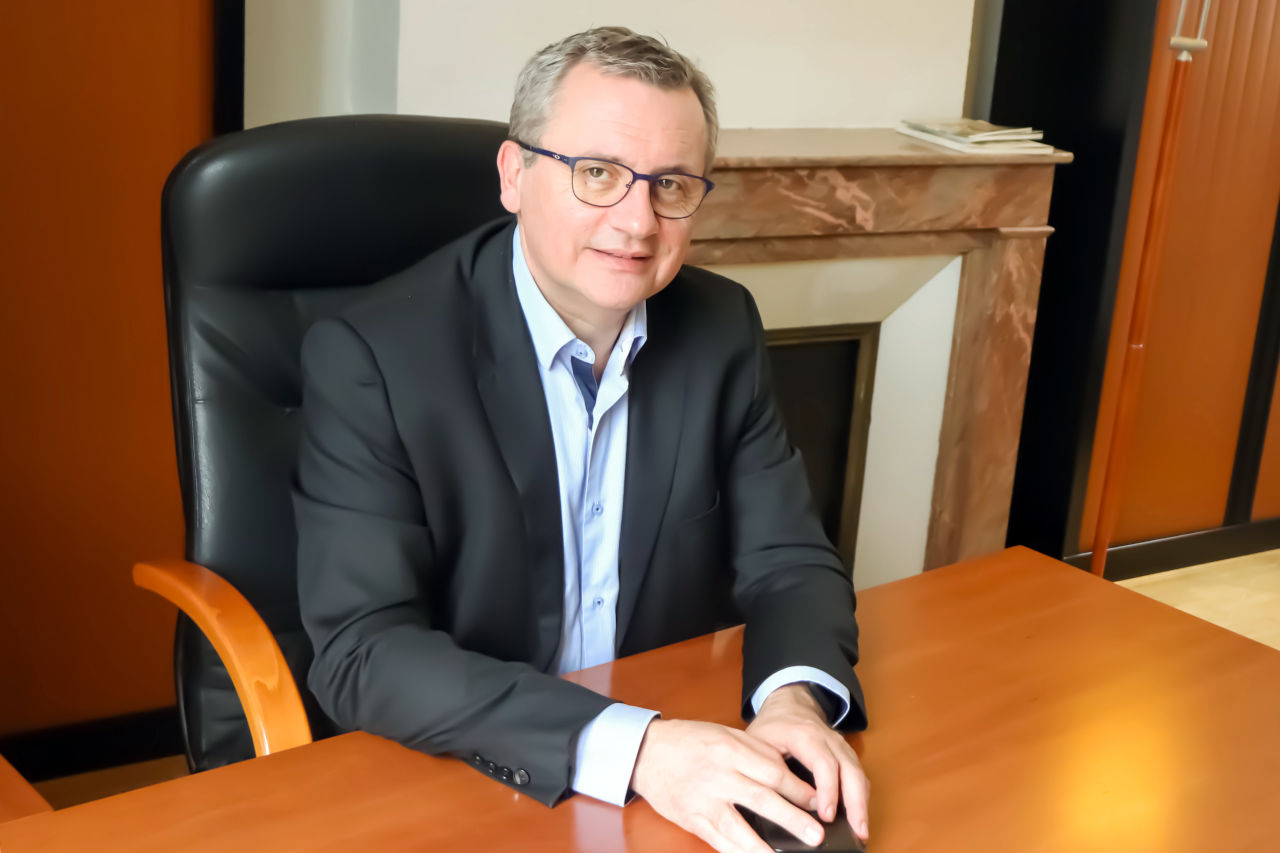
You have just taken office as Chief Administrative Officer (CAO) at the University of Montpellier. Can you explain to us what the role of a CAO entails?
The Director General of Services is, to use a metaphor, the conductor of the administration. His or her scope of responsibility includes not only central services but also those within the academic departments (UFRs), schools, and institutes, as well as within research units. His or her role is twofold: to help define institutional policy and to oversee its implementation in both administrative and technical terms.
So is it a role that’s as much political as it is administrative?
Absolutely! We tend to overlook the political aspect, but it’s clearly outlined in the regulations governing the role of the chief administrative officer. Alongside the president and vice presidents, he helps shape institutional policy, even though he himself is not an elected official. This is what sets him apart from what were previously known as secretaries-general, who did not have this political dimension.
You just said it yourself—you weren't elected. How were you recruited?
This is a call for applications published on the PEP, the Public Employment Portal. Once an application is selected, the university president submits the candidate’s name to the Minister of Higher Education and Research, who then appoints the candidate.
Is this position temporary?
I am on a four-year secondment, renewable once, at the same university.
At theUM , you’re known as the vice president of the board of directors (VP-CA)—a position you held from 2015 to 2022. Why did you switch tothe “other side”?
I accept this responsibility with great humility, and if I applied for this position, it is first and foremost because I know I can count on a competent administration and staff. It’s also true that, as Vice President of the Board of Directors, I worked on most of the issues alongside the Chief Administrative Officer. Each of us played a well-defined yet complementary role. Today, I’m well-versed in these issues, so why not move to“the other side” to implement a policy that I helped define as Vice Chair of the Board? Besides, I enjoy challenges, and this one is a way for me to reinvent myself while continuing my work.
At theUM, you’re also known as a professor of management sciences, particularly at the IAE. Is this the first time the University has appointed a member of the Professor (EC) to this key position?
It’s true—this is a first. It’s good that, over the course of an institution’s history, there can be a succession of chief medical officers with diverse backgrounds. Pascal Beauregard came from the university administration. Romain Jacquet was the deputy director of a hospital, and I am Professor.
Has it been noted that this choice is unusual in the French public administration?
Some people may have concerns or view this as a challenge to the expertise available within the civil service. But that is not the case. I believe that a diversity of backgrounds can only be a plus; in fact, the IGESR report on the role of the Director General of Services (DGS) supportsthis view.
What do you mean?
The Chief Administrative Officer must be able to communicate with the entire university community—not only with administrative and technical staff, but also with Professors, faculty, and researchers. However, the report highlights a strain in this dialogue and recommends breaking down barriers between administrative staff and Professors. For example, we must implement many reforms stemming from the Multi-Year Research Act (LPR); being a “ Professor ” makes things easier because I speak the same language and understand their situation.
Do we also need to speak the language of BIATS?
That’s right, and as it happens, in my previous positions—notably at the former UM2—I served as Executive Vice President in charge of BIATS from 2012 to 2014. I have a genuine interest in administrative and technical matters, and those who have worked with me can attest to that, but it is by my actions that I will be judged.
Among your previous positions, the title of interim administrator appears several times…
Yes, three times. I served as interim director of the Béziers IUT in the early 2000s when it became a fully-fledged IUT. Then in 2016, during the merger of the AES (Administration, Economics, and Social Sciences) and the ISEM (Montpellier Institute of Business Sciences), which resulted in the creation of MOMA. And finally, in 2018, when the president appointed me to the board of the School of Law and Political Science for nine months.
You’re joining us at a time when the health crisis has profoundly disrupted the way we work. Does that change the situation for you?
The health crisis has called our ways of working and our social relationships into question. At times, it has strained social bonds. We need to rebuild those connections, but I am very optimistic in this regard because new forms of solidarity have also emerged during the health crisis, as evidenced by the remarkable mobilization of the Professors, faculty, and administrative and technical staff in central services and across the university’s various units to ensure that education continues to be provided to students.
The time has come for us to get together again. To rediscover those moments of camaraderie in our departments, to meet one another, to share ideas… It’s very important.