The School of Pharmacy is piloting a health services program
Mandatory health service for health sciences students took effect at the start of the 2018 academic year. At theUM, this program—which promotes primary prevention* among priority populations—applies to students in the medicine, pharmacy, midwifery, and dentistry programs. Here is an update on its implementation at the Faculty of Pharmacy.
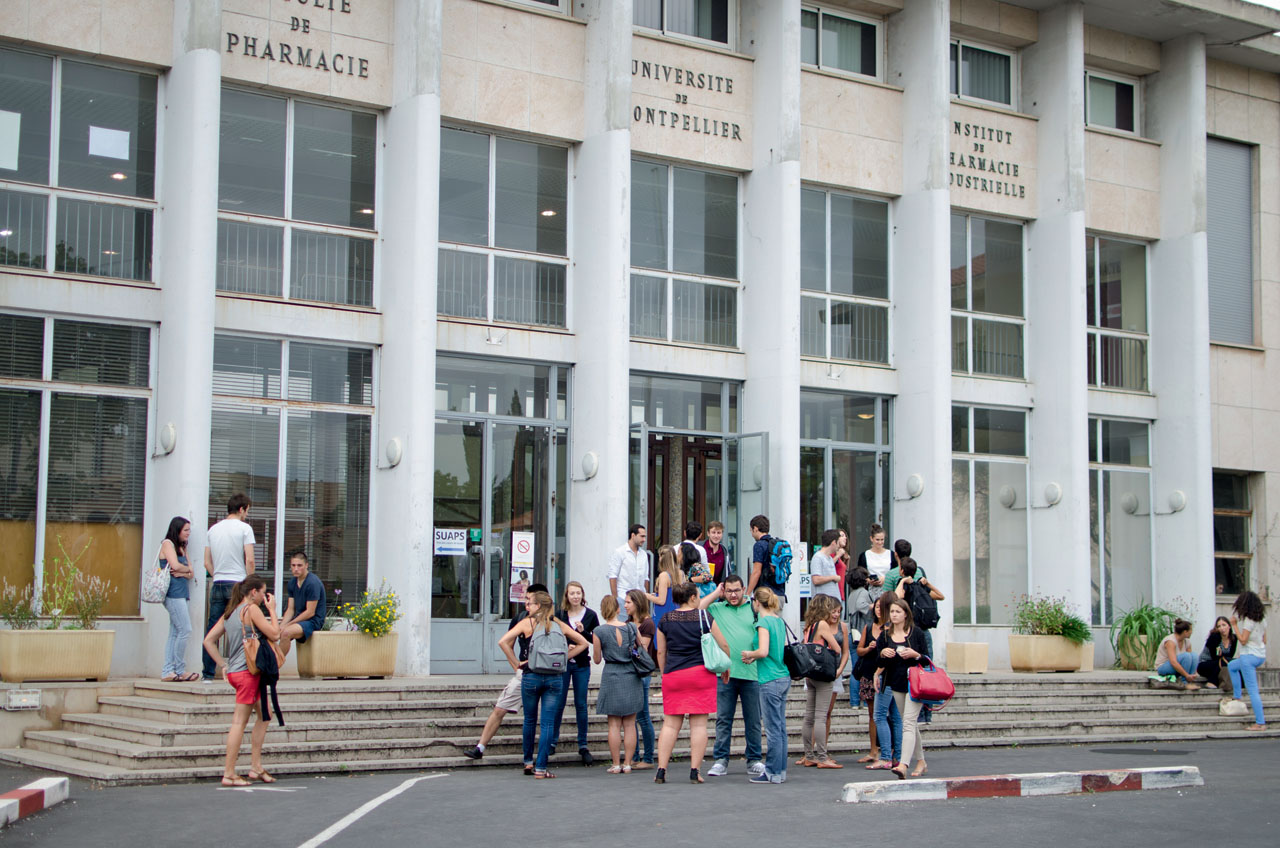
“When one young person talks to another, trust and dialogue develop more easily. The same should be true when it comes to preventing health risks,” explains Laurence Vian, who is convinced of the educational value of the health service. Since September, the dean of the School of Pharmacy and professor of toxicology has been overseeing the implementation of this complex program within the school. “The health service became operational almost immediately after its creation, without any associated funding. Faculty members are working hard to ensure its successful implementation. Nevertheless, questions remain, such as compensation for students who will travel throughout the region to deliver a prevention message for three days in 2019 and then for three weeks in subsequent years, ” she recently remarked.
Primary Prevention
To address inequalities in access to health information, the 90 fifth-year students in the community pharmacy program will reach out to populations far from the university—particularly the most vulnerable, including young people—to prevent health risks. “When they face the health issues their patients bring to the counter tomorrow, future community pharmacists will need to convey messages about primary prevention. They will have to explain their knowledge in layman’s terms to ensure that their messages are understood by all audiences, ” explains Laurence Vian, who sees the health outreach program as an excellent methodological exercise.
Concrete Actions
“Our fifth-year students have the necessary background to lead a simple addiction prevention initiative. Equipped with fun and educational kits, they benefited from the pedagogical guidance of faculty members from the School of Education, who trained them over a short period to develop an effective teaching approach,” explains the dean of the school. For the first year of the health service’s implementation, students from the Faculty of Pharmacy will conduct sessions over two or three days in classes ranging from first grade through twelfth grade at schools in the Gard, Aude, and Hérault departments. These mandatory sessions will last 45 minutes and will be conducted in pairs in split classes of no more than 12 students, in the presence of the school’s health coordinator. These are optimal conditions for addressing a critical public health issue: protecting children, adolescents, and young adults—who, in 2019, continue to be the primary victims among the French population— from the risk of addiction and its devastating effects.

Fun and educational kits on addiction—including question-and-answer cards and board games—were provided to students to help them carry out their primary prevention initiatives.
* Primary prevention includes measures designed to reduce the incidence of a disease, decrease the number of new cases, or delay the onset of initial symptoms.
The Health Department as seen by…
Hélène Fenet, professor of public health, responsible for the administrative and educational organization of the health services department
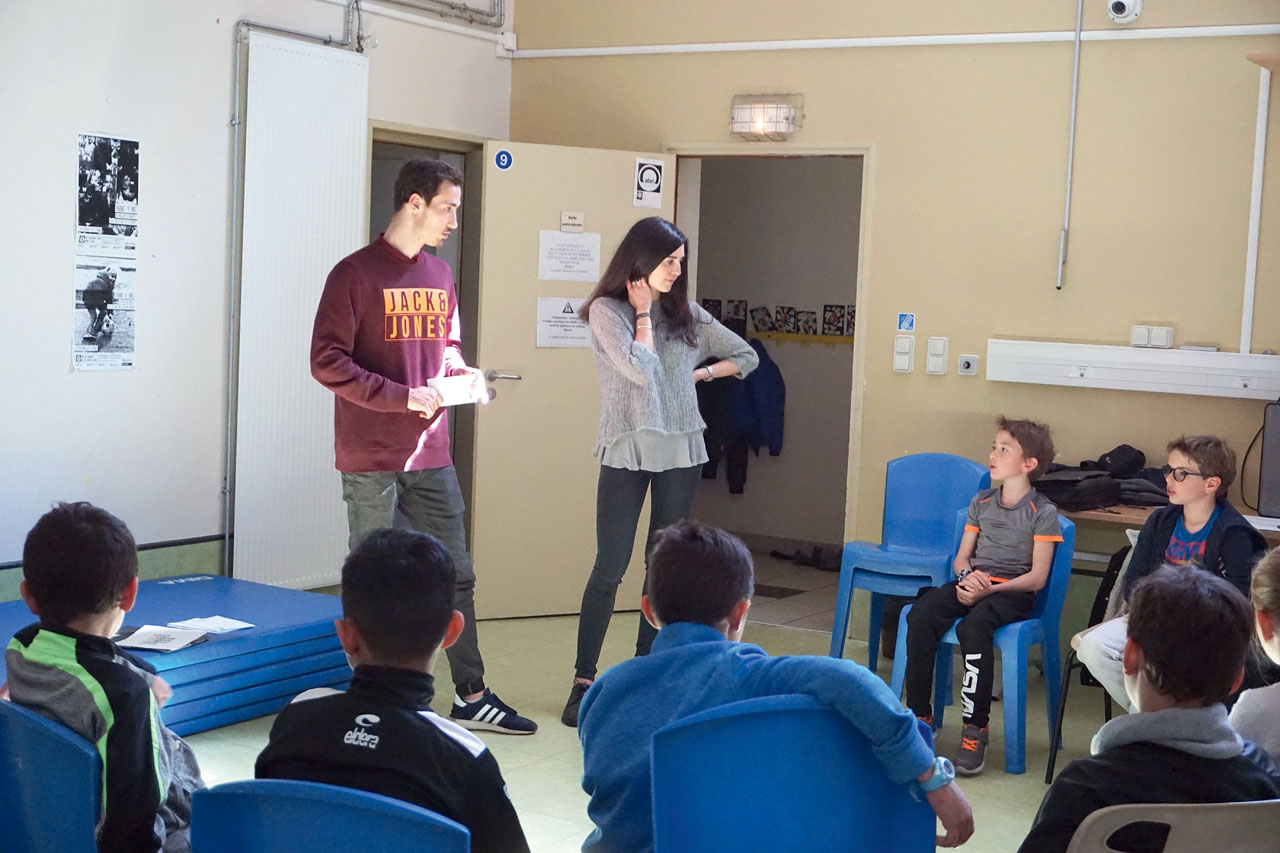 “The health service is a wonderful opportunity for pharmacy students to develop their health education skills to provide more effective primary prevention. This project was developed in collaboration with the Regional Health Agency and the regional education office, which identified the topics to be addressed in schools. Our students carried out initiatives related to their academic training, including in the areas of addiction (tobacco, alcohol, hard drugs, screen time, and internet addiction, etc.) and nutrition.”
Hajar Hadjseyd, a fifth-year pharmacy student
“Assigned to Gaston Darboux High School in Nîmes to perform my health service, I will be working to raise awareness among 10th, 11th, and 12th graders about the risks of screen addiction. I’ll start by asking them what addiction means to them so that I can build on that and provide them with essential educational information about the real and often overlooked risks of regular and prolonged use of various screens.”
The School in Numbers
- 2,971 students
- 356 master's students
- 110 undergraduate students
- 756 PACES students
- 100 students in audiology
- 72 oenology students
Training on Flu Vaccinations
To improve vaccination coverage and reduce the number of annual deaths caused by seasonal influenza, the Occitanie region was selected in 2018 as a pilot region for a program allowing community pharmacists to administer flu vaccines. At the end of the summer, the School of Pharmacy launched a continuing education course on “flu vaccination,” initiated by Professors Jacqueline Azay-Milhau, Agnès Muller, and Gilberte Marti-Mestres.
Intended for licensed and assistant community pharmacists, this one-day training session was led by faculty members in partnership with doctors and nurses fromthe Bouisson-Bertrand Institute. Fifth-year pharmacy students also receive this training as part of their curriculum, with support from the Regional Health Agency and the Order of Pharmacists. The success of this pilot program is expected to lead to the expansion of in-store flu vaccinations to the rest of France in the coming months.