The School of Dentistry Is Embracing Digital Transformation!
The School of Dentistry is piloting practical training for its students using virtual simulators. This innovative program is virtually unique in France.
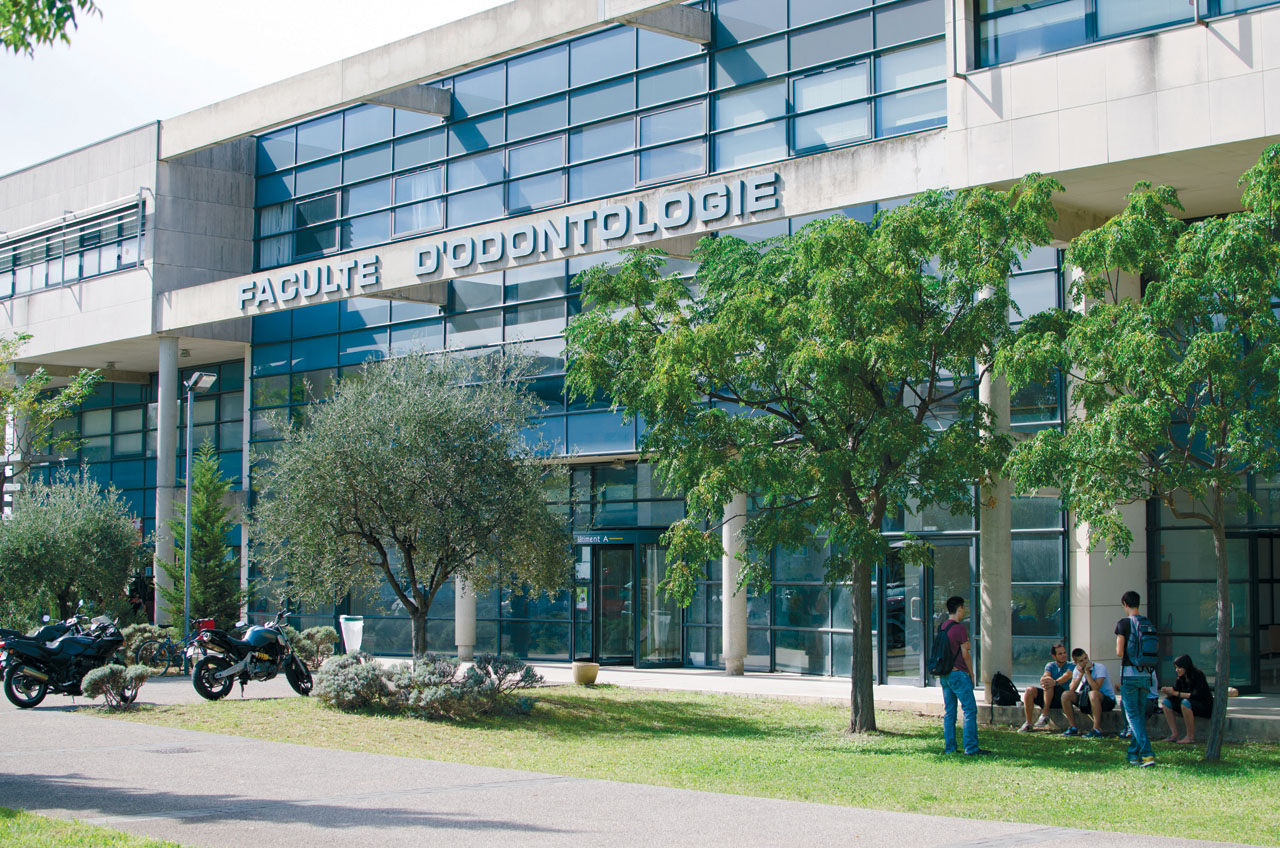
In September 2018, virtual reality made its debut at the School of Dentistry. Five haptic simulators[1] —among the very first in France—were unveiled as part of the renovation of two laboratory classrooms. This marked a historic first step toward digitizing the training of dental students. “Working on simulators allows students to refine their technical skills. It also enables them to acquire the same skills as they would by working on resin teeth, but in a more environmentally friendly and cost-effective way, ” explained Jean Valcarcel, dean of the faculty, recently.
Customizable Training
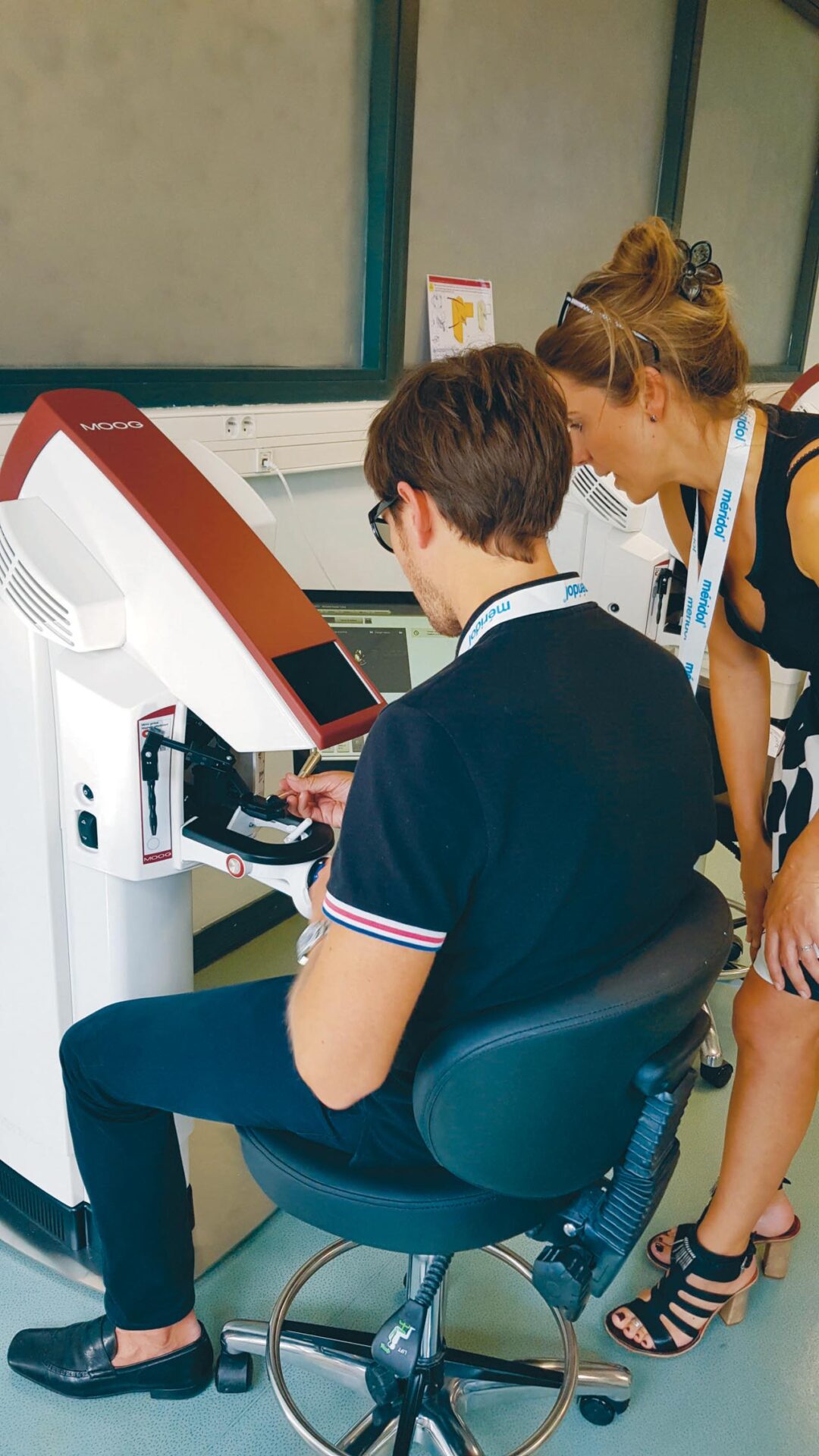 Tasked with training students in the use of these new machines, Ivan Panayotov and Bruno Picart now offer students who are interested the opportunity to practice, assess their skills, and improve at their own pace on these simulators. During one-hour open sessions, each student is assigned a machine on which they can perform a series of manual dexterity exercises.
“The student chooses the type of exercise and the instruments they need. They then proceed to remove the decayed tissue; during this phase, the virtual reality simulator allows them to view all their movements on a screen and—most importantly—to physically feel the difference in the resistance of dental tissues (decay, enamel, dentin) to drilling! Simulator exercises thus allow students to practice under conditions that closely resemble real-world patient care settings and to improve their manual dexterity using direct vision and, above all, indirect vision (with a mirror),” explains Ivan Panayotov along with his colleagues Bruno Picart, Sofia Dubois, and Marie Ceccotti, who observe and evaluate in real time, during each session, the work performed simultaneously by the students at the machines (precision, speed of movements, and quality of the therapeutic treatments performed). A grade is assigned at the end of each session, allowing us to track each student’s progress from one week to the next.
“Working conditions on a haptic simulator are actually quite close to reality, but not identical. For example, the machines do not replicate patients’ saliva or breathing movements. Similarly, the view on the 3D screen is not partially obstructed by the cheeks or the tongue, as is the case in reality,” says a former user who, like everyone else who has tried them, sees these new machines as a wonderful training supplement, particularly for students in preclinical training (the phase of learning and refining dental procedures).
The new virtual reality simulators acquired by the faculty, which were the subject of an internal satisfaction survey last spring, are now widely praised by both students and faculty. Very recently, their use was seamlessly integrated into the assessment curriculum for second- and third-year students. At the School of Dentistry, the transition to online student training is now well underway.
[1]Relating to the sense of touch
The School of Dentistry Through a Student's Eyes
Marie Teyssier, 24, a sixth-year dental student
“Having ranked highly upon completing the PACES program, I decided to pursue dentistry after a clinical internship at a private practice. I was among the first students to try out the faculty’s new simulators. This allowed me to assess and improve my manual dexterity through five training sessions, particularly in indirect-view drilling—a technique that students often find particularly daunting!”
Key Figures
- 67 Professors ;
- 141 undergraduate students;
- 145 master's students;
- 125 students in a 2-year short-term graduate program;
- 241 students in 3- or 4-year doctoral programs.
Digital Technology in Clinical Dentistry
As early as 2007, CFAO[1] made its debut at the dental care center, under the leadership of Philipe Gibert, to offer patients optical impressions for the design, on-site computer-aided fabrication, and placement of ceramic dental prostheses all in a single appointment. The integration of digital technology into dental care protocols gradually expanded, culminating in 2015 with the creation of the first CFAO dental application unit in France.“Jean Valcarcel, dean of the faculty, and Sylvie Montal, department chair, aim to make the use of digital tools standard practice across all departments of the dental center and, of course, to teach students at the faculty level the theoretical mastery of these new techniques, which are undeniably the fastest, most precise, and most effective known today,” explains Michel Fages, head of the “CAD/CAM Prosthetics” medical unit at the University Hospital.
[1] Computer-Aided Design and Manufacturing