Managing Absenteeism in Public Hospitals: The Harmful Effects of Overly Fragile Solutions
In 2020, the absenteeism rate in French hospitals averaged between 9.5% and 11.5%, according to figures from a survey by the French Hospital Federation, compared with a rate of between 8.5% and 10% in 2019, before the COVID-19 crisis.
Nathalie Commeiras, University of Montpellier and Véronique Achmet, University of Montpellier
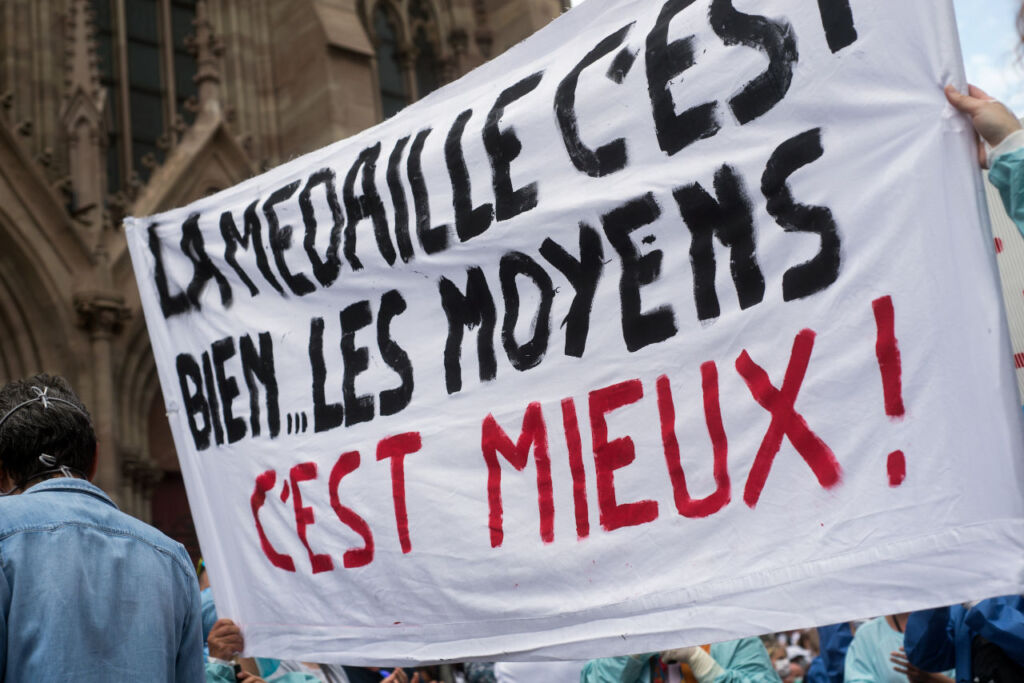
Although the health crisis led to only a relatively small increase, these figures stand in stark contrast to the rest of the economy.
According to the results of the12th Ayming Survey on Absenteeism and Employee Engagement, France recorded an absenteeism rate of 5.11% in 2019.
To understand this discrepancy, we conducted a study analyzing the management of absenteeism in public hospitals and its effects on nursing staff, healthcare administrators, and patients, against a backdrop of budget cuts and deteriorating working conditions: increased workload, time pressure, computer-monitored work schedules, fragmented work, aggression from patients and their families, etc.
"Resourcefulness"
Our study shows, in particular, that this approach to managing absenteeism has certain shortcomings: it is generally implemented internally, at the department and/or division level. Furthermore, the solutions tend to be based on “making do” and direct arrangements between the parties involved, which can have harmful consequences for the staff.
Healthcare managers therefore demonstrate a high degree of responsiveness and resourcefulness in managing absenteeism in emergency situations. As we have shown in our research, they prioritize self-substitution and schedule adjustments to manage all absences, not just short-term ones. Through self-replacement, healthcare managers call staff back from their time off (weekly or reduced work hours). Through schedule adjustments, they manage absenteeism by making the most of the available staff. Managers also rely on interdepartmental staff reassignment and, when available and of sufficient size, the replacement pool.
As a result, cooperation appears to be developing between the human resources department, senior healthcare managers, and healthcare managers in certain facilities to manage absenteeism in a more collaborative manner.
As one senior healthcare executive interviewed for our study noted:
“Every 15 days, we hold a so-called staffing meeting where the six senior healthcare executives meet with the director of nursing, the hospital administrative officer (HR director), her deputy, and each senior executive outlines the staffing challenges they anticipate for the next 15 days.”
Absenteeism management thus tends to foster cooperation among the various stakeholders. Far from dividing them or pitting them against one another, the budget cuts imposed on healthcare facilities compel staff to work together to find solutions and workarounds amid deteriorating working conditions.
Managing absenteeism therefore strengthens interpersonal relationships. A strong sense of social support develops, on the one hand, within the team among the nurses, and on the other hand, between the nurses and the nursing supervisor.
Harmful consequences
However, as we have seen, this management approach has a number of negative consequences for both healthcare providers and patients. The main effects are as follows:
- Extreme fatigue among healthcare workers
With the use of self-substitution, working hours are constantly increasing, exceeding the work schedule chosen by the employee, making it impossible to take vacation, use time off in lieu of overtime, or rest, and thus leading to presenteeism.
This causes extreme fatigue among nurses, as one nurse explains:
"Let's just say that when coworkers work five days in a row, the fifth day is tough."
This situation can lead to long-term sick leave due to the physical and emotional exhaustion of nursing staff. Because they have to adjust their schedules on their own, nursing staff are subject to constant changes in their work schedules, which is a source of dissatisfaction and unhappiness at work.
- Psychological Abuse Against Nursing Staff
The results of our research—and more specifically, the netnographic study (based on messages from discussion forums) that we conducted—indicate that if a healthcare worker refuses to cover for a colleague during their time off (self-cover), they may be subjected to psychological abuse by healthcare managers, specifically psychological pressure or even harassment over the phone.
A post found on a forum illustrates this:
“If continuity of care is disrupted because we don’t come in on our days off, it’s certainly not our fault. The rest is intimidation and emotional blackmail.”
- Risks to the safety and quality of patient care
The use of cross-departmental staffing may lead to a decline in the quality of care, since the staff member providing care is unfamiliar with both the department in question and the patients.
A nurse interviewed shared her experience:
“We don’t know the patients, so we do the best we can. We don’t know the place or where the medications are […] we can feel completely useless.”
Finally, the previously mentioned lack of moral support among nursing staff raises questions about the safety of patient care. Although, as researchers, we were unable to obtain the number of incidents related to nurse fatigue (confidential information), a union representative was able to recount an incident with alarming consequences:
“Not too long ago, we had a chemotherapy treatment that was supposed to take 8 hours; the staff administered it in half an hour, and the patient nearly died—quite clearly… and there have been even more serious incidents, but of course, that information doesn’t leave the facility.”
Shortage of professionals
In response to the COVID-19 crisis, new “make-do” solutions (such as mobilizing medical students, recalling retired healthcare professionals, hiring temporary staff, and relying on overtime, etc.) have been implemented in parallel. But they remain insufficient.
The measures used before the health crisis are indeed insufficient to address the shortage of healthcare professionals. Although provided with additional financial resources (the 2020 and 2021 Social Security Financing Bills, the Ségur Healthcare Agreements, the Hospital ONDAM, etc.), hospitals were able to launch external recruitment campaigns, but their success was limited due to the shortage of medical staff and specialized caregivers resulting from the just-in-time strategy implemented to meet the requirements of New Public Management.
Certainly, healthcare professionals remain as committed and dedicated as ever, but they are also exhausted by this situation, with no end in sight. As the director of the Thau Basin hospitals noted (in a September 2020 article by France 3 Occitanie):
"Severe physical and psychological exhaustion among healthcare professionals who have not yet recovered from the first wave."
As a result, there is a high probability that absenteeism rates will rise, which will complicate the management of the health crisis.
Consequently, the hospital must act quickly encourage people to pursue a vocation, particularly among young doctors. A thorough review must be conducted of the employment and workforce management policies for healthcare professionals, as well as of efforts to enhance the status of these professions, leading to concrete results. The agreements of the Ségur de la Santé and, more specifically, the slight wage increase last September may, however, serve as a first step toward that goal.
Nathalie Commeiras, Professor of Human Resource Management, Montpellier Research Management (MRM), University of Montpellier and Véronique Achmet, Ph.D. in Management Science, Montpellier Research Management (MRM), University of Montpellier
This article is republished from The Conversation under a Creative Commons license. Readthe original article.