Meditation in Schools: Secularizing a Spiritual Practice?
Meditation is playing an increasingly important role in daily life, at work, and now in schools. Is its introduction into the educational sphere as insignificant as it seems?
Sylvain Wagnon, University of Montpellier
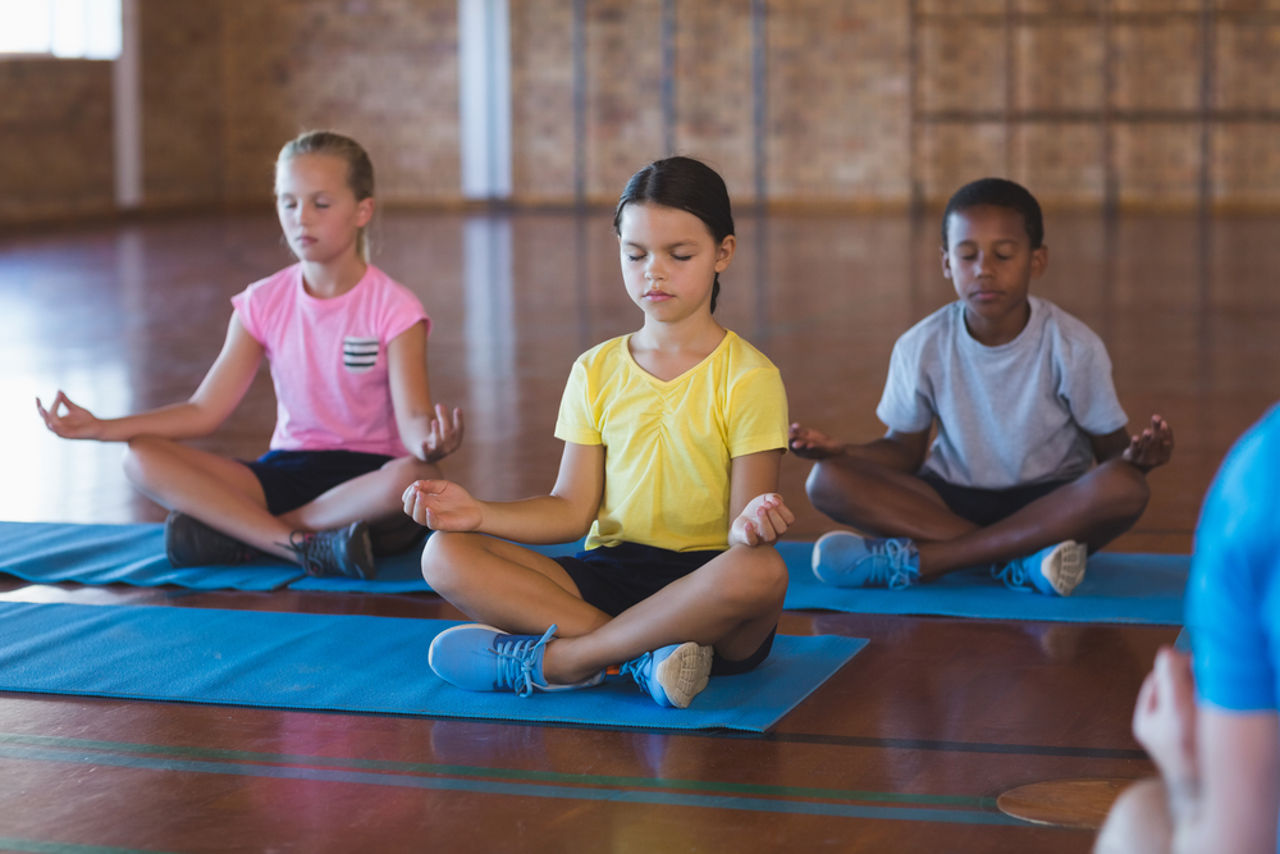
How can we explain the gradual shift of meditation from the “health” section of the media to the “education” section? The introduction of this practice—which has its origins in religion and Buddhism—into the public and secular educational sphere raises a series of questions about its definition, its methods, its connections to learning, and its goals. With the introduction of mindfulness meditation in schools, is it possible to secularize a spiritual practice?
According to Edouard Gentaz, a professor of developmental psychology, meditation yields encouraging results—admittedly, these results are still open to debate—in the fight against anxiety, stress management, and greater self-awareness.
The rise of this practice is supported by healthcare professionals, and psychiatrist Christophe André has enjoyed great success in bookstores with his writings on the benefits of meditation both in hospitals and in everyday life. Its integration into research programs and university medical curricula has become commonplace in cities such as Strasbourg, Paris, and Montpellier.
From the World of Work to Education
As a stress-management technique, meditation was bound to attract interest from the business world. As a result, mindfulness has, in just a few years, gained popularity among personal and business development coaches, who have embraced this practice as a tool to boostbusiness efficiency and enhance employee employability.
Furthermore, advances in certain areas of research seem to validate the use of meditation by demonstrating its benefits for the brain’s structure and function. Matthieu Ricard, the highly popular Tibetan monk and doctor of cellular genetics, consistently emphasizes the importance of the interactions between meditation and neuroscience, as well as the spiritual purpose of this practice.
Eline Snel’s bestsellers—and first and foremost her book *Calm and Mindful Like a Frog*, with a foreword by Christophe André—appear to mark the first step toward her integration into the educational sphere. In the wake of these books, which have become a sort of teaching method, there has been a flood of publications introducing meditation to children.
Between Education and Relaxation
These media successes—along with the benefits recognized by teachers themselves—have made it an educational tool that has been adopted by several education systems to improve students’ well-being, attention, and performance , as in Canada and the Netherlands.
Meditation helps cultivate children’s emotions, attention span, compassion, and resilience. The question, then, is how to implement this practice—which has spiritual roots and touches on psychology and the unconscious—in public schools. When teachers introduce it into their classrooms, is it really meditation? Or should it be viewed instead as a teaching tool, or as relaxation or sophrology sessions?
The Association for Meditation in Education appears to coordinate numerous projects without providing a real assessment or measurable results. An international program called MBSR (Mindfulness-Based Stress Reduction) is defined as a protocol for the use of meditation in education.
This integration into the educational sphere is actively supported by Emergences, an organization that seeks to promote all concepts and practices related to personal development. Among the members of this association are Christophe André, Mathieu Ricard, Frédéric Perez, Ilios Kotsou, Frédéric Lenoir, and Céline Alvarez, who jointly published the book *Transmettre*, a collection of essays exploring the connections between personal development and education.
A framing issue to be discussed
The religious nature of meditation is often glossed over, but it nevertheless seems necessary to engage in a genuine reflection on the integration of a spiritual practice into secular public education. It is important to understand the purposes for which meditation is practiced: simple relaxation, breathing exercises, developing attention to enhance learning, reducing school violence, personal empowerment, or enhancing the employability of future workers.
Can this practice be “compatible” with a secular school system? Is it the school’s role to teach mindfulness? If so, teachers must be trained. When we consider children’s “mindfulness,” the question arises of the responsibility of the school and teachers.
The school has not yet made a decision, leaving the door open to all kinds of approaches and definitions of mindfulness meditation, such as turning it into a Replacing Punishments. The Ministry of Education must address the issue of the growing number—and increasing diversity—of initiatives by organizations that are not always accredited, as well as teachers’ growing interest in this practice, which indeed opens up a whole new field of possibilities.
Sylvain Wagnon, Full Professor of Education, School of Education, University of Montpellier
This article is republished from The Conversation under a Creative Commons license. Readthe original article.