[LUM#16] The Mysterious Case of the Thau Bloom
Waters that suddenly turned green, oysters wasting away and dying in droves, a disturbing disappearance… Strange things are happening in the Sète lagoon as 2018 draws to a close. A curse or a natural phenomenon? To unravel this mystery, the “Eaux vertes” project team conducted an investigation throughout 2019 to track down a very, very, very tiny culprit. Its name? Picochlorum.
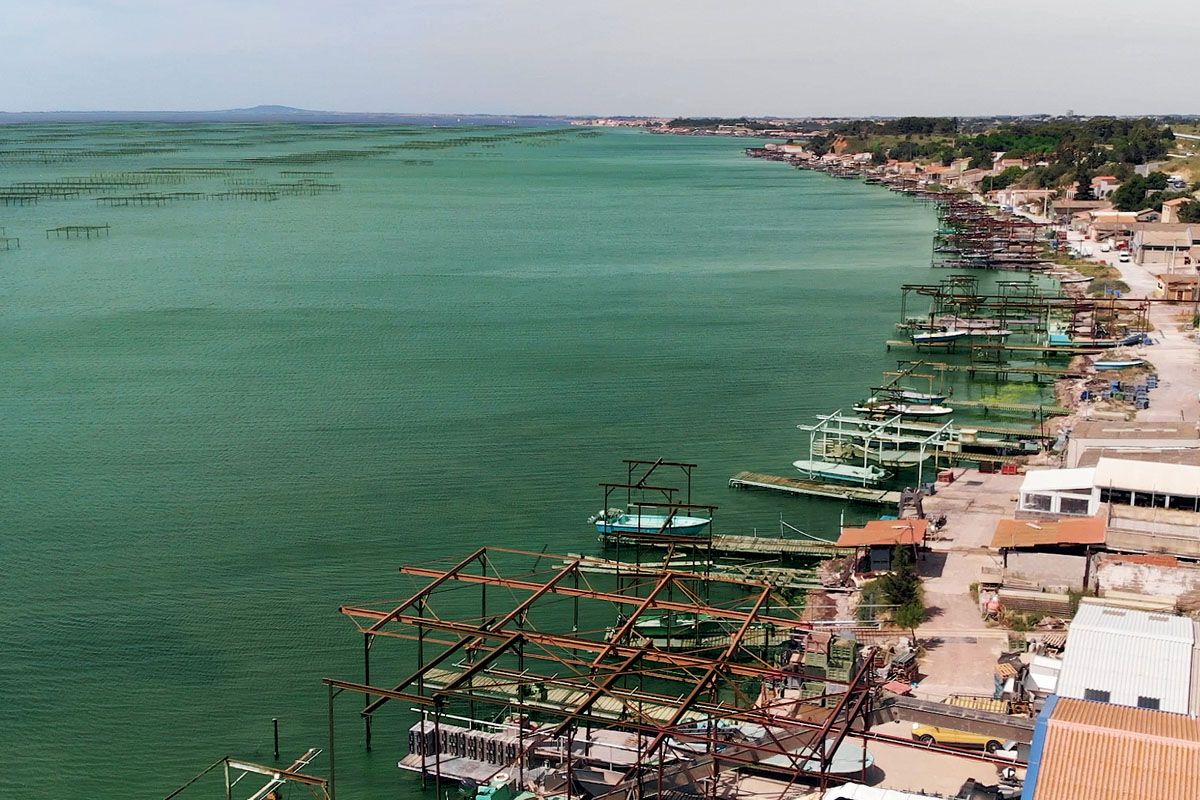
December 2018: The residents of Sète could hardly believe their eyes. The change had occurred in just a few days: the Thau Lagoon had turned green. Not watery green or greenish—no! Green! It came as a shock, especially since local oyster farmers had already been watching helplessly for two months as their oysters wasted away. In the labs monitoring the lagoon, there was a flurry of activity: “In the canals, everywhere, the water was green,” recalls Béatrice Bec, a researcher at the Marbec marine biology laboratory. “A bloom like that in the middle of winter was impressive, but above all, completely unprecedented in the Thau Lagoon.”
A Disturbing Disappearance
In scientific terms, a “bloom” refers to a sudden, massive proliferation of microalgae within an aquatic ecosystem, typically driven by rising temperatures and/or nutrient inputs, and responsible for this green color. Very quickly, Béatrice Bec and a team of scientists—including Franck Lagarde, a researcher atIfremer—launched the“Eaux vertes”project to understand the causes of this imbalance. Starting in January, samples were collected every 15 days at three different points in the lagoon and at two depths. “The entire lagoon was affected, with concentrations never before observed here: one billion microalgal cells per liter of water sampled! That’s starting to add up to a lot of suspects…”
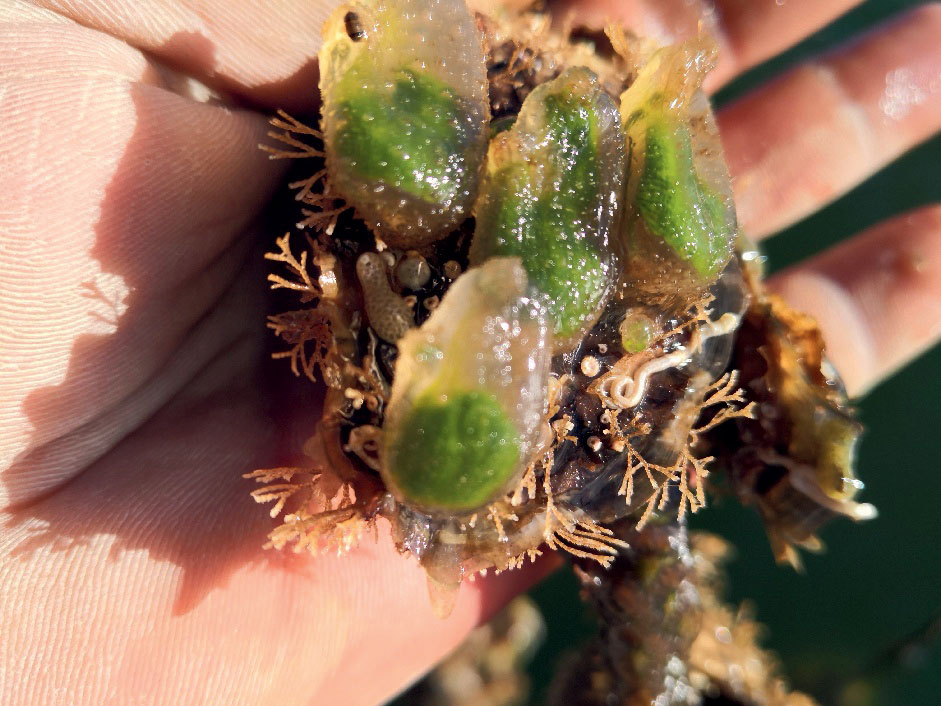
Even stranger, analyses reveal the near-total disappearance from the lagoon of diatoms—a group of microalgae that constitute the main food source for oysters, which trap them in their gills as they filter the water. In place of the diatoms, biologists have observed a massive presence of an unknown type of phytoplankton. “It looks like a tiny green ball, two to three micrometers in size ,” explains Béatrice Bec. “This single-celled microalga is so small that it isn’t trapped by the oysters’ gills—and even if it were, the oysters wouldn’t be able to digest it because they lack the necessary enzymes.” So much for the mystery of the emaciated oysters—but the culprit still remains unnamed.
Such a Small Culprit
And for good reason: the microalgae is so small that biologists cannot identify it under a microscope. To help them, they turned to molecular analysis, and it was CNRS researcher Ariane Atteia who managed to identify the culprit. Its name: Picochlorum! “This picophytoplankton has already been identified in the Adriatic Sea, around Roscoff, and in the waters off the Côte Vermeille, but never in such large quantities. It can survive in a fairly wide range of temperatures and salinity levels, which has allowed it to thrive under winter conditions. ” But why such a bloom, and why now? What exceptional factors allowed it to emerge? These are the questions haunting the lagoon’s residents as the weeks go by, the waters remain green, and the oysters remain meager.
To answer this question, scientists are examining data compiled by REPHY—Ifremer’s phytoplankton observation and monitoring network responsible for tracking the lagoon—and comparing the 2018 analyses with those from previous years. The first finding: the summer of 2018 was marked by a “malaïgue,” meaning “bad waters” in Occitan. “Malaïgue is a bit like the lagoon having a ‘liver attack’ from being overfed with nitrogen and phosphorus. These anthropogenic inputs promote excessive growth of macroalgae, which, as they decompose, lead to an imbalance in oxygen levels in the absence of wind and during periods of intense heat. This malaïgue has led to a destabilization of the diversity and abundance of phytoplankton communities,” explains Béatrice Bec.
A Harmonious Synergy
With the September winds blowing away the malaïgue, the story could have ended there, except that 2018 was also a very rainy year, marked by a succession of storms and thunderstorms. These natural phenomena, once again, contributed to an additional influx of nutrients into the lagoon. “What we observed in retrospect is that as early as August, Picochlorum was present at low levels in the lagoon, which had already been destabilized by the malaïgue. It was able to take advantage of a synergy of exceptional climatic and environmental events that ultimately led to this bloom.”
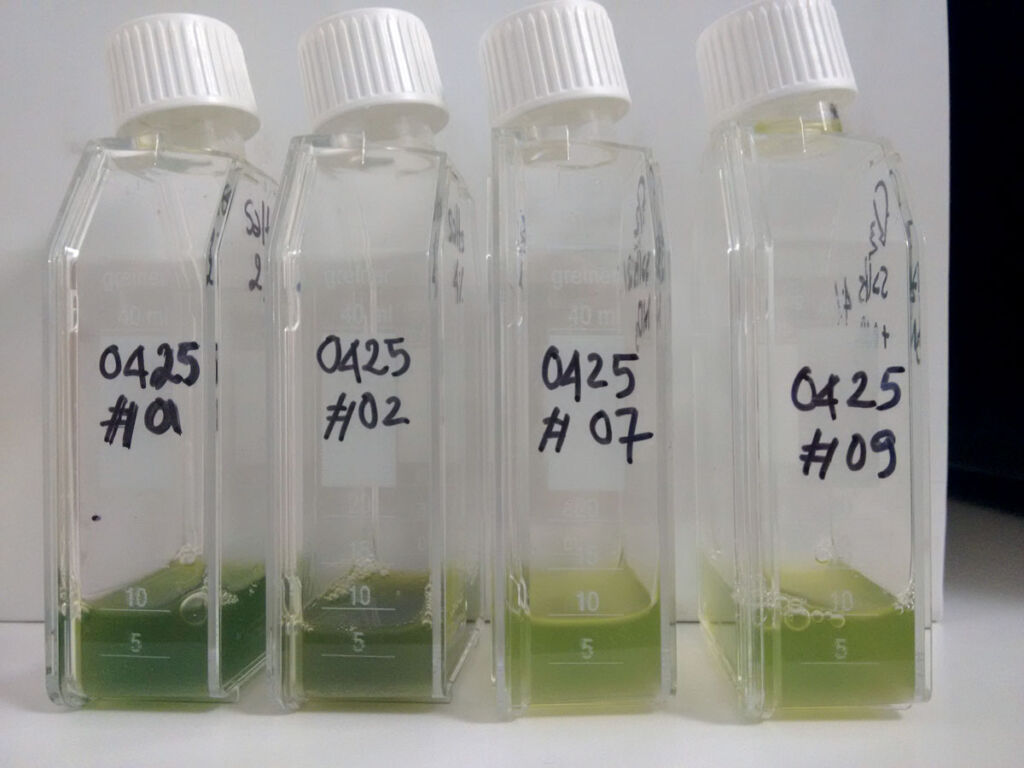
In the end, the lagoon’s inhabitants—such as oysters and diatoms—had to wait a year for their ecosystem to naturally regain the deep blue color of its waters. As for Picochlorum, it is serving its sentence at the Marbec laboratory, where experts take turns trying to get it to “talk”: “We’ve isolated a strain and are testing its physiological capabilities, nutritional requirements, preferred temperatures… ” Another goal is to develop molecular tools to monitor the lagoon and potentially set up an early-warning system against this tiny but highly resilient invader. “We even had some fun depriving it of oxygen… It’s doing just fine,” concludes Béatrice Bec.
* Marbec (UM —CNRS—IRD—Ifremer)
Check out theUM podcasts, now available on your favorite platform (Spotify, Deezer, Apple Podcasts, Amazon Music, etc.).