# Science Is Fun: From Seabird Migration to the Earth's Movements
Welcome to *La science s’aMuse*, the science show co-produced by theUM and Divergence-FM, which takes you on a journey through the archipelago of Muse laboratories. This week, Manon Clairbaux, a researcher at CEFE, presents the largest study ever conducted on the effects of global warming on seabird migration. In the second half of the program, Sandrine Baudin and Christel Tiberi introduce us to the seismometer installed at the Restinclières estate by Géosciences Montpellier.
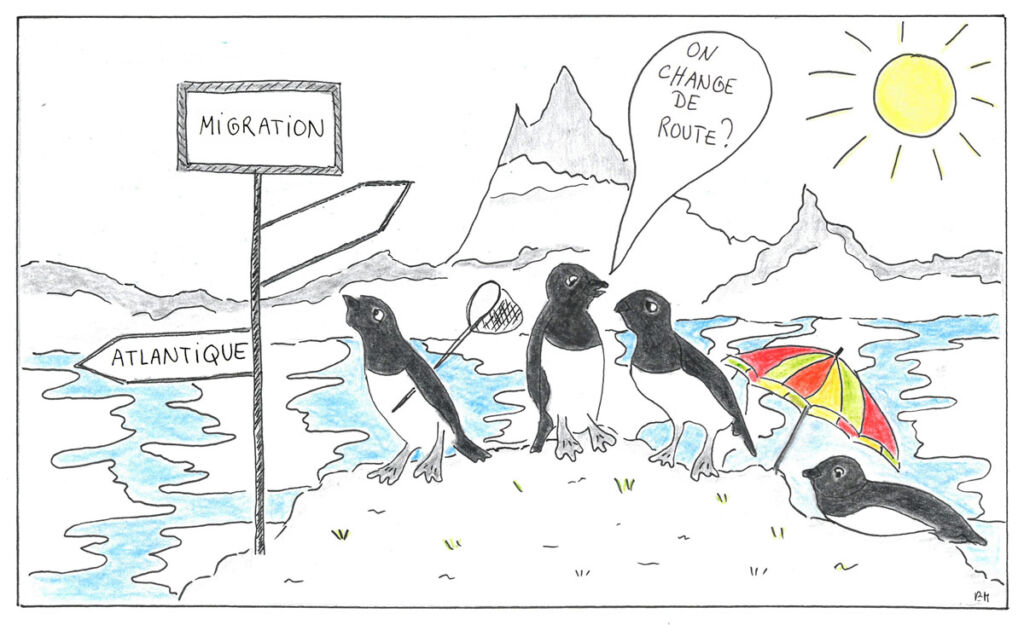
And for this next leg of our journey, we invite you to enjoy the open sea. Watch the waves roll in, breathe in the sea spray, and observe the seabirds that accompany us from one port to the next. Seagulls, of course, but also black-legged kittiwakes, puffins, little auks, and guillemots.
Our guest today is very familiar with all these species, as she has just published the largest study ever conducted on seabird migration in the journal *Global Change Biology*. The result of a collaboration among 25 research laboratories, this study examines the migratory patterns of these birds. Where are their wintering grounds? What are their ecological characteristics? Is global warming having an impact on these areas? More specifically, scientists are wondering what benefits the North Atlantic seabirds might derive from compliance with the Paris Agreement—in other words, limiting global warming to 2 degrees. We’re discussing this today with Manon Clairbaux, a researcher at the Center for Functional and Evolutionary Ecology.
For more information:
- See the CNRS press release
- Clairbaux, M., Fort, J., Mathewson, P., et al. Climate change could reverse bird migration: trans-Arctic flights and residence at high latitudes in an ice-free Arctic. Sci Rep 9, 17767 (2019).
- This fishing practice is starving seabirds
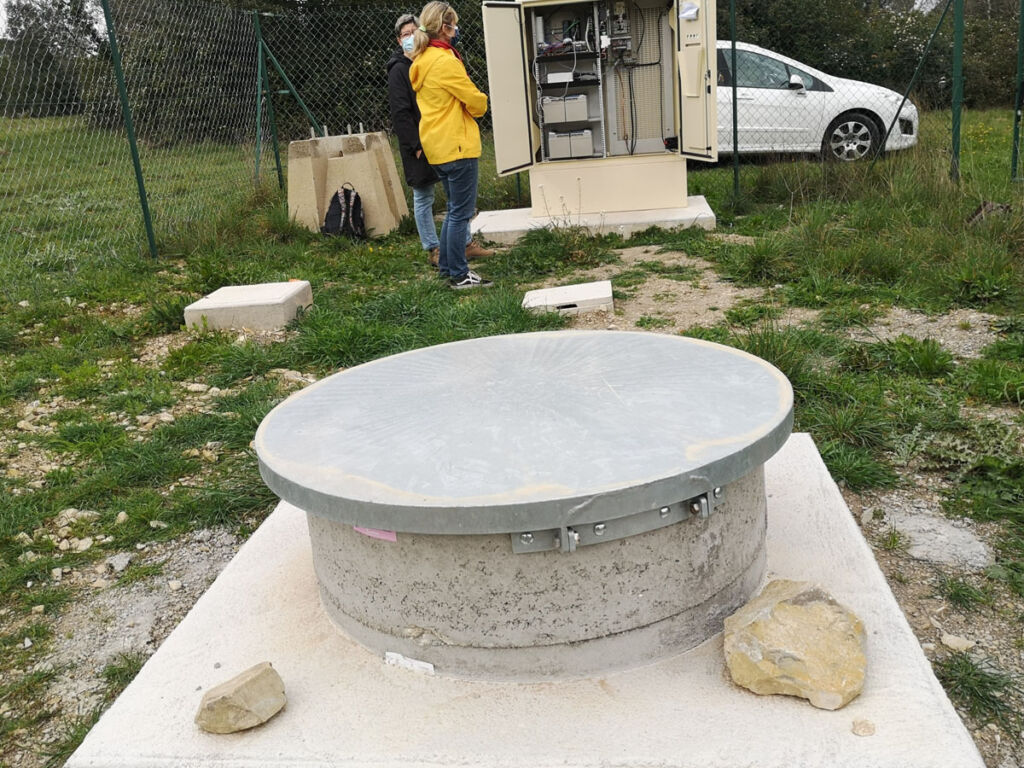
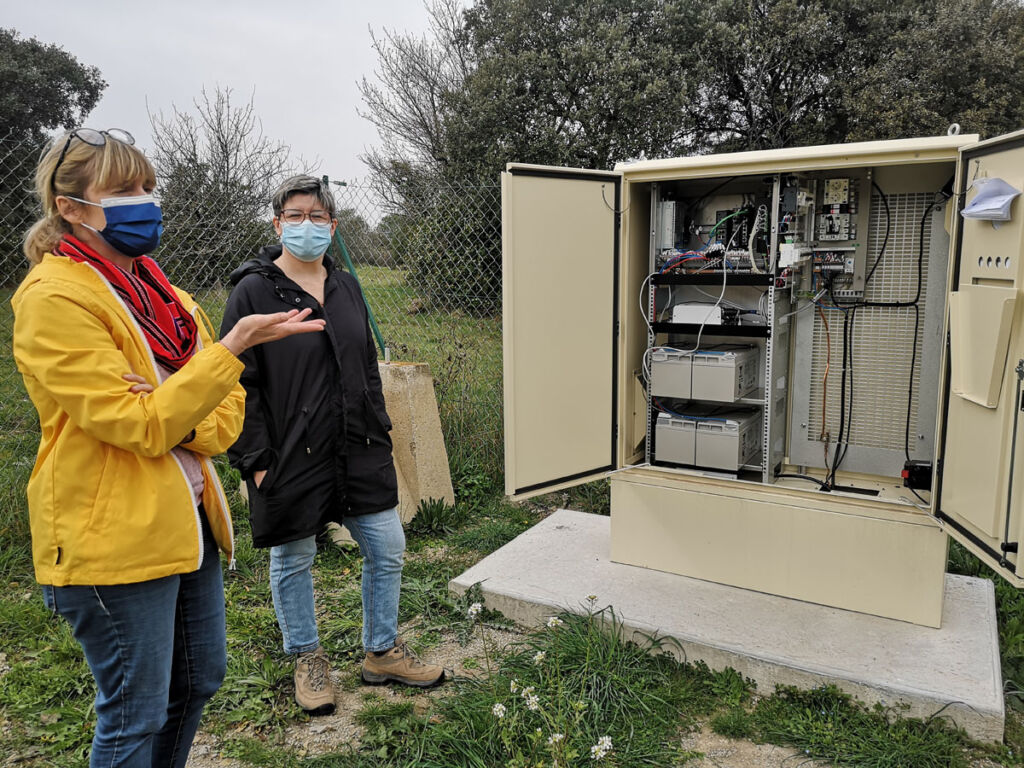
In the second part of the program, we’ll take you to the Restinclières estate. A few kilometers from the city, a strange device—located six meters underground—records ground movements from the Mediterranean Sea all the way to the far reaches of Japan. This device is a seismometer for the French Seismological and Geodetic Network, installed there as part of an agreement withthe OREME Observatory of Universe Sciences. And Sandrine Baudin and Christel Tiberi, from the Montpellier Geosciences Laboratory, are here to explain it all to us.
Science Is Fun—you’ve got the map, let’s go!
Co-production: University of Montpellier and Divergence-fm
Host: Lucie Lecherbonnier
Interview: Aline Périault/Lucie Lecherbonnier
Report: Aline Périault/Lucie Lecherbonnier
Editing: Aline Périault
Director: Bruno Bertrand
Tune in to the show “A LUM LA SCIENCE” on Divergence FM 93.9