[LUM#13] Africa Beyond the Pandemic
But what is happening in Africa? To answer this question, a serological test tailored to the African context is currently being rolled out in six countries. The goal is to gain a better understanding of how the virus is spreading on a continent that appears to be less affected by coronavirus-related deaths than the West, and thereby limit the harmful effects of an ill-suited response.
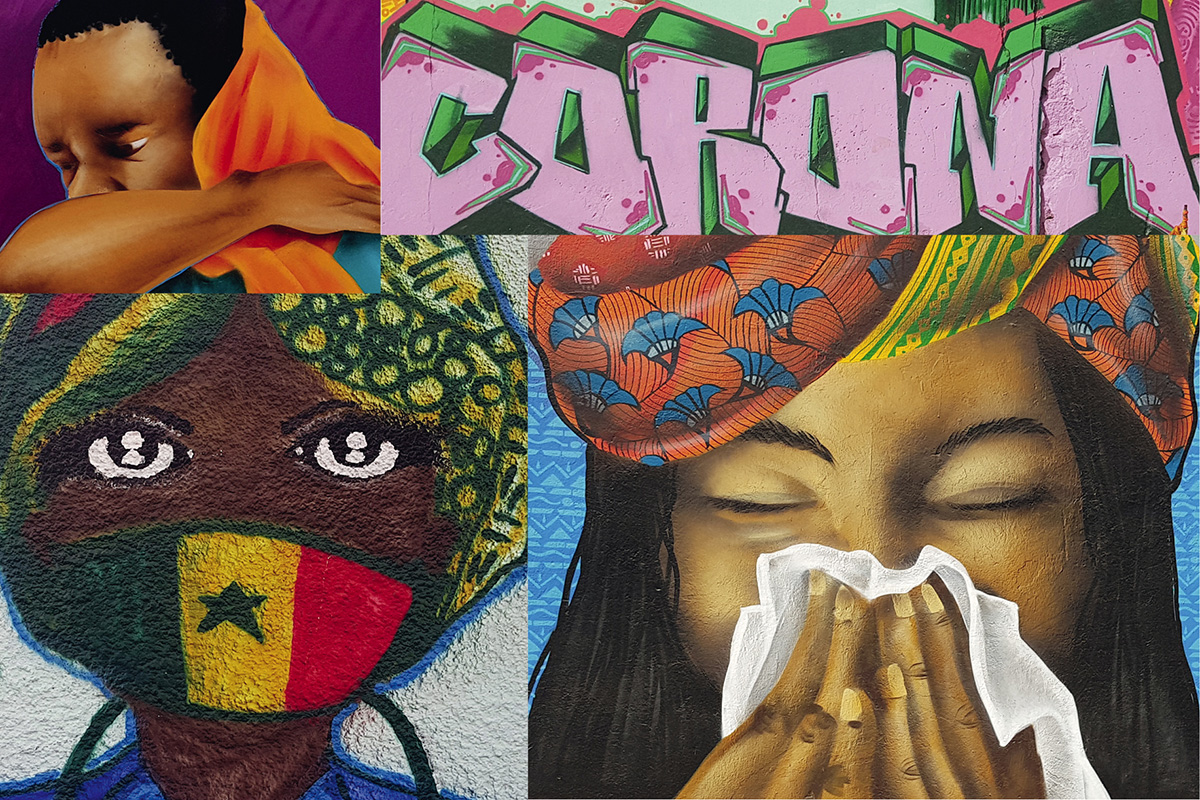
In Africa, the COVID-19 pandemic began two or three weeks after the one that struck Europe. “We might have feared the worst, yet—with the exception of a few countries like South Africa—we did not see the tsunami of severe hospitalizations and fatal cases observed in the West,” reports Eric Delaporte, a researcher at the TransVIHMI* laboratory and an infectious disease specialist at Montpellier University Hospital. How can this difference be explained? That is the central question of the ARIACOV project, led by TransVIHMI and spearheaded by this physician, who is well-versed in fieldwork in Africa, where he has monitored outbreaks of AIDS and Ebola, among other things.
Testing for Coronaviruses in General
Many factors may explain the lower Covid-related mortality in Africa, foremost among them demographics and the youthfulness of a population that is inevitably less susceptible to severe forms of the disease. Other factors, particularly environmental ones, may play a role, but as Eric Delaporte points out, “Given the limited diagnostic capacity in these countries, the first question is whether or not the virus is spreading and to what extent it is spreading within the population in order to assess the dynamics of the epidemic, ” explains the coordinator of the COVID Sud Task Force (ANRS, REACTing/Inserm, IRD).
To address this initial question, a large-scale epidemiological study was launched in the six partner countries: Senegal, Ghana, Guinea, Cameroon, Benin, and the Democratic Republic of the Congo. To carry out these screening campaigns, a serological test specifically adapted to the African context was developed. What makes it unique? It contains markers for various coronaviruses, not just SARS-CoV-2. “The goal is to be able to distinguish between people who have had SARS or MERS, but also to include markers for seasonal coronaviruses and coronaviruses found in African wildlife [see the article‘Bats Under the Radar ’],” explains the researcher.
Why test for coronavirus infection—even though these viruses are present in wildlife but have never caused disease in humans? “Because humans may very well have been exposed to these coronaviruses without developing any illness or symptoms, but having developed antibodies.” This exposure could be the source of cross-immunity and thus explain the virus’s limited spread due to a form of partial protection. “It’s just a hypothesis, but it needs to be studied, ” says Eric Delaporte.
Tailor the response to the actual outbreak
Several surveys will be conducted in various countries, each involving a sample of at least 1,500 people, and repeated every two months if possible to assess the dynamics of the epidemic. This essential assessment is complemented by a component of the project focused on a sociological analysis of the impact of the pandemic and lockdown measures on health care systems and society at large. For in Africa, even more so than in the West, the side effects of these protective measures may prove to be more severe than the virus itself.
“Today in Africa, vaccination rates have fallen, and access to antiretroviral and anti-tuberculosis treatments has become more difficult,” explains Eric Delaporte. This is due to fears of becoming infected when visiting health centers, as well as border closures and travel restrictions related to lockdowns. “Most of the medications are generic drugs manufactured in India. There is concern about drug shortages, andthe WHO has estimated that a disruption in access to antiretrovirals lasting more than six months would result in several hundred thousand additional AIDS-related deaths,” warns the doctor. Not to mention the impact of a lockdown on access to food in countries where a significant portion of the population lives hand-to-mouth.
These are the obstacles that TransVIHMI scientists are already facing in their efforts to send the reagents needed for serological testing to Africa. The problem stems from Western supplier countries preemptively securing batches of these reagents as they grapple with their own emergencies. This is a new situation for Eric Delaporte: “The COVID-19 pandemic is global, unlike the epidemics we usually see in Africa. We must ensure that the emergency in Northern countries is not managed at the expense of Africa, which could then be left behind by the rest of the world.”
Check out theUM podcasts, now available on your favorite platform (Spotify, Deezer, Apple Podcasts, Amazon Music, etc.).
* UMR TransVIHMI (UM, IRD, INSERM U1175, Check Anta Diop University (Dakar, Senegal), Yaoundé 1 University (Cameroon))