[LUM#16] The CHARM of Water
Water is one of the three themes offered to students in theCHARM-EU European master’s program. The UNESCO Chair on “Water, Women, and Decision-Making,” based in Abidjan, is a partner in this upcoming cohort, which will have to take the plunge to tackle a very real societal challenge.
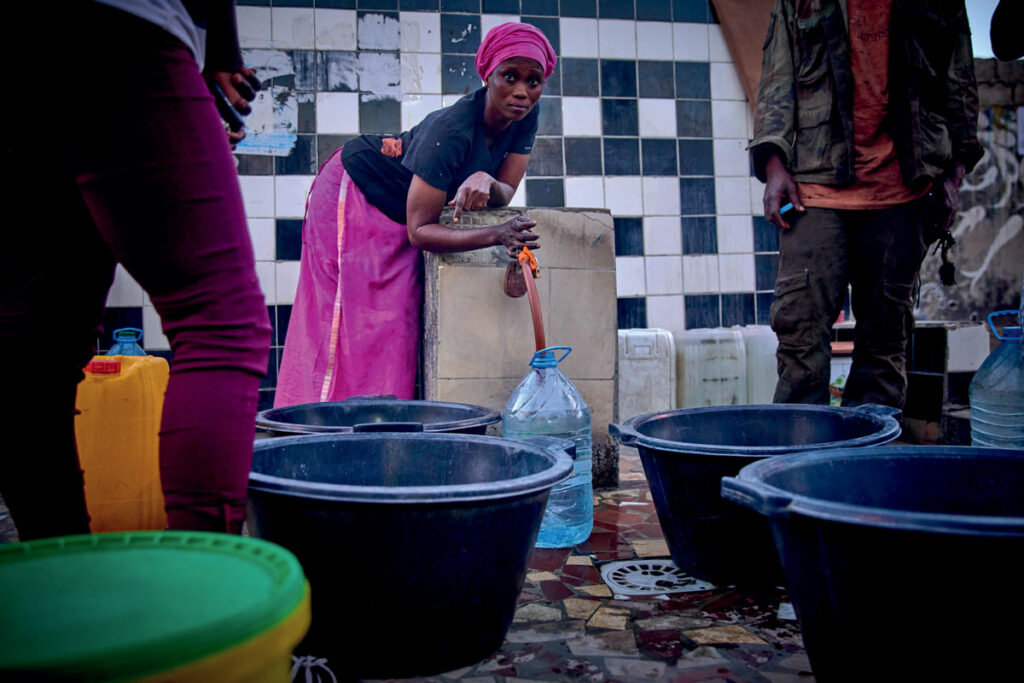
Abidjan, Ivory Coast. You live in a poor neighborhood just a few meters from the riverbed. In a few days, the rainy season will begin, bringing with it convective thunderstorms like those sometimes seen in the Mediterranean region. Except that here, the rain and runoff last for several weeks, and the residents are neither prepared nor equipped to deal with them. How would you go about keeping your family and neighbors safe? Additional information: You are a woman.
Here is one of the challenges that could be proposed to students in the next cohort of the Charm-EU European master’s program. “There are no lectures here ,” explains hydrologist and instructor Valérie Borrell*, “but rather real societal challenges to tackle related to sustainable development issues, whether in the North or, as here, in the South.” To this end, the researcher—who is already affiliated with the Icireward center —had the idea of reaching out to Euphrasie Kouassi-Yao, holder of the UNESCO Chairin “Water, Women, and Decision-Making ” based in Abidjan, as well as to its general administrator, Alexis Tchiakpe.
Promoting women's empowerment
This chair, established in 2006, promotes a system that integrates research, training, and awareness-raising with the goal of involving women—who are the primary users of water—in water resource management in Africa. “This involves training women to manage a village’s water system, for example. It gives them a recognized role in society and contributes to a form of empowerment,” explains Valérie Borrell.
The chair also offers a master’s program designed for water sector professionals in Africa who wish to receive training on gender issues in order to better identify the levers they can activate. “During certain sessions, Charm-EU students will join these African students via videoconference to work on concrete problems,” says Valérie Borrell. Students in the university diploma program “Digital Expertise for the Protection of Populations and Environments in Southern Metropolises” could also be involved in this initiative to contribute their technical engineering skills.
Learning to Listen to the Actors
How will these African, European, and international students be encouraged to develop solutions? “Through collaboration and the sharing of experiences. It’s not about imposing one’s point of view, but about listening to one another in order to innovate together,” says the researcher. To engage local communities, students will also need to utilize tools such as brainstorming and serious games… The innovative teaching approach promoted by Charm-EU opens the door to a wide range of possibilities here, in line with the living lab model.
“If we take the example of floods, we can design a serious yet accessible game that will allow young women to express themselves on these issues,” the teacher continues. “How do they experience floods? What do they observe? How would they raise their families’ awareness of safety measures? “Our goal is to help women envision themselves in a role they want to take on—one that is useful to society—and for our students to learn how to collaboratively develop innovative and equitable solutions.”
*HSM (UM —CNRS—IRD)
Check out theUM podcasts, now available on your favorite platform (Spotify, Deezer, Apple Podcasts, Amazon Music, etc.).