“Horses” will be the theme of the next Science Bar
On May 16, starting at 8:30 p.m., the next “Bar des sciences” event, organized by the University of Montpellier, will take place. For this event, Nicolas Boulbes, a paleontologist at the Institute of Human Paleontology; Pauline Hanot, a postdoctoral researcher at the Montpellier Institute of Evolutionary Sciences (ISEM); and Hélène Roche, an ethologist with the TAKH association at the Przewalski’s Horse Conservation Center, will discuss this iconic animal with the audience.
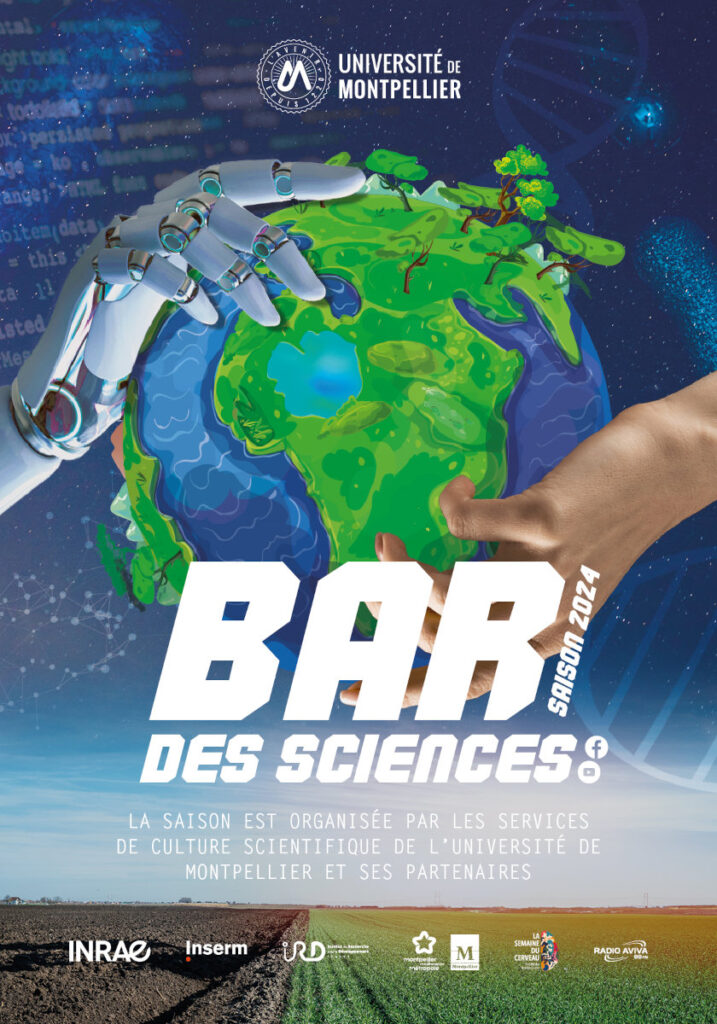
The Bar des sciences has become one of Montpellier’s flagship events for scientific culture, offering a monthly participatory, community-focused discussion on all aspects of science from January through June. Throughout the season, scientists are invited to engage in a dialogue where their knowledge and practices are not only shared but also open to discussion. The season is co-produced by the science outreach departments of theUM , and its partners: INRAE, INSERM, and IRD. Sign language interpretation will be provided for this event. Free admission, subject to availability.
A Science Bar Dedicated to Horses
The horse, “man’s noblest conquest,” is widely regarded as the quintessential domestic animal. Yet it is also—and perhaps above all—a large, herbivorous, ungulate mammal that played a vital role in ecosystems before humans eliminated it from the wild. There are literally hundreds of horse breeds. While some are less than a hundred years old, others have existed for a very long time, such as Przewalski’s horse, a wild horse that was already domesticated 5,500 years ago. Considered untamable, they constitute theoldestpopulation ofhorsesliving in the wild and, as such, represent a group whose protection is essential. Przewalski’s horse was hunted, domesticated, then returned to the wild, and was finally saved from extinctionat the last minutethrough conservation efforts and its reintroduction into the wild. This small horse, whose close cousins adorned the walls of prehistoric caves in Europe, shares common ancestors with domestic horses. Descended from a small forest animal, the horse has evolved considerably over 60 million years to become the large, powerful animal we know today. From prehistory to the age of recreation, its history is truly fascinating!
To discuss this topic at the intersection of science and society, three multidisciplinary experts will answer questions from the audience:
- Nicolas Boulbes, a paleontologist at the Albert I Foundation Institute of Human Paleontology, based at the European Center for Prehistoric Research in Tautavel. He is an associate member of the HNHP laboratory (“Natural History of Prehistoric Man”) (UMR 7194, MNHN-CNRS-UPVD).
- Pauline Hanot, postdoctoral researcher at the Institute of Evolutionary Sciences in Montpellier (ISEM) – University of Montpellier.
- Hélène Roche, an ethologist with the TAKH association at the Przewalski’s Horse Conservation Center. A trained ethologist, she specializes in science communication focused on equine behavior. Her research leads her to discuss equine behavior with historians and sociologists.
Practical Information:
- Date: Thursday, May 16, at 8:30 p.m.
- Location: Brasserie Le Dôme, 2 Avenue Georges Clémenceau, Montpellier
Free admission, subject to availability