The Master's in Chemistry opens doors for you
The master's degree in chemistry at the University of Montpellier opens the door to many possibilities. And it can open many doors for you in the job market…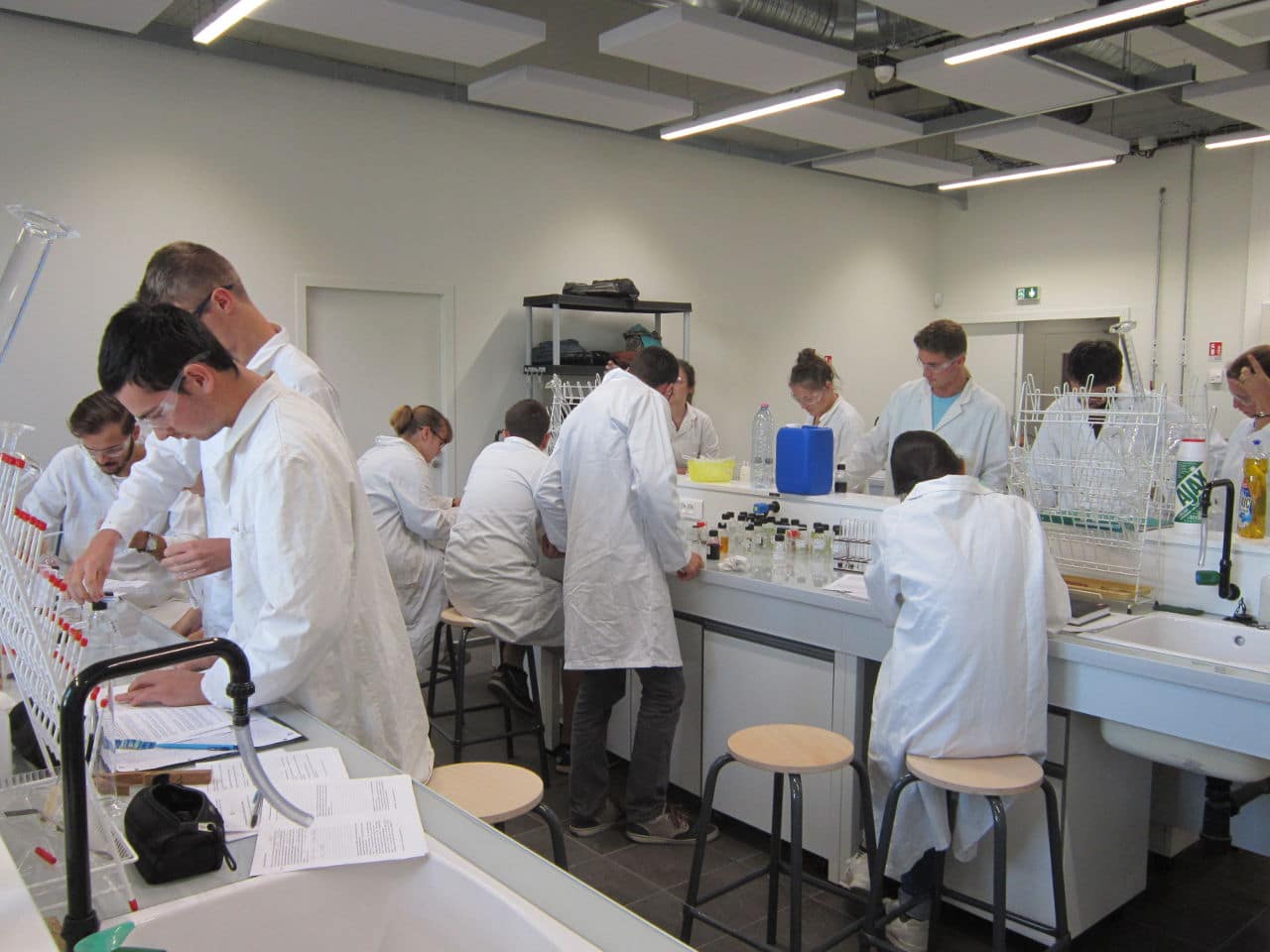
It's the only one Master's degree in chemistry from the Montpellier site, but he's got broad shoulders: no fewer than 11 different courses offered as part of the M2 program, and a faculty of 200 instructors… A master’s degree “pretty big””, says Joulia Larionova, the program’s director. The idea: “sto specialize or acquire new skills in the fields of chemistry and its related disciplines”.
86% of graduates find a job within 6 months
A program as simple as it is wide-ranging: “For students, the range of options is enormous; it’s true that chemistry plays a role in just about every area of human activity. Upon graduation, the chemical industry is, of course, ready to welcome you with open arms; beyond that, countless opportunities await you in the job market.”
While the 11 offered tracks provide 11 often very different paths, they share one common reality: real career prospects in the job market, whether in scientific management roles in research, research and development, production, or quality control, or in technical-sales management positions. The employment rate speaks for itself: six months after graduation, 86% of students are employed*.
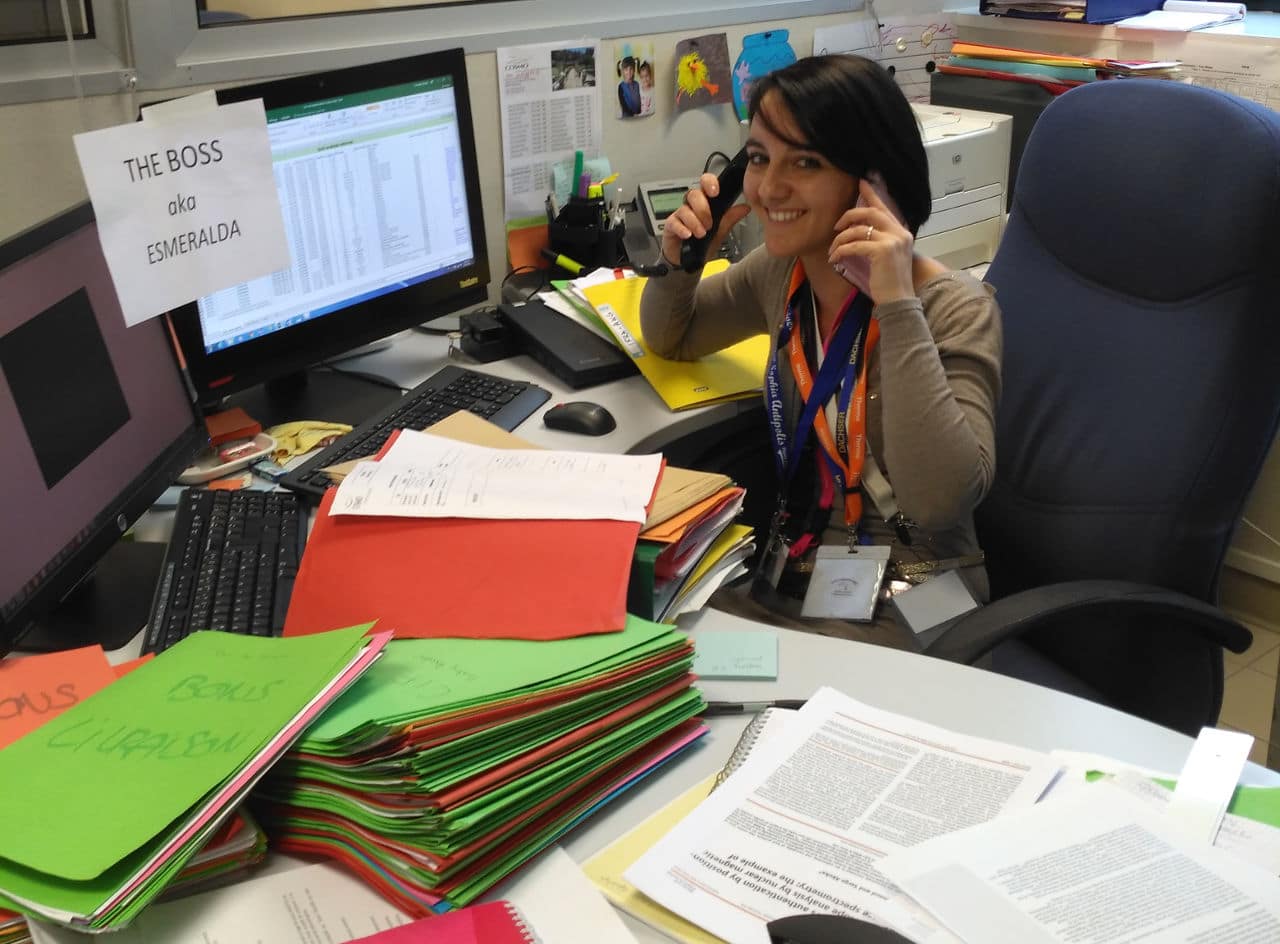
She is now an expert in scent and bio-based products. Back when Esmeralda Cicchetti Gonzales was studying in Montpellier, the Master's in Chemistry from theUM "does not yet exist." “At the University of Montpellier, I completed a chemical engineering program with a specialization in “flavors and fragrances,” which ended at the master’s level: the equivalent of today’s ICAP Master’s 1 program." said the young woman.
Very complex chemistry
She began her studies immediately after earning her high school diploma in biology. “After graduating from high school, a major in chemistry is recommended: it offers a wide range of career opportunities.“At the time, Montpellier, along with Le Havre, offered one of the only recognized programs in this field.”
Born in Grasse, Esmeralda took her first steps in the world capital of perfume. Very quickly, those steps led her into the footsteps of her grandmother, a chemist who ran a laboratory that tickled the nose. Esmeralda remembers it vividly; her own “madeleine” smells of strawberries, roses, and jasmine…
The Montpellier team is therefore a “Back to the Roots””. And an opportunity to discover that the sense of smell doesn’t just evoke Proustian reminiscences, but also offers subtle pleasures that are as intellectual as they are sensual: “break down complex information, analyze it, understand a scent…“
“People don’t use their noses enough!” she argues. Yet it is the gateway to a world that sparks the imagination—especially because so much of it remains to be explored. Major discoveries about olfactory receptors are very recent.“
A Universe to Explore
Education at the University of Montpellier? “Very comprehensive. It was also packed with hours! At the time, I didn't necessarily see the point of taking in so much information; but it all ended up being incredibly useful to me later on. The program focused on helping us become self-reliant. That wasn't always easy to handle as a student! But it was a great learning experience.“
Has been in charge of his own testing laboratory for five years, Esmeralda returned to Grasse, where she turned her passion into a career. “I built my lab from the ground up, recruited the team, acquired the equipment, and developed my own methods…””. A laboratory dedicated entirely to nature, where innovative natural extracts for perfumery and cosmetics are analyzed.
This makes the challenge all the more daunting: “Compared to synthetic products, natural extracts are astonishingly complex! With hundreds of components, they are much more difficult to analyze. It’s a daily challenge. Here, we explore the complexity of nature.“
Research
The master’s program has another distinctive feature: a very strong focus on research. “In this field, research in Montpellier is internationally recognized. And it is highly structured: the master’s program draws on the excellence of the four research institutes** grouped within the Balard Chemistry Cluster. This gives us access to high-performance equipment, including state-of-the-art technical facilities housed on the cluster’s brand-new campus.”
It’s no surprise, then, that a high percentage of graduates aspire to pursue careers in research: 44% of them* develop a passion for academic work while still in college and go on to earn a Ph.D. This path opens the door to careers such asProfessor, researcher, and research engineer…
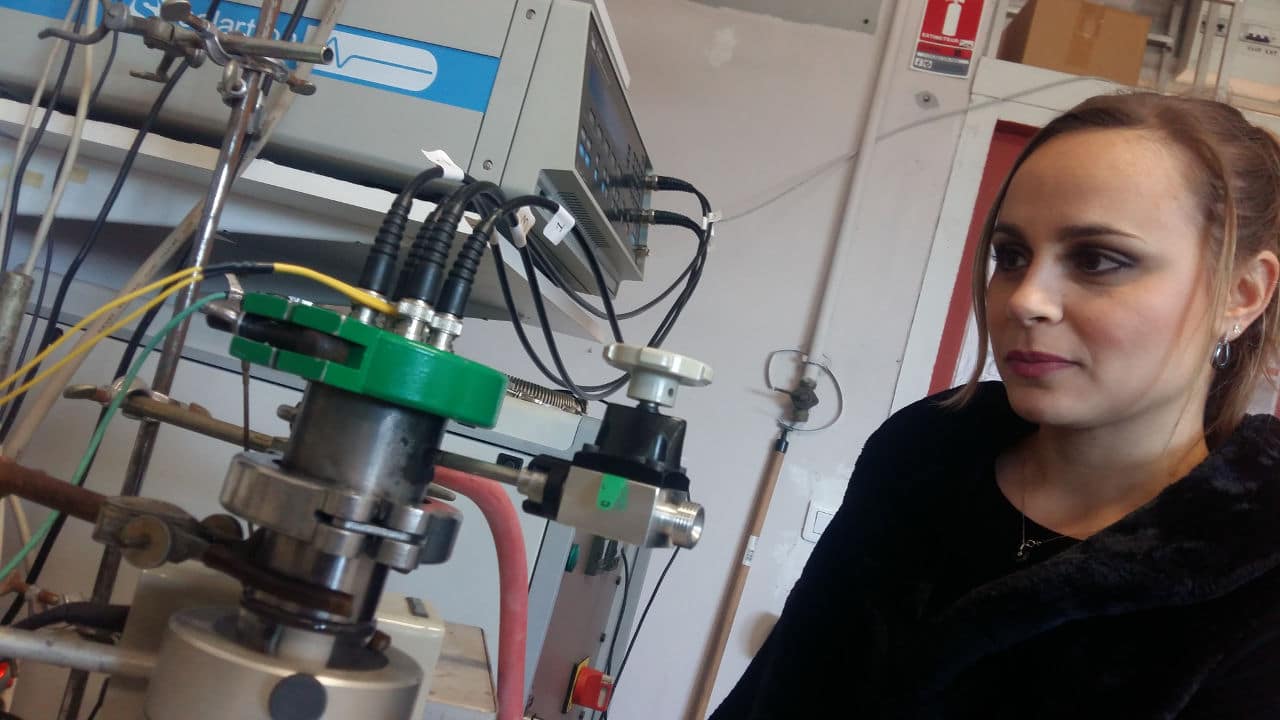
After earning her master’s degree in chemistry, Vanessa Ortiz turned to research. It was a calling she discovered late in life, during a memorable second-year internship in Melbourne, Australia…
Vanessa Ortiz is a chemist through and through. But she’s on the greener side of the field: for her, climate change and the state of the planet are critical issues. So, for her master’s degree in chemistry at theUM, she decided to focus on the environment, choosing the “Materials Science for Energy and Sustainable Development”.
“Chemistry is in everything!”
For this scientist at heart, it all began at theSète University Institute of Technology (IUT) : “I became fascinated by chemistry very quickly. Physics involves too much math. Besides, chemistry is everywhere—it’s in everything! It helps explain many everyday phenomena and gives us a better understanding of the world around us.“
After the “very serious"course offered at the IUT ("Lots of hands-on work, great teaching“), Vanessa wants to pursue a long-term academic program rather than opt for a vocational track: she therefore enrolls in a general bachelor’s degree program at the University of Montpellier to earn a degree that qualifies her for management-level positions. She has just set out on a journey toward horizons she cannot yet imagine.
Flame of Research
Everything changed during her second year of graduate school, with a five-month internship open to international opportunities. This Agde native bought a ticket to the unknown: Melbourne, Australia. Her eyes light up when she talks about that time. Under the Australian sun, the flame of research—that space where “"There's no such thing as a routine", gradually takes shape. “I discovered a new kind of independence; I conducted experiments, carried out hands-on activities, and took the initiative. Five months is more than enough time to really make a project your own.“
Vanessa is now in her second year of her doctoral program and is fully immersed in her research. It’s a level of commitment she would never have imagined just a few years ago: “In high school, it’s very difficult to envision your future career.””Vanessa is working on innovative materials that could be used, in particular, in fuel cells: a key area for the future in the production of low-pollution electricity.
From the company's perspective
Vanessa is discovering a new source of professional fulfillment: teaching. As part of “supplementary teaching assignments,” she leads organic chemistry lab sessions for students at theSète University Institute of Technology (IUT).
Her future? The young woman, who has come to enjoy changing her horizons, sees it lying just around another corner: “I’d like to make the move to the corporate side. Recruiters are increasingly looking for candidates with a Ph.D. I can see myself in a technical sales role: selling research equipment. A new adventure in a different setting—how exciting!”“
International
The master’s program in chemistry has a strong international focus, with 20 percent of students coming from abroad, high levels of international student mobility, two Erasmus Mundus tracks, and numerous partnerships with foreign institutes and universities (Madras, Kyoto, Zurich, Munich, Cornell, Madison, Wisconsin, and Manhattan, Kansas (U.S.), São Paulo (Brazil), and SFU (Russia)).
Business Sectors
Research in chemistry and related fields, the chemical industry, materials, energy, sustainable development, aerospace, automotive, cement and concrete, the nuclear sector, fine organic chemistry, biotechnology, the pharmaceutical, food, and agri-food industries, perfumery, cosmetics, …
- 2017 Figures
** Max Mousseron Institute of Biomolecules, Charles Gerhardt Institute of Montpellier, Marcoule Institute of Separative Chemistry, European Institute of Membranes