Price is not necessarily an indicator of product quality
Do prices provide us with adequate information about the quality of the goods or services we purchase? The question remains open for a category of goods that economists call “credence goods”—a term that indicates that the value of these goods is based on the trust the buyer places in the seller.
Philippe Mahenc, University of Montpellier

The quality of a trust asset includes a component that addresses public concerns regarding the environment, ethics, or health. An eco-friendly or fair-trade label enhances the value of the trust asset by indicating that its production and/or distribution comply with standards of varying degrees of specificity.
It is not easy to verify that a company complies with these standards: only an expert can certify—often with a margin of error—that the company is trustworthy. As a result, the buyer can never be certain of having been properly informed about the quality of a fiduciary good, even after consuming it. Business owners may therefore be tempted to abuse the buyer’s trust.
To alleviate uncertainty among buyers, producers and distributors of a tangible good must find a credible way to signal its quality, such as the price.
Thus, a company may sell a product at a unique price—whether high or low—to signal that it is of good quality, as we demonstrated in a research paper published in 2007. However, there are times when the price of a tangible good fails to send a credible signal, as illustrated by the following three examples from the wine, automotive, and healthcare industries.
In 1907, winegrowers fell victim to fraudsters
Before the law of June 29, 1907, which protected natural wine from adulterated wine, the wine market in France was disrupted by the supply of cheap, low-quality wine. Under this law, wine must be produced exclusively through the alcoholic fermentation of fresh grape juice. In the absence of an official definition, wine was considered a fiduciary asset.
To make cheap wine, grape pomace was pressed and diluted with water, or the color and taste of poor-quality grape juice were improved using chemical additives. The merchants and winemakers who engaged in this unfair competition accounted for about 5 percent of the market.
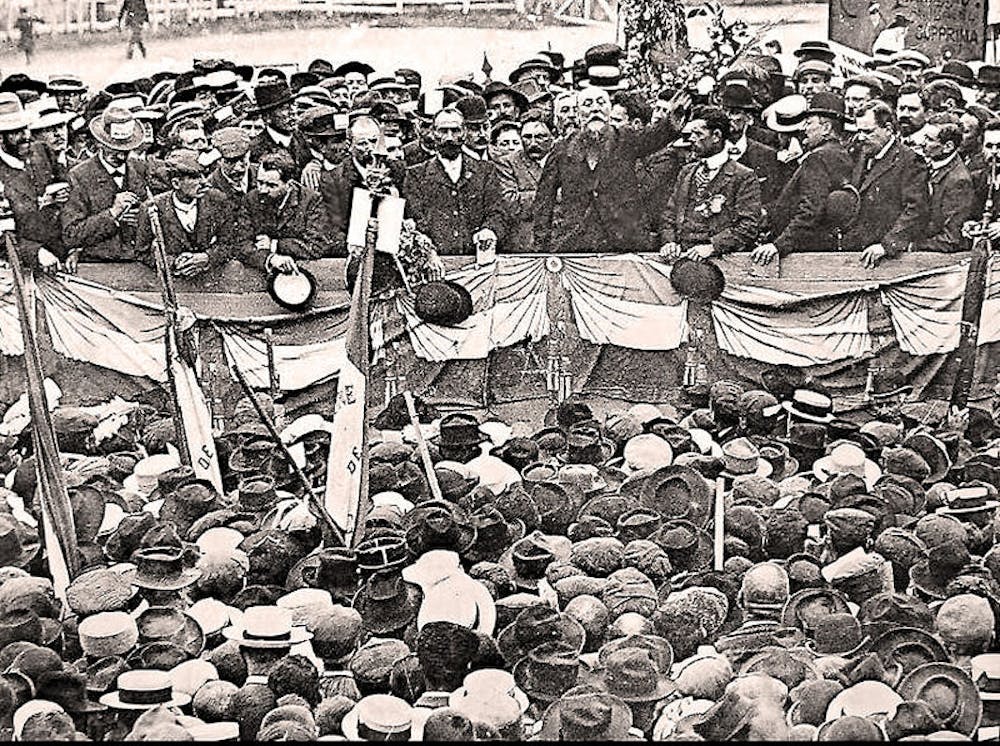
Wikimedia

When wine prices plummeted in France after 1900, winegrowers in the Midi attributed the cause to adulterated wine. Small winegrowers in the Languedoc and the Pyrénées-Orientales found themselves ruined by the poor sales of the 1906 harvest. The wine crisis sparked a spontaneous revolt in 1907, which was bloodily suppressed by the government.
In this case, the market charged the same price regardless of quality, so it was impossible to distinguish natural wine from cheap plonk. Under these circumstances, it wasn’t unreasonable to think that bad wine was dragging good wine down with it.
Subsequently, the law of June 29 and the associated decrees made it possible to organize fraud prevention and control. They granted the authority and resources to ensure compliance with standards to an entity representing the interests of winegrowers, the General Confederation of Winegrowers.
Volkswagen's Opportunism
More recently, opportunistic behavior has emerged in the European diesel vehicle market. Through a barrage of misleading advertisements, automakers claimed that their diesel engines, labeled “Clean Diesel,” were environmentally friendly.
In 2015, the U.S. Environmental Protection Agency accused the Volkswagen Group of violating the air quality provisions of the Clean Air Act, based on a report by the International Council on Clean Transportation. That organization highlighted discrepancies in nitrogen oxide (NOx) emissions between U.S. and European vehicle models.
See also:
Volkswagen's Unfair Competition
It was thus proven that Volkswagen had equipped its diesel cars with software designed to cheat on emissions tests. After passing laboratory tests, the vehicles emitted up to 40 times moreNOx on the road than the level permitted by the U.S. standard. Volkswagen pleaded guilty in 2017.
Other independent tests conducted by the German automobile club ADAC showed that, under real-world driving conditions, competing diesel engines from Volkswagen exceeded the legalNOx emissions limit in Europe by more than 10 times.
Among vehicles with the same technical specifications, if one stands out from the rest because it is less polluting, its price should reflect this distinction. Depending on sales projections, this distinction takes the form of a discount or a price increase that a dishonest manufacturer could not offer. This distinction thus lends credibility to the advertising for that model.
Laboratories Guilty of Misleading Communication
The third example of opportunistic behavior comes from three pharmaceutical companies: Genentech, Novartis, and Roche (GNR). The three companies market two drugs for blindness—Lucentis and Avastin— which do not target the same symptoms. Lucentis treats age-related macular degeneration (AMD), while Avastin treats cancer caused by diabetic macular edema.
Unlike Lucentis, Avastin does not have marketing authorization for ophthalmic use. It is nonetheless prescribed to slow the progression of AMD by many doctors who are convinced that the treatment is just as effective as Lucentis. The United Kingdom’s National Health Security reached the same conclusion in 2018.
Furthermore, Avastin has a decisive economic advantage over Lucentis: it is sold at 30 to 40 times lower prices worldwide. With such a price disparity, GNR is sending some rather troubling signals.
In 2013, the French Avastin versus Lucentis Study Group also demonstrated that Avastin and Lucentis are equivalent in terms of efficacy, with no differences in safety identified.
In response, GNR launched a communications campaign based on a selective and biased presentation of scientific findings with the aim of misleading ophthalmologists about the risks associated with the use of Avastin. Finally, in September 2020, the Competition Authority sanctioned Genentech, Novartis, and Roche for abusing their collective dominant position in the French market for AMD treatment. Among the allegations, the trio was primarily criticized for their dishonest communication methods.
In these three examples, prices did not reveal any information about the actual quality of tangible goods. They encouraged opportunistic behavior rather than deterring it. While prices did send signals, those signals were not credible because they did not allow for the identification of high quality.
Send credible signals
As we demonstrated in a research article published in 2017, it is therefore essential that the signals conveyed by prices be credible in order to ensure the reliability of certification.
It is easy to explain why prices did not send credible signals in the case of French winegrowers. They were too small to set prices, which were instead dictated by competitive pressure.
In contrast, automakers and pharmaceutical companies have sufficient market power to set their prices strategically. They set the price of a product at a level that is all the higher because they expect competitors—if any exist—to act in the same way. When products are trust-based, manufacturers can also use prices to signal quality. As we have seen, they sometimes prefer to mislead buyers.
The existence of such strategies gives pause for thought at a time when pharmaceutical companies are touting the efficacy of various COVID-19 vaccines in order to segment the market and prepare for price competition. This raises the question: Do the prices offered to purchasing governments truly reflect the vaccines’ efficacy?
Philippe Mahenc, Professor of Economics (environmental economics/industrial organization/agricultural economics), University of Montpellier
This article is republished from The Conversation under a Creative Commons license. Readthe original article.