[LUM#1] Knowledge Put to the Test of Doubt
“What do I know?” Montaigne asked. Faced with the sheer volume of information that floods us without asking for our opinion, this question is more relevant than ever… The moon’s influence on plants, the effectiveness of high-protein diets, the supposed harmfulness of GMOs, or even that of vaccines…
These are all social issues on which you may have a firm opinion. But how did you form that opinion? In the age of the information superhighway, convictions are formed at the speed of broadband. To quench our thirst for certainty, there are now countless sources, and rumors are spread far and wide: the blogosphere, social media, talk shows, magazines…
Critical Thinking
A cacophony in which authoritative opinions—those of “experts”—sometimes take center stage. These are the voices that help shape our most deeply held convictions—the very ones we should sometimes be wary of… “An expert presented as such isn’t always one. They may stray from their field of expertise, be influenced by a conflict of interest, express a personal opinion… or even be wrong!”
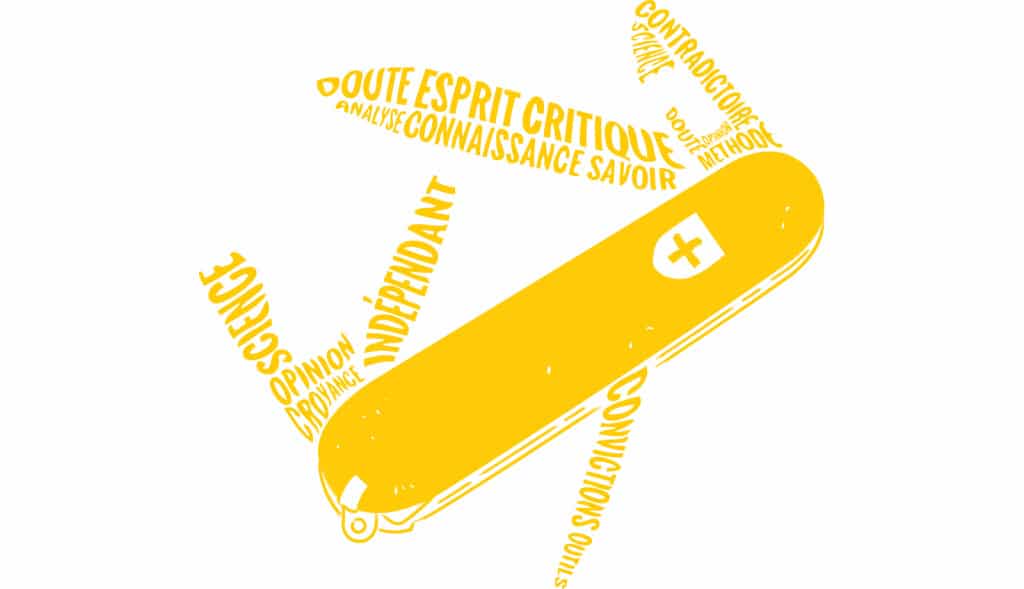
What should be your first instinct? To doubt, of course: the first step on the path to critical thinking. To fully exercise this skill, one must “look for contradictory statements, but also apply simple methods: identify the underlying issues, assess the quality of the sources, the strength of the arguments presented, the methodological rigor, and the speaker’s level of expertise…” summarizes Guillemette Reviron, a Ph.D. in mathematics and co-founder of the Cortecs collective.
Democratic Issues
Founded in 2010 within academic circles in Grenoble, Montpellier, and Marseille, this “teaching and research collective focused on critical thinking and the sciences” offers courses, presentations, and open-access educational resources. Its goal is to enable everyone, as much as possible, to make informed choices. And a distinctive feature:“In class, we always start with simple, thought-provoking topics that elicit few emotional reactions, before moving on to more complex issues,” explains Caroline Roullier, a Ph.D. in biology and member of the collective who speaks atmiddle schools and trains teachers.
According to the Cortecs collective, the very functioning of our democracy is at stake. “Whether justified or not, our beliefs help shape the world in which we live. They underpin our collective decisions, as well as those of our elected officials.” Knowledge: a matter of power that citizens must no longer leave in the hands of experts, explains Guillemette Reviron. “Today, everyone is overwhelmed by increasingly complex issues. Gaining a better understanding of them is a good first step toward taking an active role in decision-making processes.”
Check out theUM podcasts, now available on your favorite platform (Spotify, Deezer, Apple Podcasts, Amazon Music, etc.).