“The term ‘carbon offsetting’ is scientifically absurd”
To stabilize global temperatures, the Paris Agreement pledged a transition to a net-zero emissions world by 2050, with a 45% reduction by 2030. To achieve these goals, forests are our greatest ally, but they are also the central issue in the geopolitics of carbon. We discuss this with Alain Karsenty, an economist at CIRAD and an expert on the subject.
Read the first part of this interview on deforestation “Deforestation: ‘Part of the solution lies in international trade’” on the University of Montpellier website.
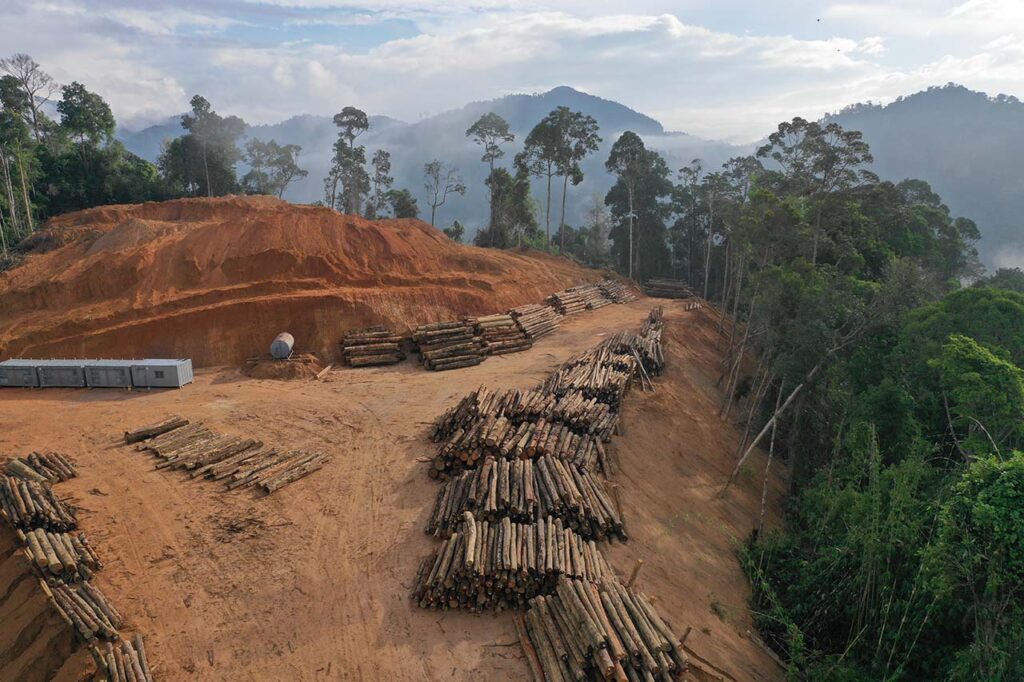
Can we speak of a “geopolitics of forests”?
Forests and all vegetation absorb about a quarter of the carbon emitted by human activities; the oceans absorb another quarter; the remaining half remains stored in the atmosphere and contributes to global warming. We can therefore speak instead of a “geopolitics of carbon” in the sense of the ecosystem services provided by natural environments.
Global deforestation, however, continues to rise, up 4% in 2022 (Le Monde 10/23/2023). Are forests still carbon sinks?
Estimates are difficult to make, but it is believed that the Amazon is no longer a net carbon sink. In Asia, deforestation has been so severe that forests are now net emitters ofCO2. The last remaining tropical carbon sink is likely the Congo Basin.
What about French forests?
We have the fourth-largest forest area in Europe after Sweden, Finland, and Spain, and the third-largest timber stock in Europe after Germany and Sweden. We are counting heavily on our forests to achieve France’s carbon neutrality goals by 2050, but we note that in 2021, French forests absorbed 31.2 Mtof CO₂, or about 7.5% of national emissions. That is nearly half the amount absorbed ten years earlier (57.7 Mtof CO₂). French forests are indeed expanding, but due to wildfires, droughts, heat waves, diseases, and pests, their effectiveness as a carbon sink is steadily declining. Together with French Guiana, France has a large area of tropical forest and thus a significant stock to preserve, but this is likely no longer a carbon sink—in part because temperatures there are often too high. The forests that absorb the most CO₂ today are young boreal and temperate forests.
Yet the international community has been mobilized since the Kyoto Protocol in 1997—are the mechanisms put in place not working?
The Kyoto Protocol launched the Clean Development Mechanism (CDM) in the early 2000s, a system allowing companies in industrialized countries to purchase carbon credits generated by projects in developing countries. These companies could offset their emissions by financing projects to reduce or absorbCO2 in the Global South—such as by installing wind turbines or planting trees. A carbon credit thus corresponds to one metric ton ofCO2 avoided or removed from the atmosphere. Many of these credits are considered questionable because verifying the actual occurrence and permanence of these reductions is extremely difficult. Furthermore, since the number of projects capable of generating carbon credits is very high, the excess supply has caused prices to fall, with the majority of transactions taking place at less than one dollar per credit. Today, there are more than one billion credits that have still not been sold—and a large portion of them never will be.
In 2005, the UN launched the REDD+projects , which you’re also quite critical of. Why?
This mechanism allowed countries that reduced their deforestation to seek compensation or sell carbon credits. The problem is that a baseline must be agreed upon: relative to what is the reduction in deforestation calculated? The choice of the baseline scenario used to measure this decline was left to the discretion of the countries. Since these are counterfactual scenarios, they are neither verifiable nor open to challenge by the payers. For example, Brazil chose as its baseline a period in the 2000s, when deforestation in the Amazon was at its peak, so that it could show the greatest possible reduction in deforestation. Many countries in Central Africa, which consider themselves to be only just beginning deforestation, rely on prospective scenarios and want to be paid for “avoided deforestation”—that is, relative decreases (compared to the baseline scenario)—which generally mask absolute increases in deforestation.
REDD+ is a mechanism among states, but does it also include private companies that wish to offset their emissions?
Unlike the Clean Development Mechanism, under the UN framework, only states can sell REDD+ carbon credits. The priority at the national level is to prevent deforestation from simply shifting from one area to another (“leakage”) and to encourage governments to implement policies that promote forest conservation and sustainable forest management. This has greatly frustrated carbon investors who wish to profit from the sale of their credits, as well as certain NGOs that use the REDD+ system to finance biodiversity conservation.
So they’ve set up a sort of parallel market?
Yes, projects that use the REDD+ label but are privately run and have nothing to do with the UN mechanism. They’re certified by private certification bodies, the best known of which is VERRA-VCS, which certifies, among other things, avoided deforestation projects. In fact, the vast majority of forest credits you’ll find on this voluntary market are certified by VERRA.
What’s the problem with these avoided deforestation projects?
Last year, The Guardian (January 18, 2023) caused quite a stir by citing a study (PNAS , September 14, 2020) conducted in Brazil, in which scientists observed that the decline in deforestation was similar in areas with REDD+ projects and in non-REDD+ areas. The declines were not due to avoided deforestation projects, but to Lula’s policies, which, since 2004, have led to a 75–80% reduction in deforestation in the Amazon. Several NGOs also raise concerns about the risk of “green colonialism.” Blue Carbon LLC, a company based in the United Arab Emirates, purchased exclusive carbon rights to 10% of Liberia’s land area (Le Monde, September 2, 2023). Will they establish protected areas? Or logging concessions? It is not yet clear.
Are there also tree-planting projects for carbon offsetting?
The term “carbon offsetting”is scientifically absurd; at best, it’s a contribution to a collective effort, not an offset that would “erase” emissions. In an era of megafires and the overall poor health of forests, forest conservation efforts or tree-planting projects may offer a partial, temporary solution, but they in no way achieve carbon neutrality, given the very long residence time (around a thousand years) of a significant portion ofthe CO2 in the atmosphere. That said, some projects are useful and provide welcome funding in certain regions, from which local communities can also benefit. The problem lies in the claim made by offset mechanisms that they promise to “neutralize emissions,” which gives a clear conscience to buyers of credits or consumers of products labeled as “carbon-neutral.”
What kinds of companies are involved in these REDD+ projects?
Large companies that engage in carbon offsetting beyond their regulatory obligations (when they have any). We’ll find most of the major publicly traded companies, from Microsoft to Shell, Delta Airlines, and so on. Among them, we need to distinguish between those making genuine efforts to reduce their emissions and companies that aren’t changing anything about their operations and are simply buying carbon credits to claim they’re “carbon neutral.” In the latter case, it’s clearly greenwashing. Starting in 2026, the EU will effectively ban companies from calling themselves “carbon neutral.”
Since theParisAgreement, however, doesn’t Article 6 risk reinforcing these private projects?
Article 6.4 of the Paris Agreement—whose broad principles have been adopted, but not its rules (delegates at COP 28 were unable to reach an agreement on them)—would, broadly speaking, allow certain private projects to enter the UN compliance market. It is a more open version of the Clean Development Mechanism that would specifically include certain forms of avoided deforestation. We’ll have to be careful, because once you’re in the compliance market, a carbon credit is essentially an emissions permit.
What mechanisms would be most effective in encouraging countries in the Global South to preserve their forests?
First, we must invest if we hope to see results later. We know where to invest: in land-tenure clarification, transforming unsustainable agricultural, forestry, and pastoral practices, energy systems (the charcoal issue), land-use planning, strengthening the rule of law, and delaying the demographic transition in several countries, among other things. Then, we will be able to provide funding based on the quality, consistency, and implementation of policies and measures aimed at curbing the drivers of deforestation. Organizations and institutions that spend billions to curb deforestation should establish scientific committees of independent experts to assist them in these evaluations. In a world where financial resources are limited, it is absurd to tie our own hands with inappropriate procedures and payment rules, which all too often result in rewarding countries for fortunate circumstances rather than for efforts translated into public policies.
Which countries or institutions are putting money on the table?
Norway is the best example. This country has developed numerous bilateral agreements with countries in the Global South. Norway spearheaded CAFI (Central African Forest Initiative), a coalition of donors in which Norway is contributing more than $500 million (France is contributing 6M) to finance investments. But Norway attaches conditions to the disbursement of the promised funds. When Bolsonaro dismantled environmental policies in Brazil, Norway halted its payments to the Amazon Fund, as did Germany. Yet the Green Climate Fund, a multilateral institution, disbursed hundreds of millions of dollars to Brazil at that time for a level of deforestation lower than in the past—even as deforestation had begun to rise again and laws protecting the forests were being systematically undermined. Imposing conditions that deviate from established rules is virtually impossible in a multilateral framework, where the money you contribute no longer truly belongs to you.
Countries in the Global South are asking the international community to pay for the environmental services provided by their forests. What do you think about this?
We’ve mostly heard from African countries on this issue, since they are the only developing countries that still have carbon sinks. However, Brazilian President Lula made a somewhat similar proposal at COP 28 (Le Monde , November 24, 2023). These are rent-seeking approaches, except that there aren’t necessarily many people willing to pay these rents. The international community has always refused to pay for carbon stocks (standing forests). Once again, it’s better to invest in effective policies, and there is a huge amount of financial transfer work to be done. But let’s do it on a sound basis.