“The cold forests are burning! Siberia is burning, Canada is burning!”
On June 9, the University of Montpellier signed a memorandum of understanding withthe University of Quebec in Abitibi-Témiscamingue (UQAT) andthe University of Franche-Comté to launch the international research project “Cold Forests.” The goal: to model how these ecosystems function in order to better preserve them. This is a highly topical issue. Adam Ali, a paleoecologist atISEM and the project leader in France, explains.
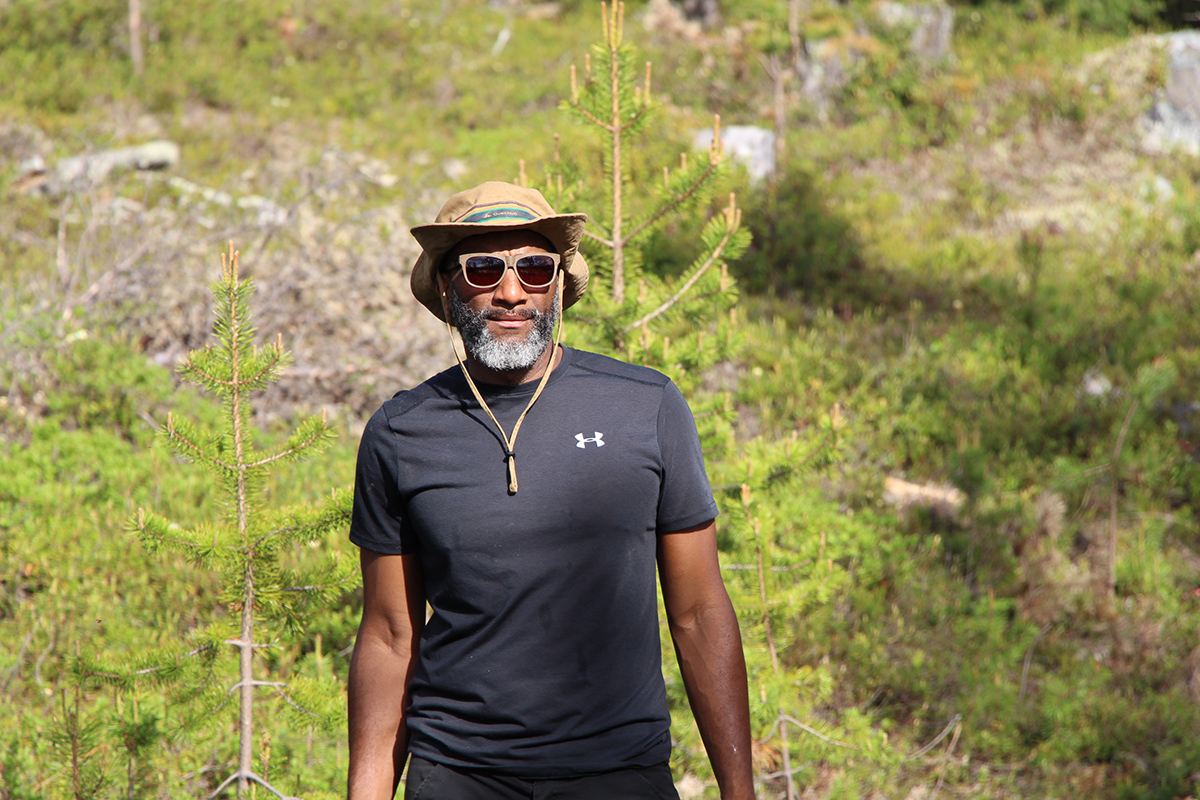
This project is called “Cold Forests.” What do these terms actually mean?
Our project focuses both on forests located in high latitudes—that is, the Arctic and subarctic regions—and on high-altitude forests: mountain forests. Whether they are found at high altitudes or high latitudes, these forests are home to species that share common life history traits. For example, their ability to withstand freezing temperatures or to grow very quickly in order to survive in these ecosystems.
What is the current issue facing these forests?
Our issue is quite simple: these forests are major carbon reservoirs. More specifically, the boreal forest that encircles the Arctic Circle is one of the largest terrestrial carbon sinks, with carbon trapped primarily in centuries-old peatlands. However, in recent years, the situation has been changing, and our carbon sink is turning into a carbon source. This shift is linked to forest fires, which are becoming increasingly frequent, larger in scale (covering several thousand hectares), and more intense. This is one of the main focuses of our research.
Do cold forests catch fire?
Yes, it’s counterintuitive, but cold forests do burn… a lot! In fact, they’re among the ecosystems that burn the most in the world. Siberia is burning, Canada is burning! For example, in 2014, in Canada’s Northwest Territories, 385 wildfires destroyed 3.4 million hectares. It’s important to note that over the past 40 years, these northern regions have seen an average annual temperature increase of +3°C. We’re seeing what’s happening right now in British Columbia with an unprecedented heat dome and a fire season that began very early, resulting in the evacuation of some villages (Radio Canada, July 1, 2021).
Yet there’s very little talk about it, even though the fires in Australia received a lot of media attention…
That’s true. There’s little talk about it because these fires are on a completely different scale from what happened in Australia, but also because not many people live in those areas. Except, of course, for the Indigenous peoples who live in those forests and depend on them for their livelihoods and for cultural purposes. There are issues related to First Nations in these territories. They will be the first to feel the effects of climate change.
But how do we explain why these wildfires start spontaneously?
It’s not easy, precisely because the system is quite complex. Is it linked to ocean warming? Is it linked to atmospheric anomalies? These are what we call teleconnection processes, and they’re really not easy to grasp, but we’re exploring this question. We’re trying to model and understand these mechanisms—or at least the factors that have led to these mega-fires in recent years.
There is also the question of how these forests are managed?
These are anthropized ecosystems, used by humans. The idea is to guide decision-making for any activity that relies on the use of biological resources in these ecosystems. To move toward ecosystem-based management that ensures human disturbances ultimately remain within what we call “the range of natural variability”—a range of disturbances that the ecosystem can absorb—and thus foresters and land-use planners are also partners in this approach.
This is an interdisciplinary project, and you yourself are a paleoecologist—what does your field contribute?
We have ecologists, climatologists, forest managers, climate modelers, and so on. I lead the paleoecological research area. The goal is to document how these ecosystems have functioned since the Holocene—that is, over the past 11,700 years. During this geological period, there have been major climate changes: periods of warming and cooling. We want to understand how these ecosystems have responded to these climate variations.
How do you observe this?
We have open-air libraries! The lakes and their sediments, in which we find charcoal and pollen grains. These two bioindicators allow us to reconstruct the history of forest fires and vegetation over time. There’s also dendrochronology…
…dendro what?
“ Dendro ” means “tree” in Greek, and it also refers to chronology and time. In wood, each growth ring represents one year; it’s an archive that records everything. To put it very simply, if it’s warmer, for example, the tree will produce a much larger growth ring; if it’s colder, the ring will be smaller. It’s a valuable tool for reconstructing past temperature changes. These trees also help us date fires, which—when they don’t burn the entire tree—leave scars. These scars contain important information that allows us to date the fires to within a year.
How long will the “Cold Forests” project last, and where will it take place?
It is scheduled to last five years, renewable once. The project will be based in Quebec, where we will be hosted at the university, but we will also work in Canada’s boreal region, in the Northwest Territories, Labrador, and Newfoundland. In mountainous regions, the Pyrenees, the Alps, the Vosges, as well as the Atlas and Rif mountains of Morocco are the targeted locations. The broader project also includes a component in the Altai Mountains, which lie on the border between Russia and China…
You mentioned an expanded project—what is that about?
The memorandum of understanding we signed on June 9 is an international research project (IRP) involvingthe Université du Québec en Abitibi-Témiscamingue (UQAT), the CNRS,the Université de Franche-Comté, and theUM. Alongside this IRP, we have established a broader international research network (IRN) that includes Sweden, Norway, Russia, China, and others. All of these partners enable us to take a truly international approach to our research questions and develop joint projects.
What does this agreement, which the University of Montpellier has just signed, offer you?
This is the first time the University has adopted a tool that allows Professors to free up time and mental energy to pursue their research. Thanks to Muse and this program, I was able to receive a two-thirds reduction in my teaching load for the entire duration of the IRP. This is a key component of the agreement on the French side. The University of Franche-Comté provides support in areas such as mobility assistance and securing research grants. On the Canadian side, there are also extensive resources, notably the Quebec Research Fund, which will provide the equivalent of $100,000 annually. We are also benefiting from the creation of a research chair in historical ecology. In short, thanks to this agreement, we have five to ten years ahead of us to carry out large-scale research on these fascinating ecosystems.
Adam Ali: A Passion for Cold Forests
In 2004, Adam Ali, having just earned his Ph.D., flew to Quebec—and he has never left. The author of a dissertation on past environmental changes in alpine ecosystems, he was drawn to cold-climate forests the day he became fascinated by the study of wildfires. “Fires! That’s what sparked my passion for cold forests,” the researcher recalls. In 2008, he was recruited by the University of Montpellier 2 and joined the CBAE, the Center for Bioarchaeology and Ecology, which has since merged intoISEM.
In Montpellier, where research tends to focus more on the South, few scientists work on cold regions, as Adam Ali jokes: “I have a field and a scientific niche all to myself! ” His most significant collaborations, therefore, are across the Atlantic—and more specifically in Quebec—where he has built them up, particularly the one he’s maintained since 2005 with Yves Bergeron, the project coordinator in Canada. “He’s an outstanding researcher; he’s won the Marie Victorin Prize, which is Quebec’s highest scientific honor,” the Frenchman points out. “He has an impact factor that borders on the outrageous, and on top of that, he possesses exceptional human qualities.” ” Fully committed “2000%” to this major project for the next five—or even ten—years, Adam Ali might well, by 2023, take the plunge and settle for good near his cold forests.