Humans in Their Environment
Our planet is fragile: this new awareness is shaping the 21st century. Together with its partners, Montpellier University of Excellence is committed, every day, to science that takes full responsibility for the future of humanity and its environment.
Drought Advisory for the Canopy
© Patrick Aventurier
30% less rain: that’s what climatologists are predicting by 2100. Drought conditions have been worsening in recent years. In Puéchabon, about thirty kilometers from Montpellier, our researchers are accelerating the drought phenomenon to better understand it.
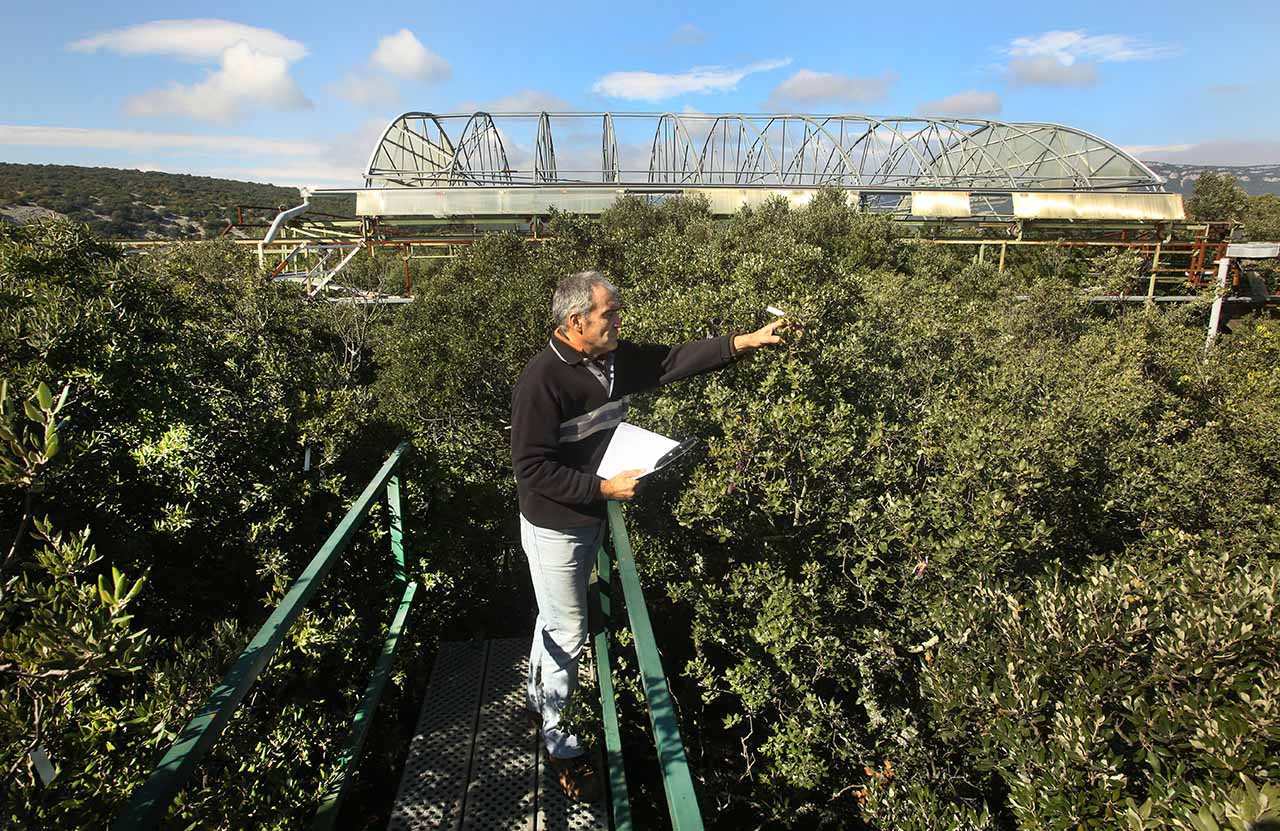
Rest assured, everything is under control. Here, the Center for Functional and Evolutionary Ecology (CEFE) has transformed the holm oak forest into an open-air laboratory. To selectively increase drought conditions, the researchers have installed a gutter system that collects rainwater before it seeps into the ground. They also have a movable roof covering more than 200 m² that can be moved over the forest to shade specific plots.
The forest is studied from every angle thanks to a walkway installed in the canopy that allows scientists to take measurements on leaves and branches whilea “flux tower”continuously measures the forest’s carbon and water budgets.
These devices make it possible to study the ecosystem’s response to climate change. Researchers are studying the development of leaves, flowers, and acorns on branches that have been monitored for several years in the canopy of the holm oaks at Puéchabon. How will the holm oaks cope with the dry climate that lies ahead? A first clue: they are reducing the number of their leaves to transpire less and conserve water.
Mapping the Hidden Life of the Oceans
© ECA Group, IRD, Ph. Borsa, J-M Boré, R. Armelle, P. Chabanet, B. Bourlès
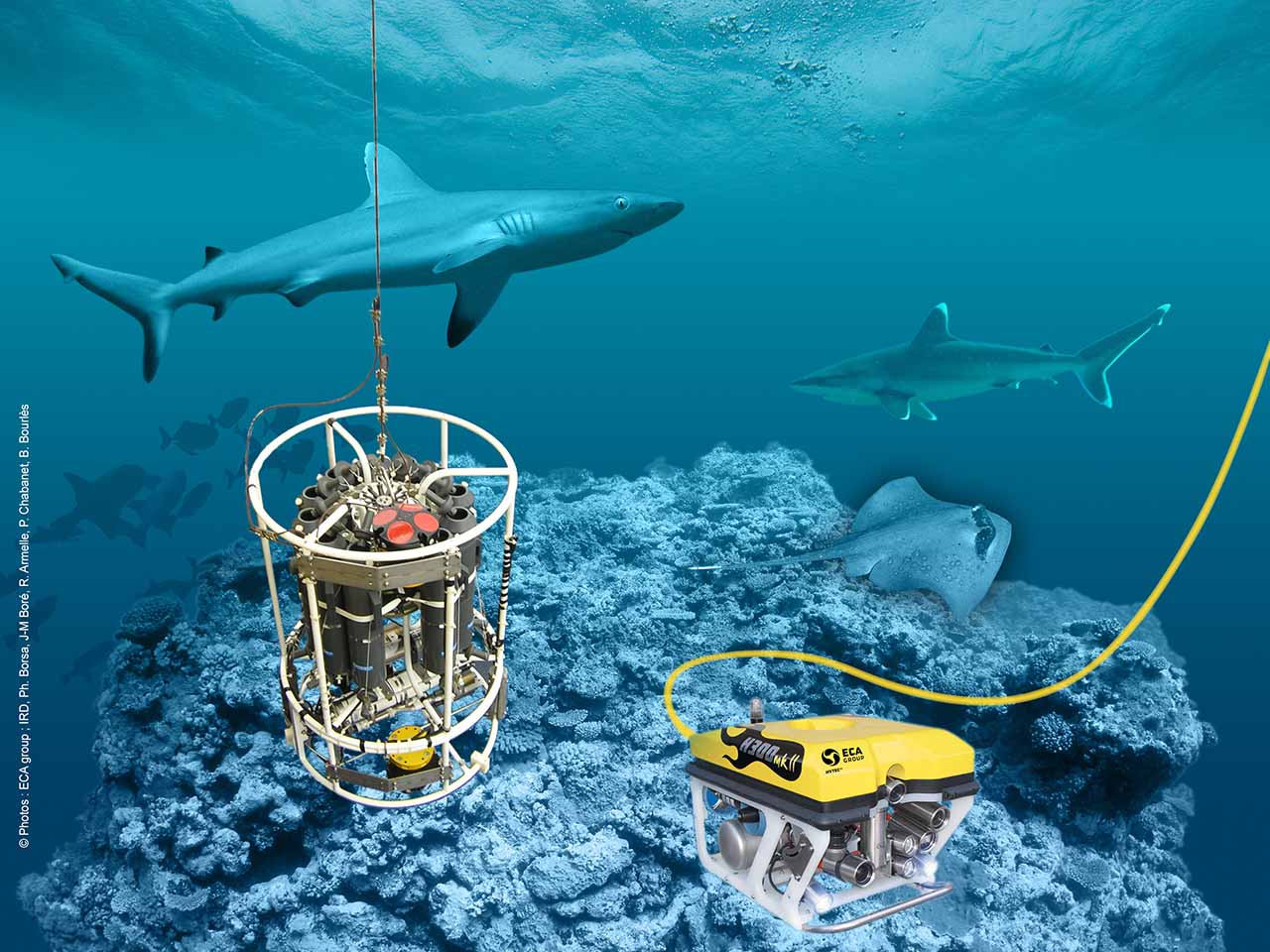
Better understanding for better protection: that is also the goal of the “Megafauna” expedition. The research field here is the boundless ocean. In July 2017, led by David Mouillot of the Marbec laboratory, a team of researchers set out to map a still poorly understood aspect of ocean life. A three-year expedition to take the pulse of the tropical seas and compile an unprecedented inventory of marine life, including large bony fish, sharks, and mammals… These fragile giants that inhabit the oceans are particularly vulnerable to overfishing and global changes: they account for a quarter of all species threatened with extinction.
Funded by the Monaco Scientific Center, the expedition has a major asset: the oceanographic vessel Yersin, an 80-meter-long ship with a reinforced hull capable of venturing into all the world’s seas. The Yersin will traverse all tropical waters, visiting most of France’s overseas territories (the Antilles, Polynesia, New Caledonia, the Coral Sea, Tromelin, etc.) and numerous countries in the Global South (Cape Verde, Mauritius, the Seychelles, etc.).
The expedition relies on a revolutionary scientific method. Just like forensic scientists, the researchers will trackthe “environmental DNA” that marine creatures leave in their wake. Upon completion, the researchers will have an unprecedented map of life in the oceans: a massive DNA catalog compiled from nearly 2,000 sites across the tropical seas.
The Last Paradises of Biodiversity
© Opti’Pousse Haie
The University of Montpellier also supports student organizations and initiatives. Summer 2017: Six students from the “UM ” took the plunge into the unknown, heading for the Indian Ocean. Their project— to create a marine protected area in Madagascar —received funding from the university’s Solidarity and Student Initiative Development Fund.
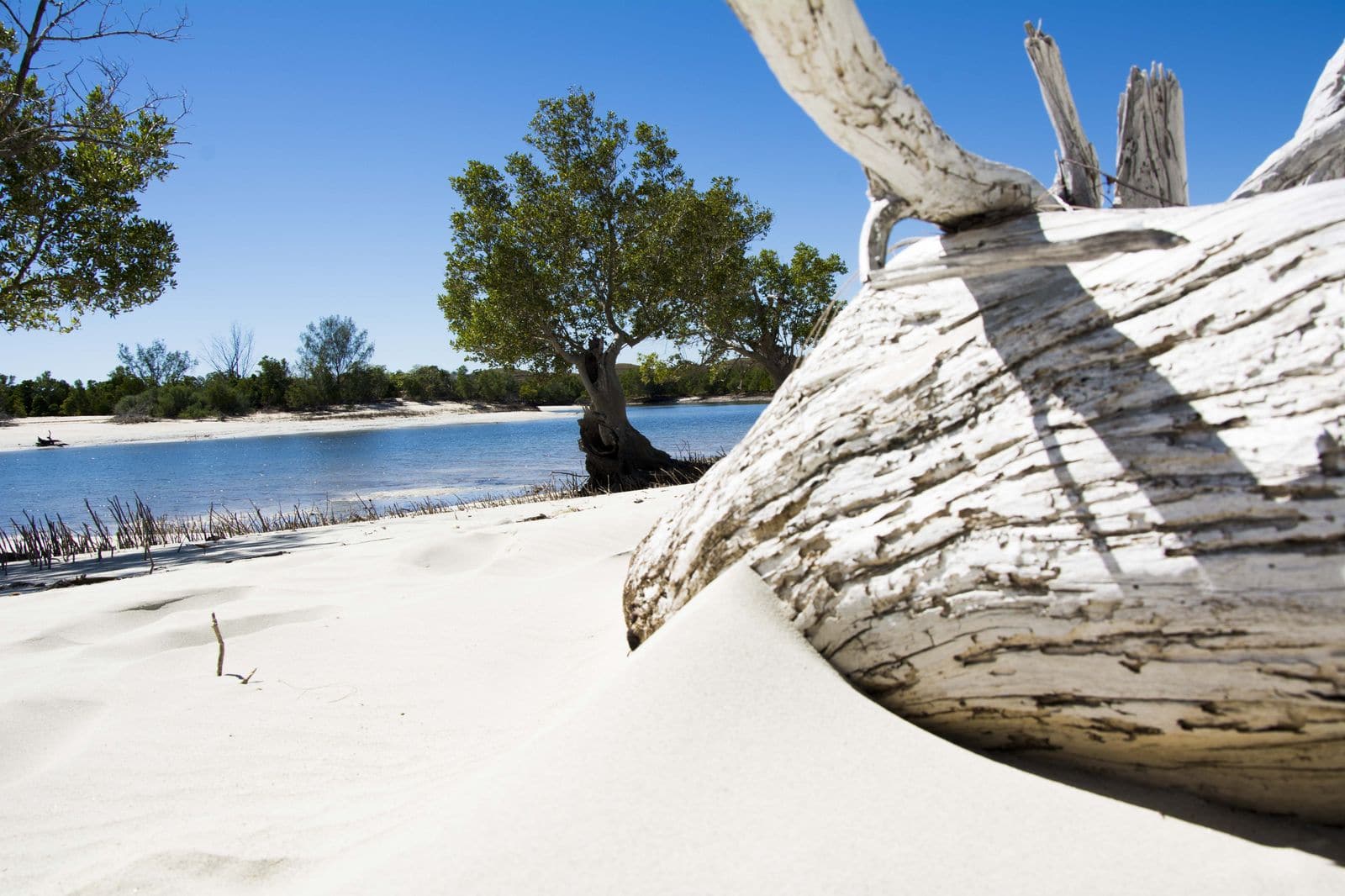
In northern Madagascar lies Nosy Lava, a small island populated by fishermen: a paradise of terrestrial, coastal, and marine biodiversity. But it is a paradise under threat. Poaching, the animal trade, mangrove destruction, and intensive fishing… Some animal species have already gone extinct, such as the iconic dugong; turtles are slaughtered for their meat, and fish are overfished. This overexploitation of resources is primarily the work of people from outside the island. It poses a direct threat to local communities, who depend directly on these natural resources.
At the Faculty of Sciences at the University of Montpellier, six third-year biology and ecology students are taking action. Marie, Ninon, Florine, Tiffany, Quentin, and Gaël have named their project “Protect Mada.” With support from the Opti’Pousse Haie association, they are compiling an inventory of the island’s biodiversity and analyzing its resources, with the goal of demonstrating the island’s ecological and cultural value.
Their goal is also to raise awareness among the local community about environmental conservation and to enable them to become fully involved in the project. The students have just completed the first phase of this project: they are preparing to submit the preliminary application to establish the marine protected area.
The number: 2
This is theUM ’s global ranking in ecology, according to the latest Shanghai Ranking. TheUM is second only to the University of Oxford and ranks ahead of other prestigious institutions such as the University of California, Berkeley (4th).
I-SITE MUSE
 “ Feed, Care for, Protect“, three global challenges for the 21st century at the heart of I-SITE MUSE.
The MUSE (“Montpellier University of Excellence”) project brings together 19 institutions behind a shared goal: to establish in Montpellier a thematically focused, research-intensive university that is internationally recognized for its impact in fields related to agriculture, the environment, and health—a university that will serve as a close academic partner for all members of the consortium, one with which they will have strong ties and of which they can be proud.