Loup, are you there?
While the return of the wolf presents real challenges for livestock farmers, the presence of this carnivore can nevertheless have ecological—as well as societal—benefits. Jean-Louis Martin, a researcher at the Center for Functional and Evolutionary Ecology (CEFE), explains.
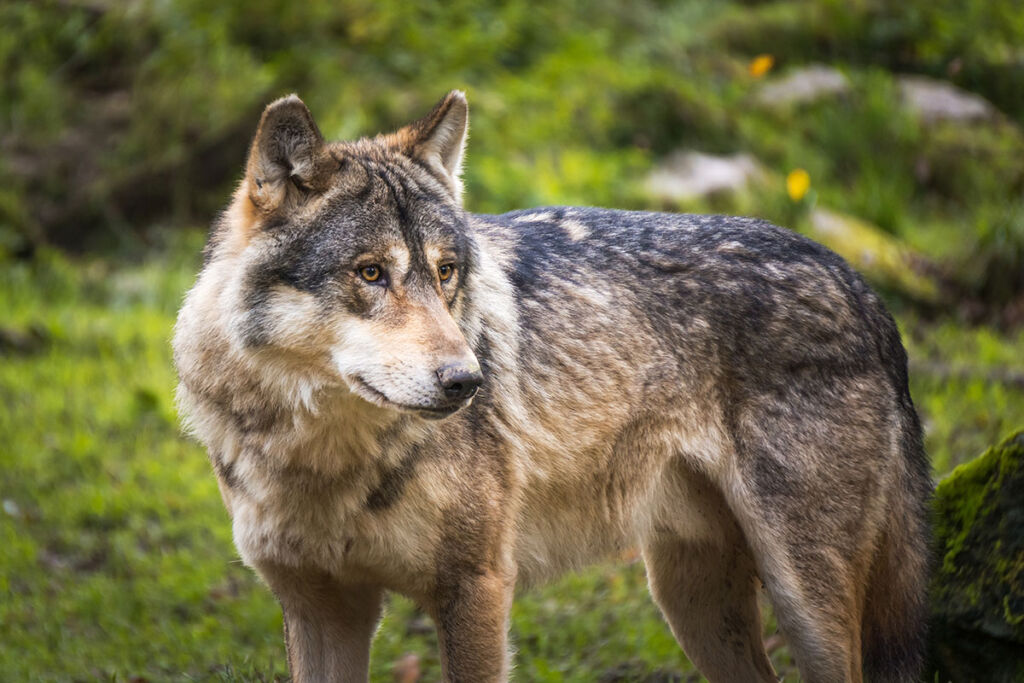
© Matthieu – stock.adobe.com
Slowly but surely, wolves are making a comeback. While they have remained relatively abundant in Canada and Alaska, their numbers have once again reached nearly 6,000 in the United States, south of the Canadian border. In Western Europe, the wolf population is estimated at more than 12,000, including 500 in France. In fact, wolves never really went very far away…“This is a natural colonization of French territory from Italy, which is home to one of the core populations that had survived in Europe,” explains Jean-Louis Martin.
This colonization is often viewed through the lens of the serious challenges it poses to livestock farmers:“These negative effects of the wolves’ presence on livestock farming—such as the number of sheep killed—are visible and easy to document,”explains Jean-Louis Martin. “On the other hand, the potential benefits that the presence of wolves might bring from an ecological or public perspective are often indirect and very difficult to demonstrate…”.To better illustrate these pros and cons, the researcher and his colleagues published a summary of the challenges posed by the coexistence of deer, wolves, and humans. It reveals that while the return of the wolf poses problems, it is also likely to bring benefits…
Controlling the deer population
For while the wolf is returning, it is certainly because it is now protected, but also because the past century has seen a dramatic increase in the number of deer and roe deer—this carnivore’s preferred prey.“While these large herbivores have been reintroduced in some areas, they have also naturally colonized new territories,” the ecologist explains. A “successful” return that is nonetheless not without ecological and societal consequences.
Because when left to their own devices, ungulates can wreak real havoc on forests.“In the studies we conducted in Canada, we showed that in the absence of deer predators, 90% of the understory vegetation disappeared.”As a result, many invertebrates that live in this understory disappear in turn, followed by the birds that feed on them.
The thousands of teeth of these herbivores also limit the regrowth of young trees, while their hooves, as they trample through the forest, contribute to soil compaction.“In France, the damage caused by deer to agriculture was estimated at approximately 20 million euros in 2004,”says Jean-Louis Martin.
Living Together, Road Safety, and Health
And that’s not even counting the economic and human costs caused by… traffic accidents. In 2012 in the United States, there were 1.23 million traffic accidents involving deer, killing 200 people and causing $4 billion in damage. Every year in Germany, 200,000 deer collide with vehicles, resulting in 50 deaths and 3,000 injuries, with the total cost of repairs in Europe estimated at over 1 billion euros, including 100 million for France.“Some recent studies suggest that the return of deer predators could lead to a decrease in the number of deaths resulting from these collisions,” the researcher explains.
Finally, the return of the wolf could have positive effects on… human health. Deer and roe deer are, in fact, prime hosts for ticks, whose nymphs carry diseases that can affect humans.“A significant decrease in the density of deer can thus reduce the incidence of Lyme disease,” concludes Jean-Louis Martin.
“Be careful—this is neither about demonizing deer nor sanctifying wolves, ”warns Jean-Louis Martin, “but simply about taking a broader view of the consequences of the wolves’ presence in a context where their wild prey is abundant, and about fostering better coexistence between wolves, deer, and humans.” The researcher conveyed this message earlier this year to the Minister for Ecological and Solidarity Transition as part of the work of the Scientific Council on Wolves and Livestock.
Top-down or bottom-up control?
Why is the world green? Researchers propose two possible answers to this question: The first hypothesis is that the world is green because plants employ “strategies” involving thorns or toxic molecules that prevent herbivores from eating them entirely. This is known as the top-down control hypothesis. Second hypothesis: the world is green because herbivores, anxious to escape their predators, spend a great deal of time managing this risk of predation and devote less time to feeding, consuming only the bare minimum without devouring the forests. This is known as the “top-down control” hypothesis.
To test these hypotheses, the researchers turned to a real-world laboratory: an archipelago in Canada where some islands were colonized by deer and others remained free of these large herbivores. “We found that, in the absence of their predators, deer strip the understory of its vegetation and cause a decline in biodiversity,” explains Jean-Louis Martin. “In this case, the result is consistent with the hypothesis that downward control of herbivores is necessary for the world to remain green.”
Hence the ecological importance of wolves, bears, pumas, wolverines, and other large carnivores. “If we promote a world without predators, we are eliminating something that has played an essential role in shaping life as we know it.” If just one species is missing, everything is thrown into disarray.