[LUM#11] Noise for senescent cells
Comparing senescent cells—which accumulate in our joints as we age—to a noisy neighbor in an apartment building: you’d have to think of that. It’s a funny and striking image that earned Yassin Tachikart, a doctoral student in biology, victory in the regional finals of the “My Thesis in 180 Seconds” competition and a spot in the national finals.
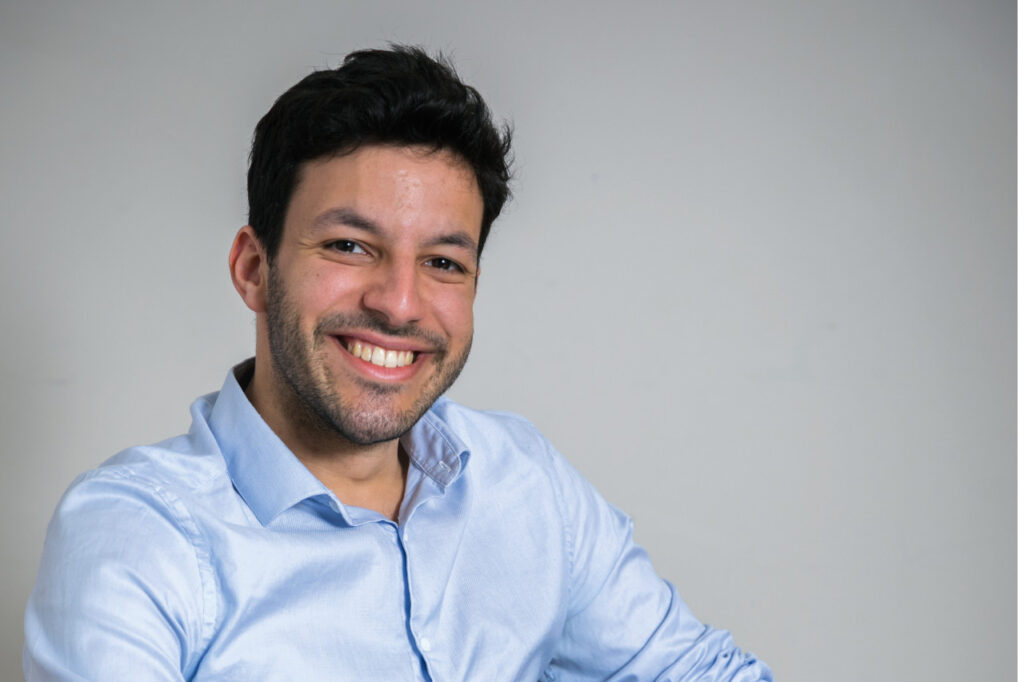
For the second year in a row, the Stem Cells, Cellular Plasticity, Regenerative Medicine, and Immunotherapy Laboratory has provided Occitanie with its winner of the “My Thesis in 180 Seconds” competition. Yassin Tachikart succeeded Nadège Nziza by winning the regional final of the competition before advancing, alongside Valentin Chaput—the second contestant from Montpellier—to the national grand finale, which took place in Grenoble last June.
Beneficial cells
Yassin Tachikart, a Ph.D. student at Inserm under the supervision of Jean-Marc Brondello, is pursuing a dual degree in pharmacy and biology and has been studying the role of stem cell senescence in knee osteoarthritis for the past three years.“The scientific definition of senescence is the cessation of proliferation,” explains the young researcher. “A senescent cell is a cell that can no longer divide.”
Contrary to popular belief, senescent cells play a role in our bodies throughout our lives—and a particularly beneficial one at that, since“fundamentally, these cells help repair damaged tissue by inducing the differentiation of surrounding cells or by engaging the immune system,” explains the doctoral student. Similarly, when a cell accumulates mutations and risks becoming cancerous, senescence acts as a defense mechanism.“To prevent the onset of cancer and uncontrolled division, these cells will become senescent and be eliminated by the immune system. So in theory, yes, it’s really amazing!”
An accumulation associated with aging
Problem: For various reasons related to aging, these cells appear more quickly or are no longer properly eliminated, and end up accumulating in the joints. They then disrupt their environment by releasing inflammatory molecules that cause diseases such as osteoarthritis. To borrow Yassin’s analogy, they become “that neighbor who turns the music up full blast at 4 a.m. and wakes up the whole building.”
In his dissertation, which he will defend in October 2019, the researcher has highlighted“the role of a protein that triggers the senescence of joint cells. It could enable us to identify new therapeutic targets. ” Part of this research is expected to be published shortly in the scientific journal Aging and has already been published in the journal Les cahiers de myologie (Targeting Senescent Cells, 2018) .
Ways to do this
A fitting conclusion for the man who, on stage at the MT180, proposed no longer“adding years to life, but life to years.” In the meantime, at 28, his whole life lies ahead of him. And while Yassin has no shortage of plans, he prefers to remain open to all opportunities. “What I really want is to do research. Whether in the public sector, in the private sector through a startup, in France or abroad, as long as I’m given the means, I’ll go.” Research to watch as we look forward to our golden years with greater peace of mind.
UM podcasts are now available on your favorite platform (Spotify, Deezer, Apple Podcasts, Amazon Music, etc.).