[LUM#11] Meeting the Challenge of e-Health
Nearly twenty years after the advent of digital technology in the hospital sector, the results of the electronic health record remain mixed. It is a tool designed to facilitate the work of healthcare professionals, but its use has not yet been optimized, as explained by Roxana Ologeanu-Taddei, a researcher in management sciences and co-research director of the E-Health Chair at the University of Montpellier Foundation.
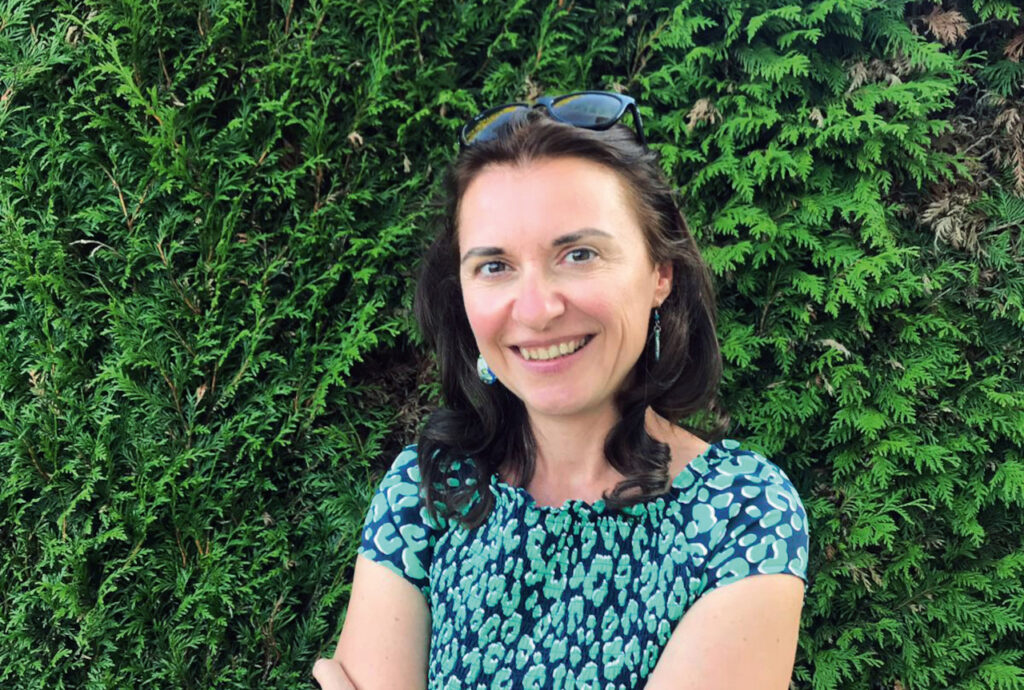
In a hospital more than anywhere else, access to information can be a matter of life and death. The electronic health record (EHR) centralizes all information related to a patient’s care on a single interface: medical history, current treatments, prescriptions, clinical tests… In short, information sharing between departments is just a click away, which could guarantee healthcare professionals“real time savings in finding relevant information, and ultimately better patient care,” explains Roxana Ologeanu-Taddei, a researcher at the Montpellier Management Research Laboratory (MRM) and a professor at Polytech.
An International Issue
Since 2013, this information systems specialist has been helping healthcare professionals use the EHR by providing them with“actionable knowledge—that is, knowledge that is useful in practice.” This support is necessary because, despite its many advantages,“the use of the electronic health record remains far below its potential,” notes the researcher, who observed doctors at Montpellier University Hospital for several months.
The main obstacle to the use of this technology is the lack of“interoperability”—in other words, compatibility with the various software programs used by healthcare professionals—which forces them to re-enter their information multiple times.“We should impose standards on software developers and have them monitored by a certification agency affiliated with the Ministry of Health, as is done in the aviation industry, for example,” recommends Roxana Ologeanu-Taddei.
Getting Familiar with Software
Another problem: the poor user experience of this software, which sometimes makes information difficult to find.“ The interface would need to be highly customizable to address the specific needs of different hospital specialties while truly taking their practices into account,” explains the researcher. In collaboration with two doctors from the University Hospital, she now offers a university degree program at the Montpellier-Nîmes School of Medicine titled Digital Transformation in Healthcare.
Expectations Regarding Telemedicine and E-Health
Beyond DPI, the convergence of digital technology and healthcare is nevertheless giving rise to numerous promising projects in telemedicine. Roxana Ologeanu-Taddei is co-supervising two doctoral dissertations focused on the design and evaluation of two mobile apps, in partnership with physicians at the Montpellier University Hospital. One concerns telerehabilitation, enabling the development of remote care. The other focuses on a digital card, Vigicard, for tracking and sharing information on drug allergies.“I am very enthusiastic about these new projects, which research on digital health can help inform to ensure their success,” she concludes.
Check out theUM podcasts, now available on your favorite platform (Spotify, Deezer, Apple Podcasts, Amazon Music, etc.).