[LUM#8] “What’s Left of the Wilderness?”
Since the end of the 20th century and the recognition of the link between the ecological crisis and human activity, the protection of biodiversity has been at the heart of public debate. But what does this concept of biodiversity actually mean? It is a question that philosophy has taken up, inviting us to rethink our relationship with nature.
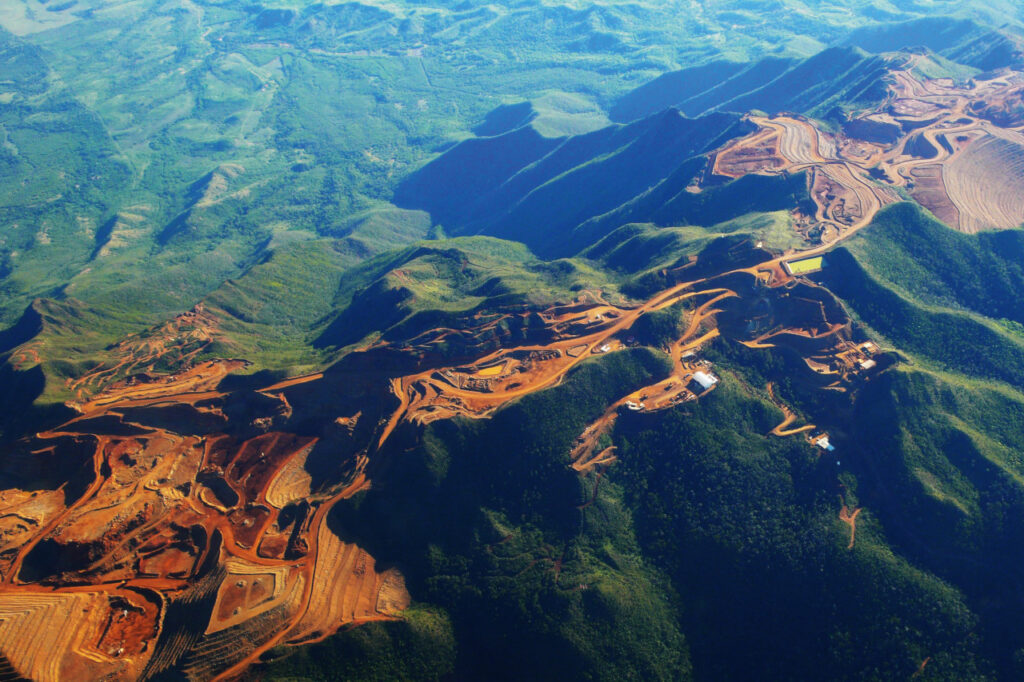
The concept of biodiversity first emerged in the 1980s. This term gradually came to replace the word “nature” in the discourse of politicians, scientists, and activists. For Virginie Maris, a philosopher at the Center for Functional and Evolutionary Ecology, this shift in vocabulary reflects“a profound change in our relationship with the environment, by breaking down the boundary between humans and nature. A boundary that, according to the researcher, “has always served as a cornerstone of Western thought—but also as a thorny problem.” Indeed, how should we conceive of humanity’s place within this dichotomy?
“A thornyissue”
The concept of biodiversity will completely blur the line between nature and culture by integrating humans into nature and eliminating “the need to refer to something that is separate from or external to humans. What matters here is the diversity of life.The theoretical distinction between what stems from human activities and what is independent of them is no longer truly relevant.”
Paradoxically, the term “biodiversity” has also distanced us from nature, relegating its protection to a more scientific realm—one of “more technical management by experts.” This gradually disconnects people from the many connections they have with nature.
Nature Under Surveillance
A shift that the philosopher first observes semantically in expressions such as“natural heritage management” and“optimization of ecosystem services”—in other words, the benefits that humans derive from ecosystems. But also in the emergence of mechanisms such as offset banks and environmental accounting.“Since 2000, the issue of nature conservation has been reframed in economic terms. We’ve shifted from responsibility to accounting. By changing the words, we also change—sometimes imperceptibly—the way we approach these issues.”
This change is also driven by the explosion of digital technologies and big data, which, according to the philosopher, can take the form of surveillance of nature.“We can equip all large birds of prey with GPS or GoPros; we can place sensors everywhere—but this raises the question of what we’re really trying to achieve. Are we protecting nature, or are we creating total transparency in the world around us, in a sort of delusion of absolute control?”
The Age of Man
And what should we make of the cloning of extinct species using DNA fragments, or the artificial insemination programs implemented in the name of conserving endangered species? Does the proliferation of biotechnological innovations and increasingly complex conservation measures tend to obscure the question of where to draw the line in the artificial manipulation of nature?“Where do we draw the line? ”asks Virginie Maris. “How far should we go in this dependence on technology?”
This trend reaches its peak in the arguments of certain proponents ofthe “Anthropocene”(see sidebar), who believe that only science and technology can mitigate the impact of human pressure on the planet.“In this age of humanity, what remains of nature conceived as wilderness—viewed in its exteriority, its otherness, and its autonomy from human ends? What concepts can we offer to counter global-scale geoengineering projects and the current trend toward the total appropriation of the world?”
Learning Boundaries
Don’t confuse protection with appropriation. Consider the idea that while we cannot do without nature, the reverse is not true—and that, undoubtedly, certain places and species would fare much better without us. That, at any rate, is Virginie Maris’s conclusion1, who urges humans to “exercise self-restraint. To accept that territories and species follow their own dynamics, their own evolutionary paths, and that sometimes we should simply refrain from intervening. And if humans do venture there, let them do so only as observers—at their own risk.”
“Anthropocene.” The term was popularized in the late 20th century by Paul Josef Crutzen, a meteorologist and atmospheric chemist who won the Nobel Prize in Chemistry in 1995. This proposed name to characterize the current epoch in the geological time scale literally means “the Age of Man.” It would follow the Holocene. Several potential starting points are currently under debate (domestication, the colonization of the Americas, the Industrial Revolution, the discovery of nuclear fission, andthe “Great Acceleration”of the 1950s). It refers to the period when the impact of human activities on the planet became so significant that it constitutes a new geological force. It remains a highly debated concept within the scientific community.
Learn more:
- The term "carbon offsetting" is scientifically absurd, LUM, 2024
- Podcast “A l’UM la science”: From Ecological Offset to Bricolab, 2022
Check out theUM podcasts, now available on your favorite platform (Spotify, Deezer, Apple Podcasts, Amazon Music, etc.).
- See his latest book, published in September by Seuil and titled The Wild Side of the World. ↩︎