The University of Montpellier and 17 other European partners are joining forces to restore harmony and balance among bees (Better-B)
The key to resilient beekeeping lies in harnessing the power of nature to restore harmony and balance within the bee colony and between the colony and its environment. This is what the University of Montpellier is achieving with its partners through the Better-B project.
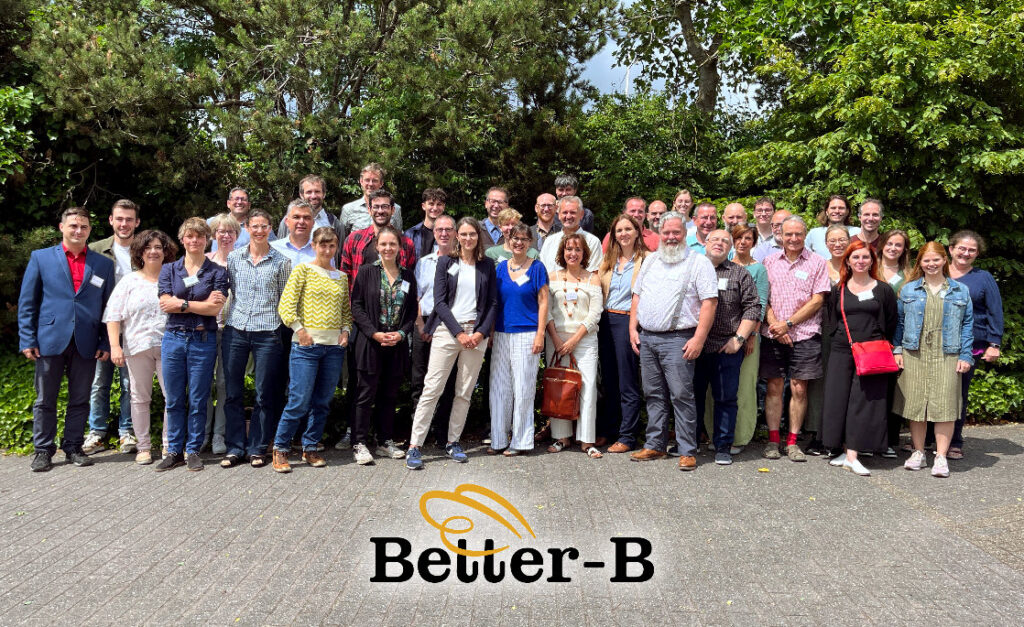
Honeybee colonies are often ill-equipped to cope with external threats, such as climate change, pesticides, and parasitic attacks, which are exacerbated by modern beekeeping practices. The key to resilient beekeeping is to harness the power of nature and restore harmony and balance, both within the honeybee colony and between the colony and its environment. The Better-B consortium believes that the path to harmony and balance is paved by Darwinian colonies: abandoned or feral colonies that have survived in the wild or have been selected based on fitness criteria. However, these colonies generally lack the desirable traits that are important in modern beekeeping. Our solution consists of understanding the selection processes and mechanisms at work in nature and adapting modern beekeeping practices accordingly, utilizing the benefits of advanced technologies where appropriate. This is the raison d’être of Better-B. The implementation of our new approach to beekeeping management will take place in close collaboration with the beekeepers involved. Restoring harmony and balance must occur on three levels: the environment, the honeybee, and beekeeping practices.
Our consortium of 18 partners from 14 countries, coordinated by Dirk de Graaf, a professor at Ghent University, has been awarded 6.3 million euros by the European Union, the United Kingdom, and Switzerland to improve the resilience of beekeeping in the face of abiotic stresses such as climate change, habitat loss, and hazardous chemicals.
The Better-B project has received funding from the European Union, the Swiss State Secretariat for Education, Research, and Innovation (SERI), and UK Research and Innovation (UKRI) as part of the British government’s Horizon Europe funding guarantee (grant number 10068544).
