Marie Huot: Anti-speciesism and Feminism—A Shared Struggle Against Oppression in the 19th Century
At a time when environmental challenges are more urgent than ever, the unique life story of Marie Huot (1846–1930) is once again in the spotlight. Long overlooked, her fight for animal rights and women’s emancipation has, a century later, become a source of inspiration for younger generations.
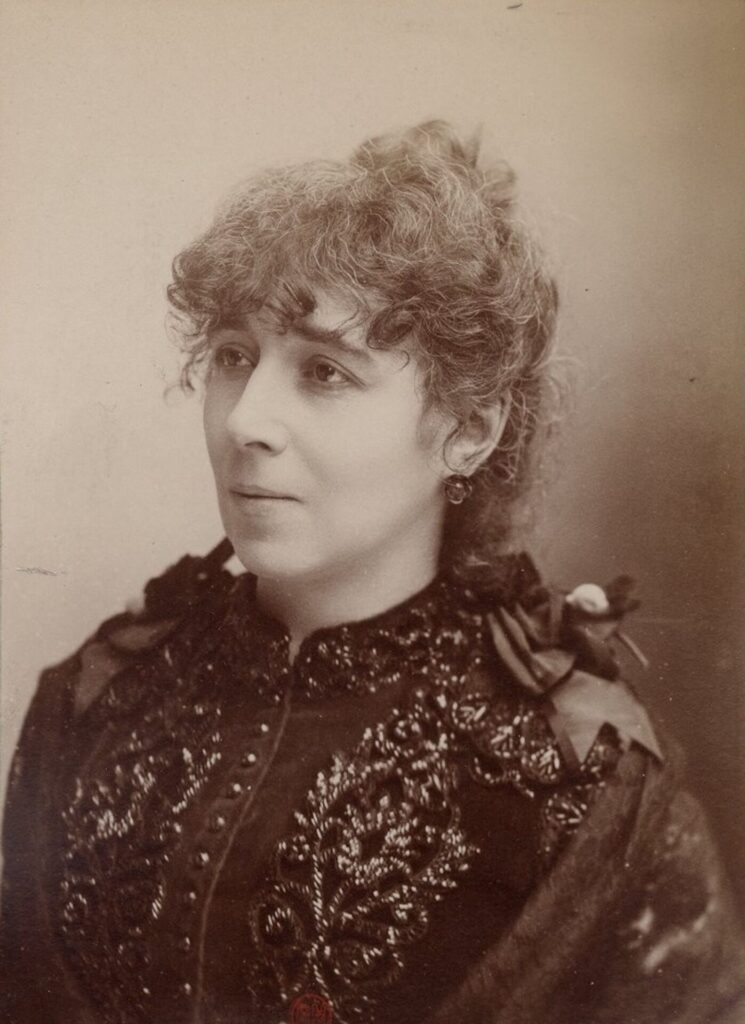
Sylvain Wagnon, University of Montpellier
A writer, poet, and libertarian activist, Marie Huot was a pioneer in the field of birth control. Her name resurfaced in November 2022, just as the world’s population surpassed the eight-billion mark. Population growth is once again becoming a hot-button political issue.
A Struggle Then and Now
Her ideas strike a very contemporary chord within environmental movements. The current concerns of a generation that is questioning whether to have children—at a time when governments and public opinion remain stagnant or paralyzed when it comes to taking action on climate and environmental issues—highlight Marie Huot’s potential legacy.
At the same time, her fight against animal cruelty echoes the demands of many environmentalists and vegans. This pioneer of anti-speciesism waged a relentless battle against bullfighting, and her example continues to serve as a model for today’s struggles.
Finally, her commitment paved the way for debates on the convergence of struggles, highlighting the intersectionality of social, feminist, and environmental causes, with the goal of shaping a different society based on greater solidarity and equality.
The Hunger Strike
Marie Huot is not simply advocating for birth control. She is calling for a more radical form of social and political action: the womb strike.
In 1892, in her article “Maternités, ” published in the anarchist newspaper*l’En dehors*, she directly addressed the issue of abortion and the need for a “womb strike” to combat poverty and inequality between men and women. Her contribution to feminist struggles is emblematic of the desire to make motherhood a conscious, thoughtful act and a force for social transformation.
By making motherhood—or the rejection of motherhood—a focus of political struggle, she is also part of the anti-militarist movement that refuses to view children as “cannon fodder.”
In 2019, the international Birthstrike movement directly carried on Marie Huot’s legacy and her approach to activism, championed by prominent figures such as Alexandria Ocasio-Cortez.
My body belongs to me!
Above all, for Marie Huot, women must fully commit themselves to political struggles in order to free themselves from the exclusive role of wife and mother to which 19th-century bourgeois and capitalist society confined them.
Marie Huot became involved in the “neo-Malthusian” movement , which advocated birth control as a prerequisite for a better life for the working class. She took part in demonstrations, signed petitions, and gave lectures to promote the adoption of birth control, which she considered the primary condition for women’s emancipation.
A struggle that is currently being waged by many feminist movements in the name of social justice.
She supports the anarchist educator Paul Robin in his fight for a holistic education that takes into account the various facets of a child, in contrast to the traditional view of education. Learning with the mind, but also with the body and emotions, remains revolutionary in the field of education, both then and now.
For Marie Huot, sex education is essential—an indispensable prerequisite for the emergence of a “conscious generation.” For women, knowing their bodies means giving themselves the freedom to make choices about them. Need we remind you that it wasn’t until 2017 that a textbook depicted a clitoris?
It should also be noted that, at the end ofthe 19th century, “procreative prudence” and birth control were fiercely attacked by conservatives and religious figures who advocated a puritanical and strict moral code. And even within revolutionary and progressive circles, these were issues of concern to only a minority.
Animal Rights and Feminism
Alongside the first French libertarian feminists— "neither housewives nor courtesans"—Marie Huot committed herself to fighting against the patriarchal system of domination. For her, the convergence of feminist struggles and the animal rights movement was self-evident, since the patriarchal and capitalist system oppresses and dominates both women and animals.
In her writings on animal rights, she consistently highlights the parallels between the violence inflicted on animals and that suffered by women. Through concrete actions, she fights against experimental medicine practiced by male doctors who abuse their power to conduct violent and unnecessary experiments not only on animals but also on women.
She railed against doctors who, in the name of Claude Bernard’s so-called “experimental” method, abused vivisection “in demonstrations repeated a thousand times.” She did not hesitate to interrupt Dr. Brown-Séquard, who was performing a public vivisection on a young, living monkey. Her friendship with Louise Michel—an anarchist activist and major figure of the Paris Commune—revealed through their correspondence, shows a combative Marie Huot, who carried out numerous “hard-hitting” actions and interventions within the People’s League Against Vivisection, particularly against bullfighting, which was beginning to take hold in France.
During her lifetime, Marie Huot was attacked as a woman, a libertarian, and an anti-speciesist. She has been overlooked by historians because of her eclecticism and the difficulty of “categorizing” her within a specific ideological current. Yet Marie Huot laid the groundwork for an anti-speciesist philosophy. She forcefully asserted that sexism and speciesism share the same roots in discrimination and domination, and that they must be fought together to achieve a new balance among all living beings—one based no longer on domination but on equality.
Sylvain Wagnon, Full Professor of Education, School of Education, University of Montpellier
This article is republished from The Conversation under a Creative Commons license. Readthe original article.