Nine key initiatives and hundreds of actions implemented
It’s time to take stock of the nine key initiatives of the I-SITE Program of Excellence (PEI). On Wednesday, November 23, 2022, the leaders of the “Muse key initiatives” presented the findings of their projects. This was an opportunity to demonstrate how these initiatives have helped shape their scientific community and enhance the national and international visibility of the University of Montpellier (UM) and its partners.
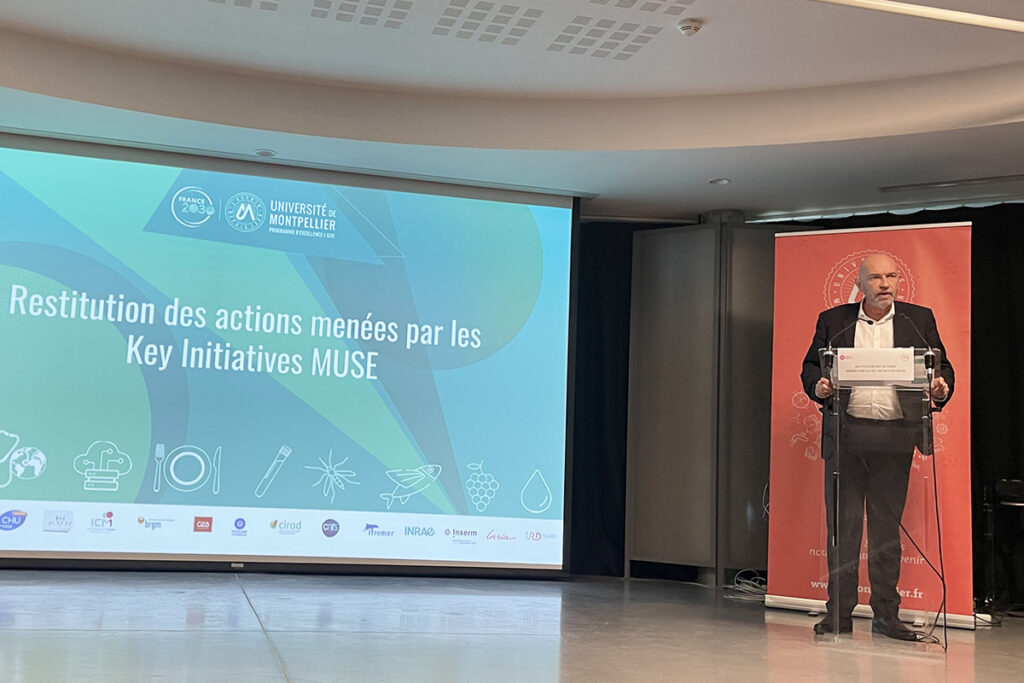
Food and health, biomarkers and therapy, data for the life sciences, water, the ocean, and coastal areas, climate risks and health challenges, risks and vectors, blood sciences, and viticulture and oenology… By addressing these themes, the nine Muse (Kim) key initiatives embody the unique identity of theUM , and its PEI partners within its region. Depending on the level of organization of the communities at the time of their creation or the expected societal impacts, each Kim had a specific roadmap centered on a common goal: to foster synergies between research, education, and the socio-economic sector.
A leverage effect
The various reports thus demonstrated that each key initiative had a multiplier effect that justified extending their activities as part of the Occitanie Region’s “Key Challenge” program. This is the case for the Kim “ water ,”“vine & wine,”“biomarkers & therapy,”and “ risks & vectors .” The latter’s themes will, in fact, be fully integrated into the ExposUM project. Others are expanding their scope internationally through initiatives planned under the “Ideas” program of the Investment for the Future Program (PIA3). The designation of the UNESCO International Center on Water ( ICIREWARD ) and the international recognition of the scientific community in this field are fine examples of the momentum generated by the “water” key initiative.
The impact of these initiatives on the international stage can be measured by the number of partnerships established and the dissemination of Montpellier’s expertise in these fields. For example, the international “seeds” research projects developed at Kim“Sea & Cost”have enabled collaboration with 36 international partners across all continents and paved the way for the creation of a Montpellier marine science program. The establishment of a core collection comprising 279 grape varieties representative of the genetic diversity of Vitis vinifera by the KIM Vine & Wine division is intended to inspire international partners on both American continents, in South Africa, and in Australia.
A key concept: “interdisciplinarity”
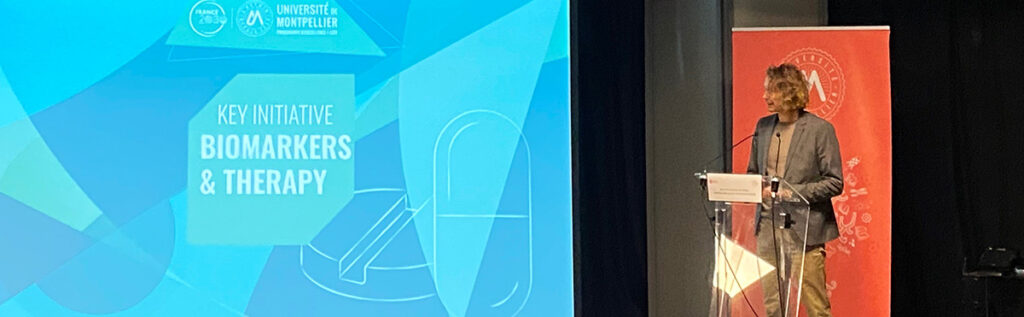
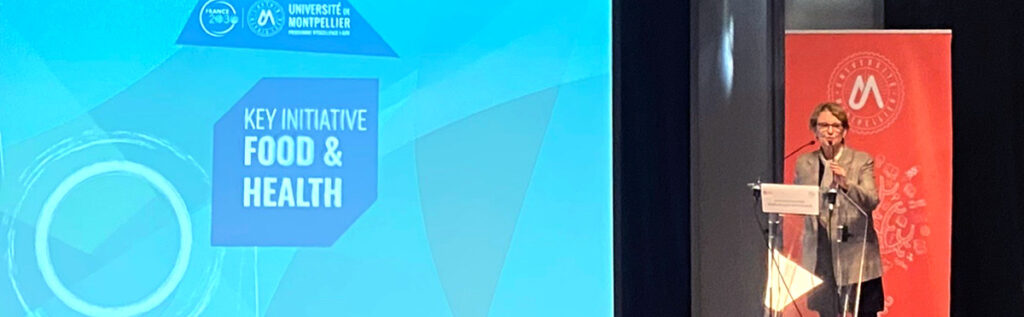
The term“interdisciplinarity”was undoubtedly the one most frequently used throughout this morning of presentations and discussions. The involvement of various scientific communities around a common theme has indeed created new synergies, leading to innovative interdisciplinary research projects—as exemplified, for instance, by the Beast project launched by the“Data for Life Sciences”key initiative.Interdisciplinary by nature, the Kim “ Food & Health ” has, for its part, enabled the implementation of foundational initiatives at the intersection of agriculture and health. It is in the spirit of interdisciplinarity that shared platforms have also been developed, such as“e-match”for access to health data for biomedical research—launched by the“Biomarkers & Therapy”KIM—and the establishment of a service hub for the entire community by the“Data & Life Science”KIM.
Master’s scholarships, summer schools, interdisciplinary training programs… Through their various activities, the key initiatives have helped strengthen interdisciplinarity in education, particularly for master’s students. It is therefore no coincidence that the contribution of these key initiatives to the development of the IDIL (Interdisciplinary and in-lab graduate program) has been regularly highlighted. The flagship event: the hackathon Water4futur embodies the continuum of education, research, innovation, and dissemination in the service of societal challenges. This initiative brought together schoolchildren, high school students, and college students from 20 universities and 11 countries.
Share knowledge, innovate, raise awareness
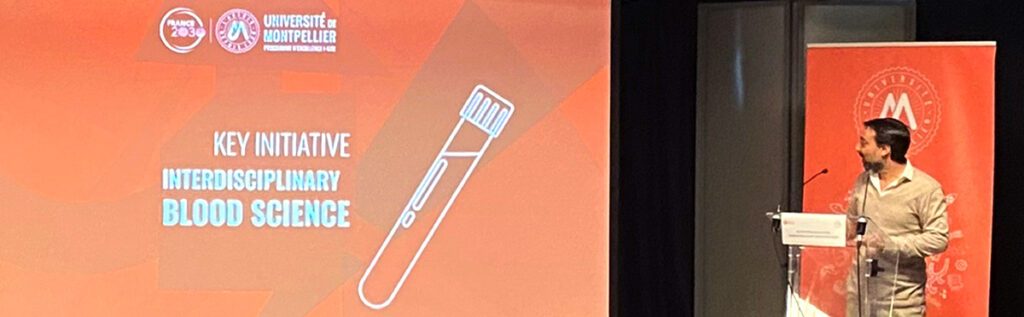
As these projects were rolled out amid the pandemic, the MOOC format was adopted by several key initiatives to enable as many people as possible to access training. Notable examples include an international MOOC on blood sciences as part of the KIM“Interdisciplinary Blood Science” initiative; those developed in collaboration with the FAO on food systems; and those developed with Wageningen University & Research, a strategic partner of theUM , on building a healthy and sustainable food environment; and the“Vine & Wine”MOOC project.
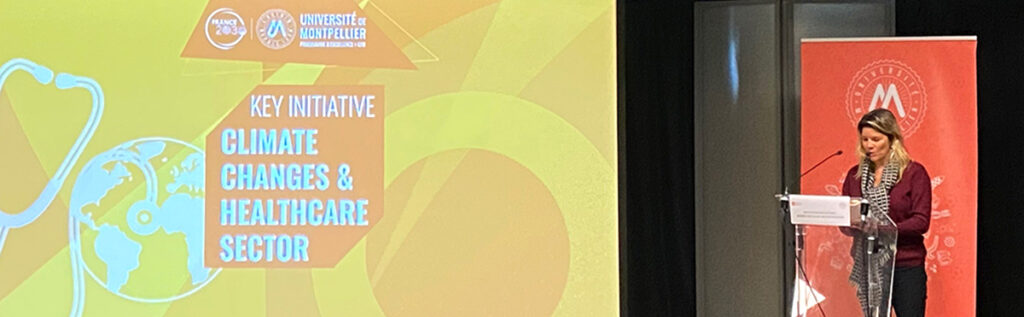
The roadmap for key initiatives also included a section dedicated to innovation and the economy, two key areas of the I-SITE excellence program. Notable examples in this area include initiatives that have strengthened the dialogue between the scientific community and the business world—such as the participation of key initiatives in trade shows like the Sea and Coast Fair—as well as support for the development of innovative projects. The Kim Food & Health initiative has also launched a support program for startups and companies through the Innov’labs. Finally, the Kim Climate Change & Healthcare Sector initiative has made raising awareness among stakeholders in healthcare organizations and developing tools to aid managerial decision-making central to its project.
The organization of research-industry networking events in health and nutrition—such asthe “Biomarkers & Therapy Days”—held in collaboration with the economic development agency Ad’Occ and the Eurobiomed competitiveness cluster has helped raise awareness among stakeholders in the relevant professional sectors. More broadly, raising awareness among both the business community and the general public has been a common goal shared by all the KIMs, which have organized numerous seminars, workshops, and other events to share knowledge and integrate the various communities into the local area.