New Facilities for the Gard Campus of the Montpellier-Nîmes School of Medicine
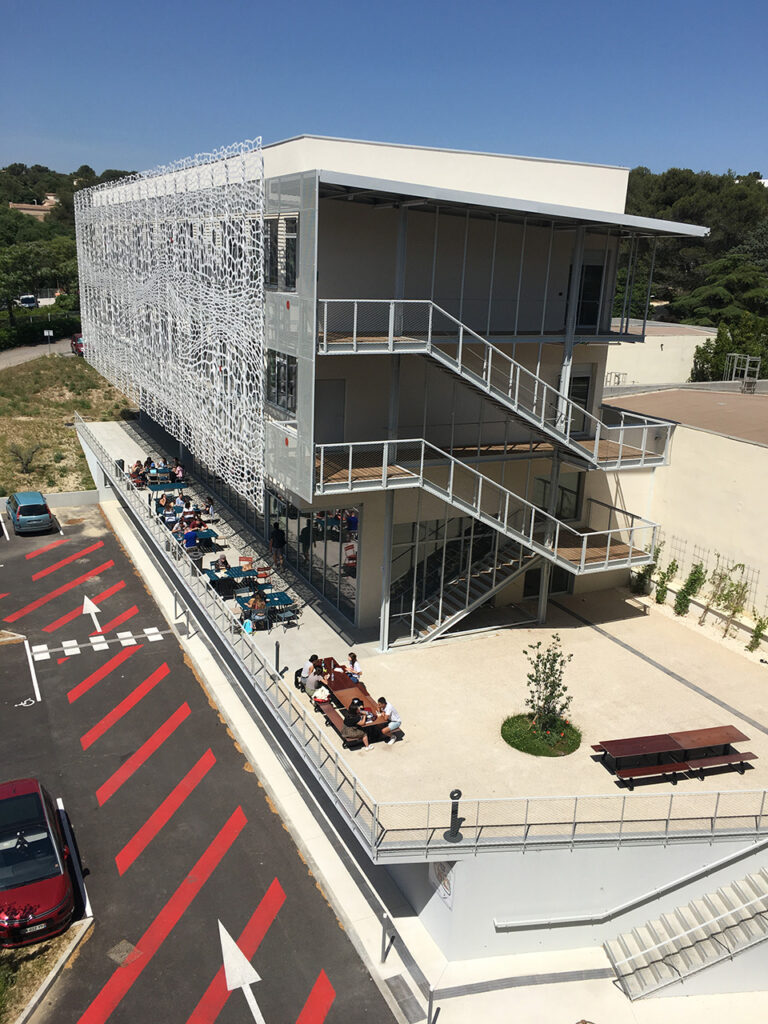
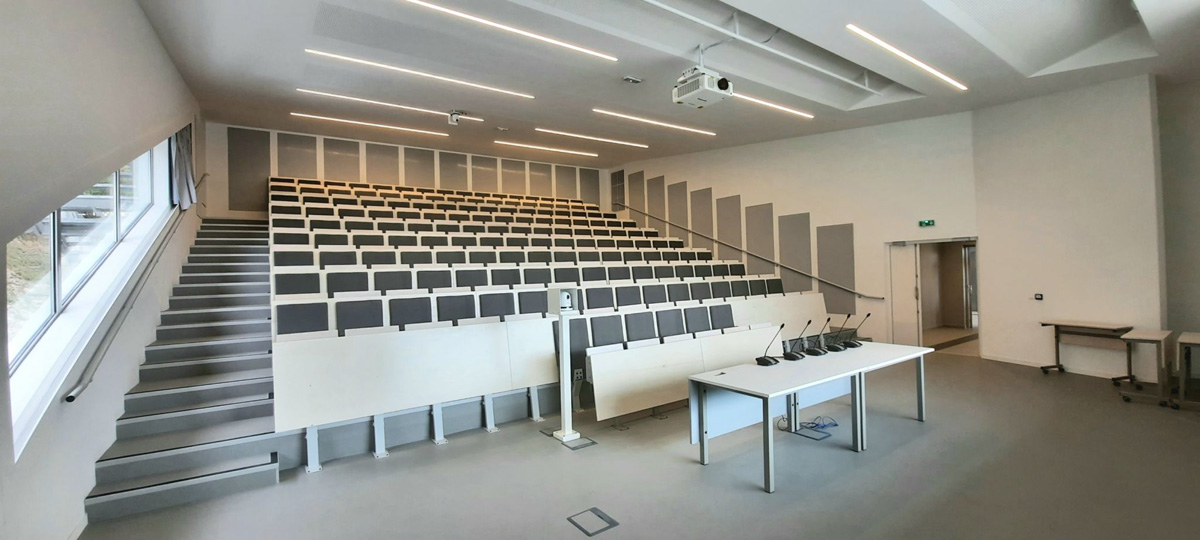
On February 8, the Nîmes University Hospital Campus inaugurated the expansion and renovation of its facility during an official visit attended by representatives from the various institutions that helped fund the project. With 1,434 m² of additional floor space and 1,336 m² of renovated space, the Nîmes-Montpellier School of Medicine has further enhanced its appeal.
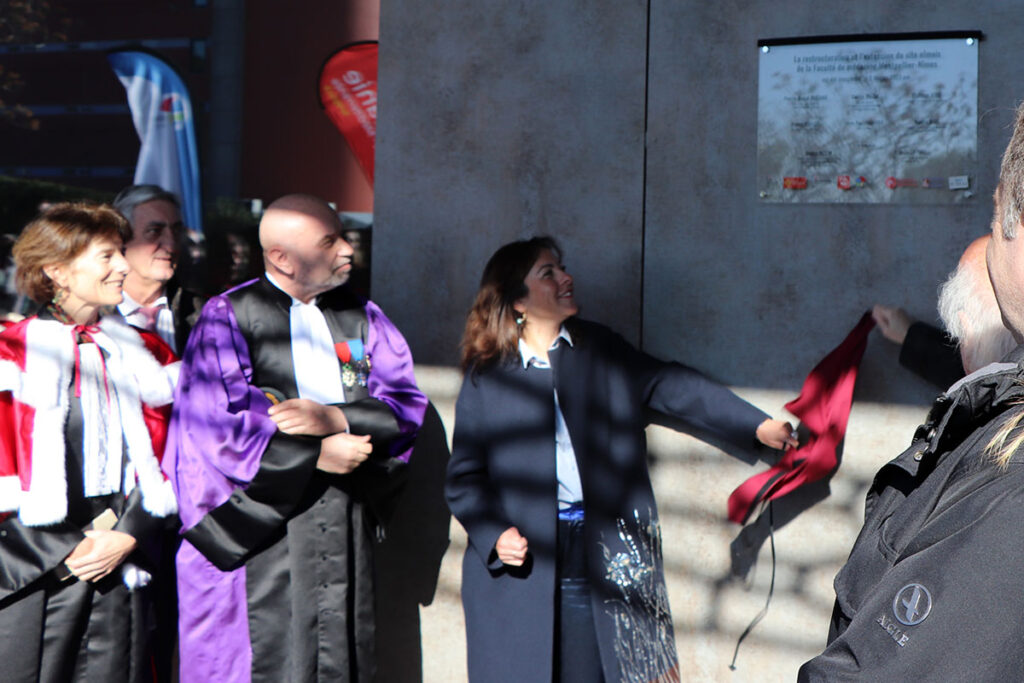
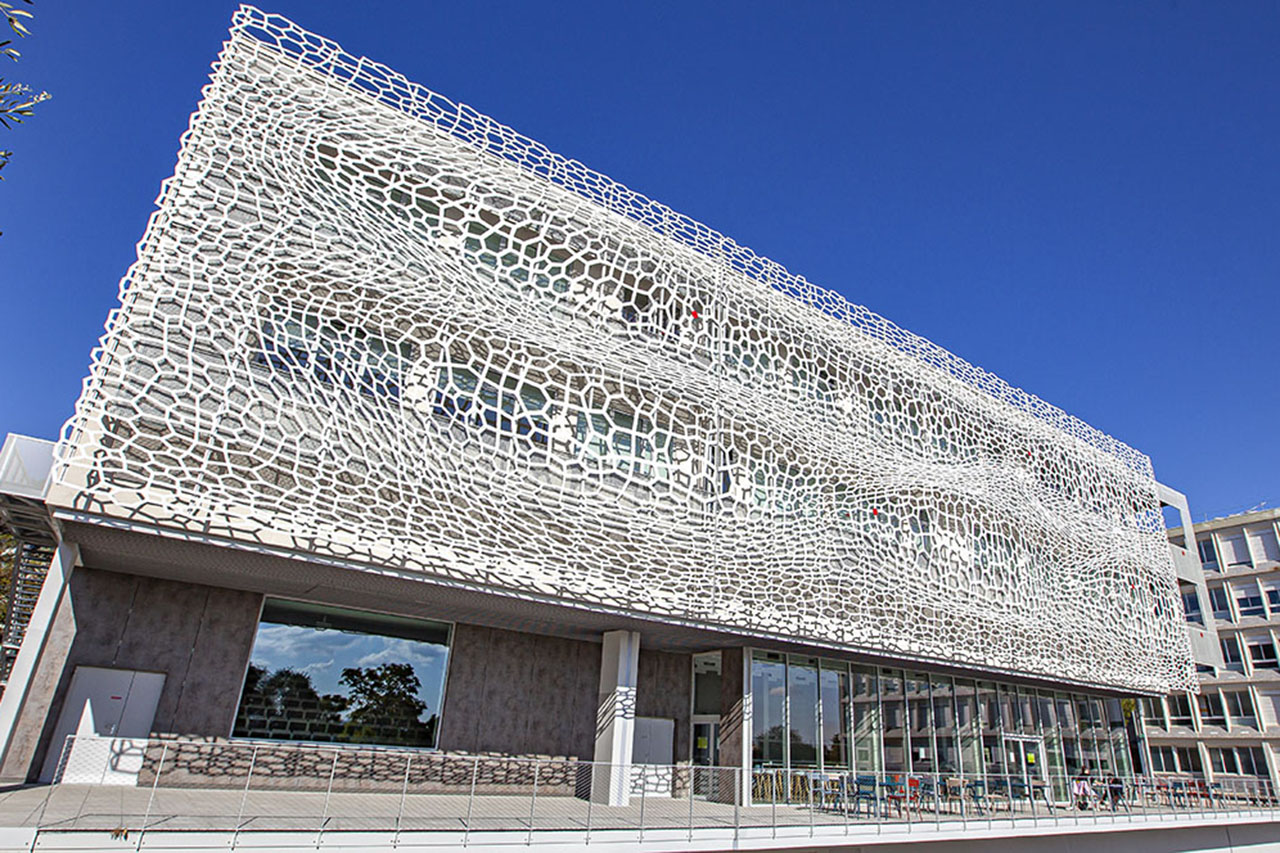
On February 8, in the presence of numerous officials, Philippe Augé, president of the University of Montpellier, and Carole Delga, president of the Occitanie Region, unveiled a plaque commemorating the official inauguration of the expansion of the Gard campus of the Nîmes-Montpellier School of Medicine, designed by the architectural firm Nicolas C. Guillot. This marks the synergy that made it possible to complete this project, which began a little over two years ago but had been planned for a long time, as Philippe Augé points out: “This inauguration is the culmination of a commitment spanning several years—one that is all the more significant given that Montpellier-Nîmes is the only medical school in France located on two sites, thereby contributing to the regional network and the expansion of the University of Montpellier’s educational offerings.”
The Region, the State, the university, the metropolitan area, the city of Nîmes, and the University Hospital (CHU) have all contributed funds to raise the 9.6 million euros needed to complete the expansion of Building D and the renovation of Building A.“The Region has invested 3.4 M€ in this project, which reinforces our commitment to making Nîmes a true Health Campus,” said the president of the Region. “Investing in the future of healthcare also means addressing today’s challenges in accessing care and combating medical deserts.”
A New Lease on Life
The Nîmes campus will celebrate its 50th anniversary this year. Over the course of five decades, this second location of the Montpellier-Nîmes Faculty of Medicine has become a campus in its own right, growing from 747 students in 2001 to more than 2,100 twenty years later—representing one-third of the total number of students enrolled in theUM medicine and midwifery programs. This steadily rising number can be attributed to the quality of education—which is identical in every respect to that offered at the Montpellier campus—and to student life in the city, which is becoming increasingly popular. “ “The proximity of the university hospitals in Nîmes and Montpellier, as well as the very rich healthcare ecosystem at both sites and throughout the region, allow us to offer students exceptional internship opportunities,” notes Faculty Dean Isabelle Laffont. “It’s no coincidence that we are currently the third most popular medical school chosen by residents upon completing their postgraduate medical studies.”
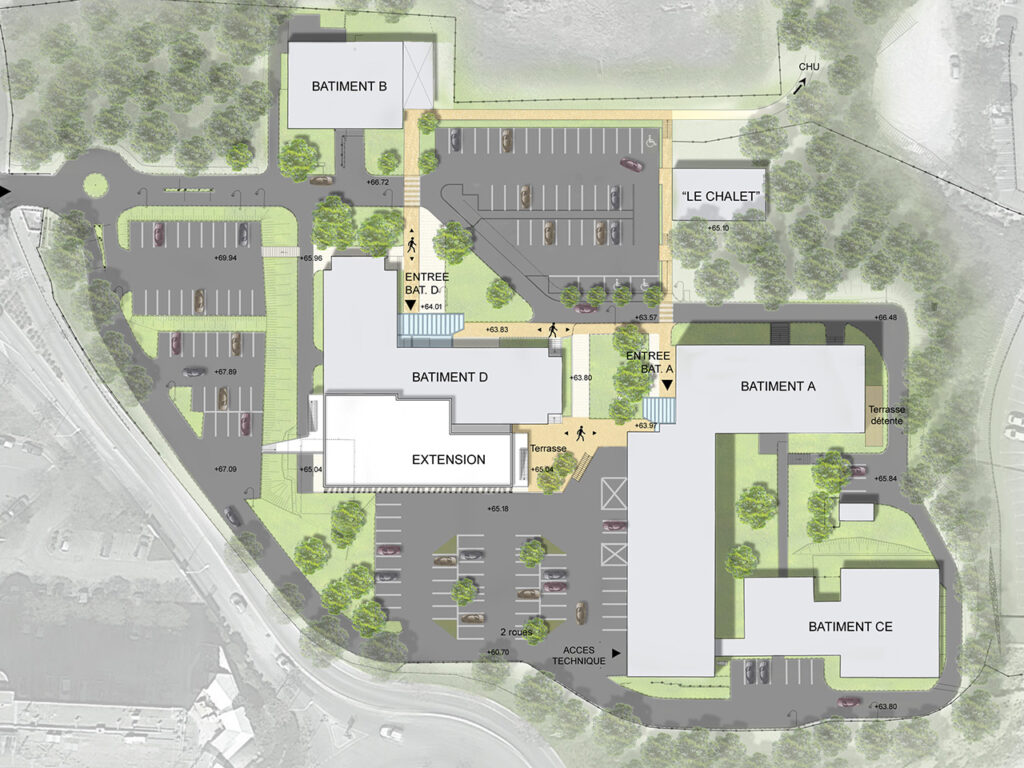
In response to this success, a renovation of the campus was therefore expected. It is now complete. The expansion of Building D, located at the heart of the campus, offers teaching staff and students a fresh start thanks to its 1,434 m² of new construction and 1,336 m² of renovated space. Four additional classrooms and a 150-seat lecture hall have been built, supplementing the 13 existing classrooms and two lecture halls. The renovation of Building A, meanwhile, has created three new classrooms by consolidating all administrative services on the first floor, which was previously remodeled to gain more than 170 m².
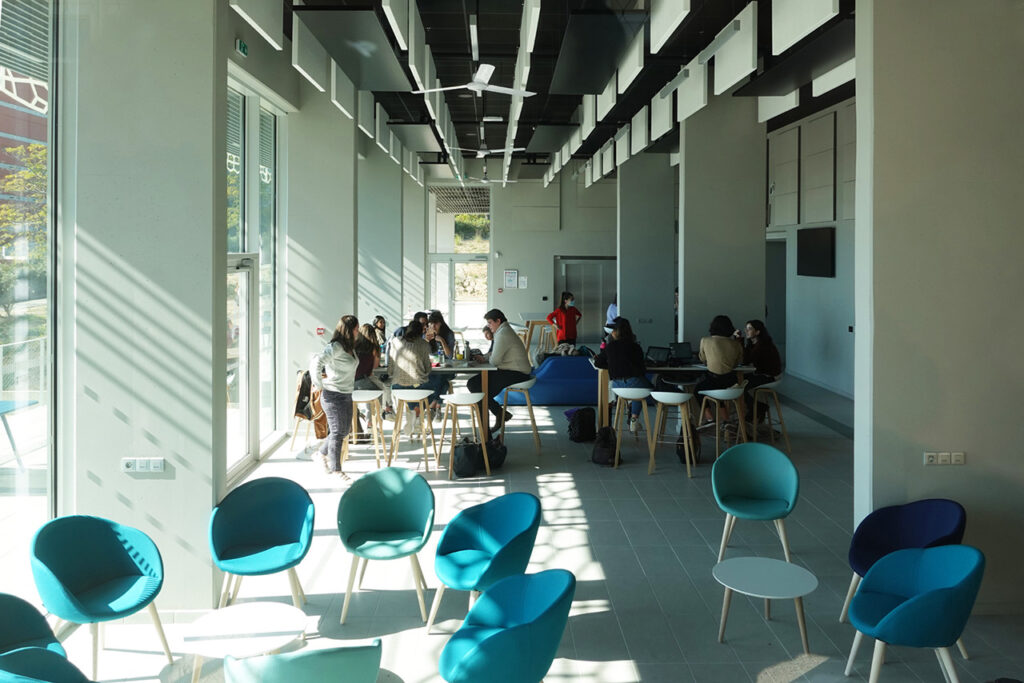
Student life, so dear to medical students, has not been overlooked, with the creation of a 200 m² social space—complete with a sound system, equipment, and furniture—in the extension of Building D. The facilities of the “Corpo Carabins Crocodiles” student association and the Nîmes Midwifery Students’ Association have also benefited from this renovation, as has the tutoring area. Finally, a 1,000-square-meter outdoor pine grove with garrigue vegetation has been landscaped, offering access to a multipurpose recreational area (pétanque, mölkky, relaxation breaks, etc.).
Implementing Modern Teaching Methods
Isabelle Laffont, Dean of the Faculty of Medicine, was delighted to give a tour of all these facilities throughout the morning’s inauguration ceremony.“The expansion and renovation provide our institution with superbly equipped new facilities, enabling us to implement a modern educational approach in which digital technology, simulation, and the scientific method take on an unparalleled role.” ” And it was undoubtedly the new simulation-based teaching center—SimHU Nîmes, dedicated to university hospital medical simulation—presented by anesthesiologist Laurent Mattatia, that captured the guests’ attention the most.
An exceptional facility built in partnership with the Nîmes University Hospital, which now has ten simulation rooms where medical students and healthcare professionals can practice medical and surgical procedures on “patient robots.” Thanks to hyper-realistic simulations, where scenarios evolve in real time—whether in the operating room, the emergency department, the delivery room, the neonatal unit, the intensive care unit, or any other hospital department—all hospital departments open their doors to learners without posing any risk to patients. “The creation of ‘SimHU Nîmes,’ based on the principle of primum non nocere [‘first, do no harm’], is deeply rooted in our DNA,” concludes Nicolas Best, Director General of the Nîmes University Hospital. “The hospital-university collaboration between our two cities continues to grow and develop, allowing us to pool our expertise to serve patients in our region.”
A collective public financing plan
All of the funding partners were present on February 8, 2023, at the Nîmes University Hospital Campus. Pierre-André Durand, Prefect of the Occitanie region and Haute-Garonne, represented by Marie-Françoise Lecaillon, Prefect of the Gard; Carole Delga, President of the Occitanie region; Philippe Augé, President of the University of Montpellier; Franck Proust, President of Nîmes Métropole; Jean-Paul Fournier, Mayor of Nîmes, and Nicolas Best, Director General of the Nîmes University Hospital.
All of them participated in this expansion project for the Montpellier-Nîmes School of Medicine, the total cost of which—9.62 million—was financed as follows:
- Occitanie Region: 3,389 M€
- Balance: 3,250 M€
- University of Montpellier: €843,000
- Nîmes Métropole: €820,000
- City of Nîmes: €817,000
- University Hospital: €500,000