Fishing and Climate Change: What Are the Impacts on Carbon Sequestration in the Ocean?
An international team led by researchers from the University of Montpellier, the CNRS, the World Maritime University (WMU), and the University of California has quantified the past, present, and future impact of fishing and climate change on the ability of commercially important species (fish and other macroinvertebrates) to sequester carbon on the ocean floor. Their findings, published in the journal *Nature Communications*, show that climate change is projected to reduce carbon sequestration by commercial species by 13.5% by the end of the century. However, the impact of climate change remains much smaller than that of fishing, which has already reduced this sequestration by 47% compared to 1950. This research therefore calls for more sustainable ocean management that takes into account the impact fishing can have on carbon sequestration.
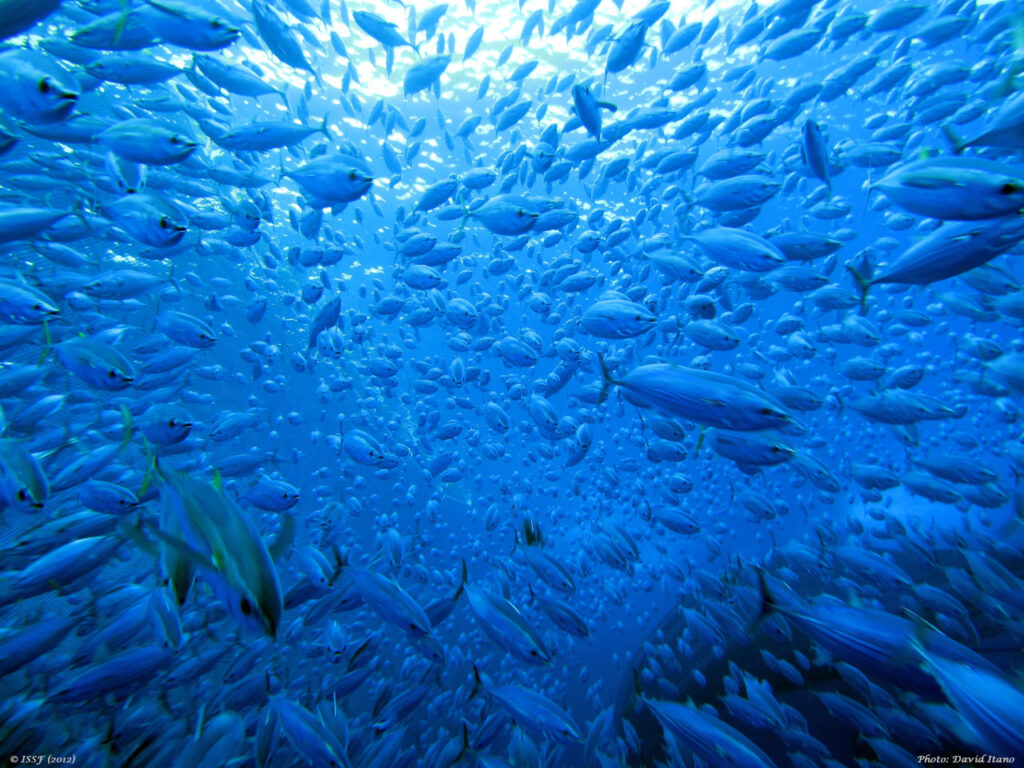
What if marine macrofauna could help sequester more carbon?
Natural Climate Solutions (NCS) have the advantage of killing two birds with one stone: mitigating climate change while combating biodiversity loss through the restoration, protection, or improved management of ecosystems such as forests. But as forests continue to burn, the scientific community is gradually turning to the ocean to find new NCS. In their 2021 joint report, experts from the IPCC and IPBES suggest that the way we manage the food resources the ocean provides must evolve to help us combat climate change. But what is the connection between a biodiverse ocean, fisheries, climate change, and carbon sequestration? These are the questions this new study seeks to answer.
How does marine macrofauna sequester carbon?
The role of fish and macroinvertebrates (macrofauna) is far from negligible, given that they account for 30% of the carbon sequestered by all marine organisms. Their diet, which consists of carbon, is partly accumulated in their flesh or expelled via fecal pellets. When macrofauna produce fecal pellets or die from disease or old age, the carbon contained within them sinks to the ocean depths, thereby sequestering the carbon they contain. Thus, the study shows that in 1950, before the combined effects of overfishing and climate change became apparent, commercially important macrofauna had the capacity to sequester 0.23 billion metric tons of carbon per year, 90% of which was via fecal pellets.
The Historical Impact of Fishing
Today, this commercially important macrofauna sequesters only 0.12 billion metric tons of carbon per year—a 47% decrease compared to the 1950s. “Every time fishing reduces the biomass of commercial species by 1%, carbon sequestration decreases by 0.8%,” the study’s authors explain. Fishing has a greater impact on carbon sequestration through the sinking of carcasses than through the sinking of fecal pellets. “This is because fishing targets the largest organisms—those most likely to die of old age.” In addition to the impacts this may have on carbon sequestration, this decrease in the arrival of carcasses on the ocean floor also means a decrease in the supply of food to the abyss, as carcasses are a delicacy for the organisms that live there. “So, we may be starving a whole host of deep-sea organisms that we barely know about,” they conclude.
The Impact of Climate Change: A Vicious Cycle
The more climate change worsens, the lower the ability of commercially important species to sequester carbon will be, which exacerbates global warming. If the Paris Agreement is met (+1.5°C), carbon sequestration will decrease by 4% by 2100, but by as much as 13.5% if temperatures rise by +4.3°C. For every degree of warming, a 2.46% reduction is expected. Thus, the combined effects of fishing and climate change could reduce carbon sequestration by 56% by 2100 compared to 1950 levels.
A New Natural Solution for the Climate?
The study quantifies, for the first time, the benefits of restoring fish and macroinvertebrate populations: up to 0.4 billion metric tons ofCO2 sequestered per year, a potential comparable to that of mangroves. Over several decades, this would amount to 240 billion metric tons ofCO2—the equivalent of six years of human emissions. SNCs associated with the restoration of commercial fish populations therefore appear to be a promising avenue, but their contribution to meeting climate goals will remain minimal unless these measures are viewed as complementary to a drastic and immediate reduction in greenhouse gas emissions. The researchers also highlight numerous uncertainties surrounding this emerging field of research. “For example, the effect of restoring commercial species on their prey—which also play a role in carbon sequestration—remains unknown. While it is difficult to conclude that a new carbon sink exists, our results nevertheless illustrate the importance of managing the ocean more sustainably to prevent the destruction of a carbon sink whose protection could yield benefits for biodiversity and the climate,” they conclude.
Practical Information:
- Publication Date: October 27, 2025
- The full article: here