Pesticides in Tap Water: How Are Tests Conducted in France?
In September 2022, the magazine *Complément d’enquête* (France 2) and the daily newspaper *Le Monde* reported that in 2021, 12 million people in France were affected by instances where drinking water quality thresholds for pesticides and their “metabolites” were exceeded; this term refers to the byproducts of pesticides resulting from their breakdown over time.
Julie Mendret, University of Montpellier and Alice Schmitt, University of Montpellier
On February 15, 2023, ANSES announced that it was initiating a market withdrawal procedure targeting S-metolachlor, a herbicide whose metabolites are responsible for significant groundwater contamination in France. Its metabolites—notably metolachlor-ESA, metolachlor-OXA, and metolachlor-NOA—are reportedly present in French groundwater at concentrations exceeding the quality limit set by European legislation.
This alarming situation calls for a reevaluation of how drinking water testing is conducted in France.
Pesticides, which are primarily used for agricultural purposes in rural areas, seep into the soil once applied and can lead to the contamination of groundwater. They can also, through soil erosion or runoff during rainfall, enter surface waters (rivers, lakes, etc.).
However, the water used to produce our tap water is drawn from these same sources. It is therefore potentially contaminated by pesticides. For this reason, tap water in France is subject to regular health monitoring.
Water Quality Monitoring at Multiple Levels
This monitoring consists of surveillance, carried out by the entity legally responsible for water production or distribution, as well as health inspections, conducted by the regional health agencies (ARS), in accordance with the provisions of the Public Health Code and European Directive 98/83/EC.
The ARS oversees the entire healthcare system at the regional level. Public entities, local governments, healthcare professionals, and nonprofit organizations all interact with it. It serves as the point of contact for the prefecture’s decision-making in the area of health and conducts water quality inspections on its behalf.
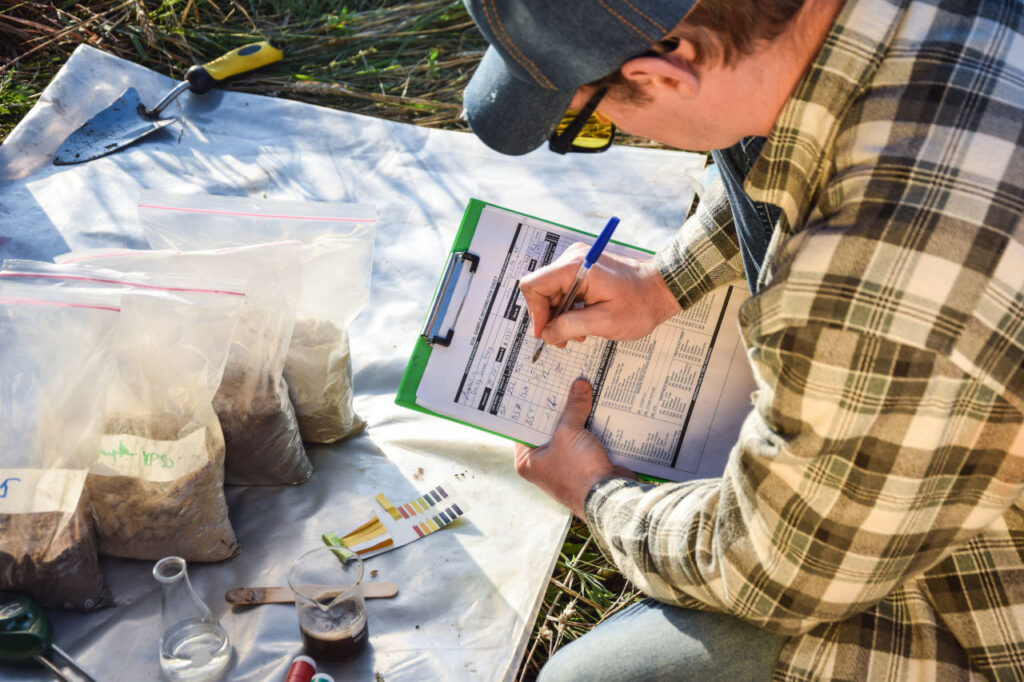
Samples are collected at the source (that is, from the aquifer or river, at the intake point before treatment), at the outlet of the treatment plant, and at the distribution point (that is, at the faucet).
The parameters measured and the frequency of sampling are specified by an executive order and vary by monitoring site. At the distribution point, for example, tests are conducted to check nitrate and iron levels, as well as for the presenceof E. coli. Medications are not currently included in these tests.
Sampling and analysis are conducted by laboratories accredited by the Ministry of Health for water quality testing. These laboratories must adhere to established analytical methods and meet a certain level of “analytical performance,” meaning they must produce consistent and reliable results.
In fact, the validity of the data produced is closely linked to the reliability of the analyses, and developing an analytical technique specific to each substance can be a long and laborious process. In particular, the detection limit for a compound must be below the regulatory threshold to make it possible to interpret the results of its analysis. This requires particularly precise analytical instruments.
In addition, other compounds present in the water sample may also interfere with the analysis of the target parameter. For this reason, analyses should only be conducted by laboratories that have demonstrated their competence.
The cost of testing means we have to make choices
With regard to pesticides, more than 1,000 substances are currently authorized and used on crops in France. Furthermore, certain pesticides and their “metabolites” can persist in the environment for several decades and must therefore continue to be monitored even long after they have been banned.
Although the number of pesticides and metabolites being tested has been increased since late 2020, it is not currently feasible, due to cost and resource constraints, to analyze all of these substances.
[Nearly 80,000 readers rely on The Conversation’s newsletter to better understand the world’s major issues. Subscribe today]
For this reason, the General Directorate of Health states that it is necessary to prioritize pesticide testing in drinking water based on the likelihood of their presence and the risks to human health.
The ARS selects the target compounds based on local agricultural activities, cultivated areas, and the quantities of pesticides sold. On average, 170 pesticides and metabolites are tested for, with considerable variations from one region to another.
In the Grand Est region and in Brittany, testing for approximately 200 pesticides and metabolites has been underway since early 2021.
The frequency of testing depends on the flow rate of the water source and the size of the population served, with variations ranging from 0 tests per year to more than 800, as indicated by these data provided by the AIDA website. The Ministry of Health then makes the results of the ARS water quality tests available.
How are regulatory limits for pesticides established?
The “quality limit” refers to the maximum concentration of pesticides in drinking water permitted by law under normal circumstances. It is 0.1 micrograms per liter per individual substance and 0.5 µg/L for the total of all measured pesticides and metabolites, with the exception of molecules considered more hazardous, for which the quality limit is set at 0.03 µg/L: aldrin, dieldrin, heptachlor, and heptachlor epoxide.
Classified as “persistent organic pollutants” and banned in France since the 1990s, these molecules continue to contaminate certain soils and water resources.
Unlike the standards set for other pollutants, this regulatory standard—established by a 1998 European directive—is not based on toxicological criteria, but on the detection limits of the analytical instruments available at the time.
More specifically, with regard to pesticides and their metabolites, the European Commission follows the so-called ALARA principle ( as low as reasonably achievable): it therefore recommends keeping their concentrations at the lowest level that is reasonably achievable in order to protect resources.
Therefore, this is not a health standard, and exceeding this value does not mean that the water is unfit for consumption.
Exceeding Regulatory Standards
The threshold beyond which exposure to the molecule is considered hazardous is defined by the maximum health limit, known as Vmax.
ANSES sets the Vmax as follows: each compound is assigned 10% of a toxicological reference value based on dietary water intake (assuming that a 60-kg individual consumes 2 liters of water per day throughout their lifetime).
The WHO estimates that 10% of our chronic exposure to pesticides comes from the water we drink (according to ANSES, this figure drops to 5% in France), while food accounts for 80% of this exposure; the remainder comes from our environment, such as the air we breathe.
The Vmax has no legal significance and may sometimes be much higher than the regulatory limit for the reasons explained above: the ALARA principle is applied to protect the environment and as a precautionary measure for our health.
These Vmax permits are valid for a limited period of nine years, during which so-called remediation measures (such as improving the quality of the water source and implementing treatment methods) must be carried out.
Only exceeding the Vmax results in immediate restrictions on tap water consumption.
Compliance with the Vmax therefore allows for the distribution of water even when it exceeds the legal standard for pesticides. In the latter case—that is, when the regulatory limit is exceeded but not the Vmax—local authorities apply for an exemption to continue distributing this non-compliant water, and new regulatory thresholds are then established for a period of 3 years, renewable once.
These temporary limits can be several dozen times higher than the original regulatory limits and are set to prevent water service from being cut off to thousands of people.
The procedures for public information provided by city halls are outlined in Article D1321-104 of the Public Health Code: The local government must post the results of water quality tests within two business days of receiving them, except in emergency situations, in which case measures are taken to inform users as soon as possible and to offer temporary solutions, such as the distribution of bottled water.
When ANSES has not yet established the Vmax—particularly due to a lack of scientific data— usage restrictions are applied, or a transitional health-based limit may be set by the DGS and submitted to the High Council for Public Health (HCSP) for its opinion.
On June 15, 2022, a directive from the Ministry of Health established a transitional health standard of 3 µg/L in accordance with the recommendations of the HCSP.
This value is therefore now used as the basis for implementing water conservation measures.
A lack of data on pesticide metabolites
From a regulatory standpoint, pesticide metabolites found in drinking water are classified into two categories based on their level of hazard: “relevant” and “irrelevant.”
According to ANSES, a pesticide is considered relevant to water intended for human consumption “whenever there is reason to believe that it (or its degradation products) could pose an unacceptable health risk to consumers.”
Depending on the category in question, the limit values in drinking water vary. Relevant metabolites are subject to the same quality limit of 0.1 µg/l as pesticides, while non-relevant metabolites are subject to a limit of 0.9 µg/l.
Deciding whether a pesticide should be classified as “relevant” is far from easy, as this definition leaves considerable room for interpretation. Added to this is a lack of data and studies on these products, which makes it impossible to determine their actual impact on health.
That is why, by the fall of 2022, S-metolachlor metabolites had already become a topic of discussion: after reassessing their relevance, the limit was lowered to 0.9 µg/l, thereby making water that had previously been deemed unfit for consumption in certain French municipalities drinkable once again—even though its quality had not actually changed. These changes are a source of confusion among consumers and may, quite understandably, raise doubts about the quality of their tap water.
What options are available to limit the spread of infection?
One obvious way to limit contamination of drinking water is to reduce inputs at the source by ending the widespread use of pesticides. However, the issue of persistent organic pollutants—which can remain in the environment for years or even decades—remains.
There is also a curative solution, which would involve adapting existing treatment processes. In fact, the typical conventional process currently in place is generally insufficient to remove all pesticides. To achieve this, a so-called “multi-barrier” approach must be adopted by adding several treatment steps to the standard process.
One example is the combination of powdered activated carbon and ultrafiltration (a membrane-based technique), which appears to be effective for removing pesticides and their metabolites.
Membranes could thus be incorporated into water treatment processes. In particular, nanofiltration can remove a large number of pesticides, as is the case in Mery-sur-Oise, where the water treatment plant has incorporated a nanofiltration process since 1999. Only membranes that comply withthe decree of June 22, 2012—which guarantees their safety—may be used in the production of water intended for human consumption.
What is the best course of action?
While drinking bottled water should not be a routine solution due to its catastrophic environmental impact and the potential health risks associated with ingesting plastic microparticles and plasticizers, it can nevertheless be a solution in the event of contamination of your municipal water supply.
However, while bottled water is subject to health inspections by the ARS, microplastics and plasticizers are not included on the list of parameters tested for…
Julie Mendret, Associate Professor, HDR, University of Montpellier and Alice Schmitt, Postdoctoral Researcher in Process Engineering, European Membrane Institute, University of Montpellier
This article is republished from The Conversation under a Creative Commons license. Readthe original article.