Policing the Police: From Theory to Practice
For several months now, criticism has been pouring in against the police in general and the IGPN in particular. The protests against pension reform, the “yellow vest” movement, the high school student protests, and then efforts to enforce emergency measures during the lockdown have highlighted the violent or abusive behavior of some police officers.
Stéphane Lemercier, University of Montpellier
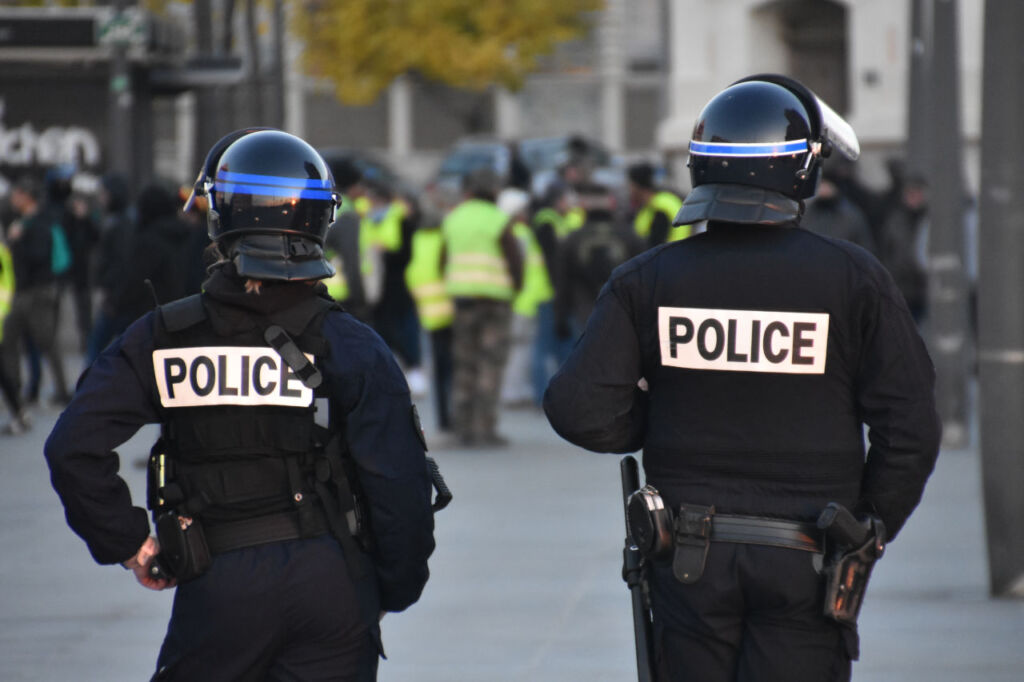
Add to that the allegations of widespread racism within the police force following the death of George Floyd, an African American killed by a police officer in the United States —in a context that has nothing to do with that of French society—and the publication of a counter-report casting doubt on the official account of Adama Traoré’s death at a gendarmerie in 2016: that was all it took to drive thousands of protesters into the streets to demonstrate against police violence.
Under pressure, the President of the Republic even ordered the Minister of the Interior to quickly finalize a study launched last January, which was intended to make recommendations for improving police conduct following the death of a man during a police operation.
But what exactly are we talking about? How and by whom is the French police force monitored? How are police forces in other countries monitored?
Police Oversight in Theory
In France, oversight of misconduct within the police force is primarily the responsibility of the police officers themselves: Article R 434-26 of the Internal Security Code designates each police officer as a custodian of the Code of Ethics and a guarantor of its observance.
But we know from various studies that the police culture is deeply ingrained, which does not encourage police officers to report their peers. Nevertheless, Article 40 of the Code of Criminal Procedure stipulates that “any public official or civil servant who, in the course of their duties, becomes aware of a crime or misdemeanor, is required to notify the public prosecutor without delay….”
But this provision is rarely enforced.
Ultimately, the General Inspectorate of the National Police is the official body responsible for overseeing the police. It conducts administrative and judicial investigations into breaches of ethical standards and offenses committed by police officers. These investigators are feared by all public officials because they have a reputation for getting results, even though some sometimes question their effectiveness, independence, or impartiality.
But according to sociologist Sébastian Roché: “Having police officers investigate other police officers is not satisfactory.” He therefore suggests establishing an external oversight body that is independent of the French police, as is the case in many other countries.
Regulatory bodies in France and abroad
This oversight body already exists in France: it is the Defender of Rights. This constitutional authority, established in 2011, is empowered to ensure that security professionals adhere to ethical standards.
According to its latest annual report, published on June 8, 2020, for the year 2019, the agency handled 1,957 cases related to the conduct of security forces, compared with 1,520 the previous year.
This accounts for only 2.4% of its total caseload, far behind cases involving social security, traffic law, or the justice system… But more importantly, the Ombudsman found ethical violations in only 10% of the cases it handled!
Looking at the situation abroad, most oversight bodies for law enforcement agencies are members of the IPCAN (Independent Police Complaints Authority Network), a professional network for informal exchange and cooperation that primarily includes European countries, though not exclusively.
Geoff Caddick/AFP
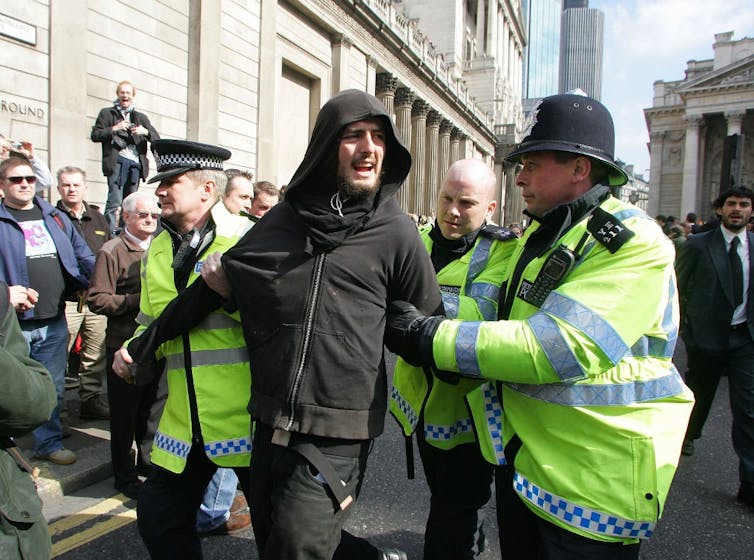
In the United Kingdom,the Independent Office for Police Conduct is held up as a model for its transparency and its guarantee of independence. It is headed by an individual who has never served as a police officer, and its members are also prohibited from having served as police officers.
In Quebec, there is a police ethics commissioner (often a former lawyer or judge) who receives complaints against police officers who have violated the Quebec Police Code of Ethics.
In Denmark, there is an independent police complaints authority that investigates criminal offenses committed by police officers. It is headed by a High Court judge who works with a prosecutor, a law professor, and two representatives from civil society. Its members are appointed by the Minister of Justice and must be replaced every four years.
In Norway, the Norwegian Bureau for the Investigation of Police Affairs is composed of former police officers and lawyers who investigate law enforcement officers suspected of committing criminal or ethical violations. In Australia, there isthe Australian Commission for Law Enforcement Integrity (ACLEI), headed by a judge and responsible for investigating police officers and combating corruption within the government.
In Belgium, there is the P Committee, which is headed by a judge. Its members are appointed by the Chamber of Representatives. Its representative states that “it is a body of the legislative branch established to assist the legislature in its oversight of the executive branch.”
Finally, in Switzerland, there is a Police Ombudsman’s Office, an independent body dedicated to fostering dialogue, providing information, and offering advice to the public; however, it has no authority to investigate or impose sanctions. The same is true in Spain, Ireland, Greece, Finland, Serbia, Slovakia, and Hungary, where “police ombudsmen” receive reports of inappropriate conduct by police officers and then refer them to the judicial authorities if they determine that a violation has occurred.
Police Checks in Practice
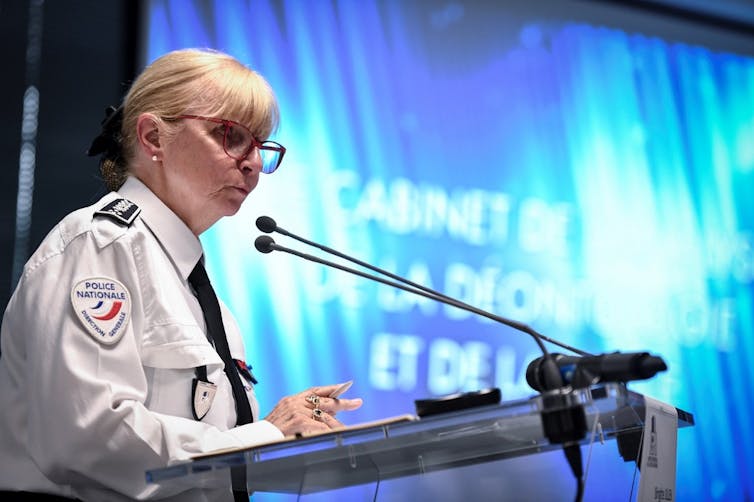
In France,the independence of the IGPN has often been called into question, even though its head insists she receives no instructions from senior leadership. The fact that it is a department that reports to the Director General of the National Police and the Minister of the Interior does not speak in its favor…
In terms of transparency, the IGPN has made positive strides in recent years with the publication of an annual report that provides statistics on its investigations. Since 2018, data on those injured or killed by the police has also been collected and made public. However, Cédric Moreau de Bellaing and Sébastian Roché, two researchers who examined dozens of cases investigated by the IGPN over a seven-year period, noted “a lack of sincerity in the search for the truth.”
Stephane De Sakutin/AFP
Claudine Angeli-Troccaz (Deputy to the Human Rights Defender in charge of security ethics issues) believes that:
“To ensure the proper functioning of democratic institutions, it is now essential not to limit security issues to a mere accounting of resources or to concerns about confrontation and escalation, but rather to place professional ethics at the center of security debates and do everything possible to foster changes in professional cultures—a prerequisite for changing practices.”
It is high time to take radical measures, and the creation of a College of General Inspectors within the Ministry of the Interior —established by an emergency decree issued on June 10, 2020—will not solve the problem… It is time to consider effective and innovative measures.
Reflective Practices and Possible Developments
The IOPC (the French equivalent of the IGPN) regularly publishes a magazine for police departments called “Apprentissages et leçons.” Each issue focuses on a specific topic: arrests, protest management, protecting vulnerable populations, and so on. Drawing on real-life situations, it details what went wrong and draws lessons to prevent similar setbacks from happening again.
This is already what the IGPN is doing regarding occupational risks through the AMARIS project (Improving Risk Management), which analyzes the most frequently encountered risky situations to propose a prevention strategy by creating awareness fact sheets distributed in police stations. The IGPN could draw heavily on this model to do the same with regard to poor police practices, and such cases could be raised and discussed during initial training for police cadets and during continuing education for officers.
The IGPN should focus on its audit, support, and advisory missions for the departments that request them and expand its role to include mediation between the police and the public, following the model of the Hungarian, Greek, or Finnish ombudsmen. It could leave the “administrative and judicial investigations” component to an external and independent authority, such as the former National Commission on Security Ethics (CNDS, established by Law No. 2000-494 of June 6, 2000). This administrative body, established by the Jospin government, was composed of four members of Parliament, representatives from the Council of State, the Court of Cassation, and the Court of Auditors, as well as six qualified individuals. It had significant legal powers; professional secrecy could not be invoked against it, and any refusal to respond to its inquiries constituted a criminal offense. However, a lack of financial resources, competition with the IGPN, and sabotage by certain police unions led to its dissolution in 2011.
France, which was a pioneer in police oversight with the creation in 1986 of the National Police Code of Ethics, followed by the establishment of the CNDS in 2000, has for far too long been reluctant to address inappropriate behavior by police officers that tarnishes the entire institution.
By implementing reflective practices based on the British model, by redefining the IGPN’s mandate, and by establishing a National Ethics Commission for Police Security with sufficient resources, the police and individual officers could regain a certain degree of legitimacy, and the public could once again have a police force it can rely on.
Stéphane Lemercier, Lecturer – Member of the Montpellier Criminal Law Team (EDPM), University of Montpellier
This article is republished from The Conversation under a Creative Commons license. Readthe original article.