Why is it so difficult to manage a company experiencing hypergrowth?
Many business leaders dream of hypergrowth. Being at the helm and at the heart of a company that experiences growth accelerating by more than 20 percent annually for at least three years has become a true ambition for entrepreneurs.
Bénédicte Aldebert, Aix-Marseille University (AMU) and Ophélie Laboury-Barthez, University of Montpellier

Indeed, that is precisely the path taken by Google, Facebook, and Airbnb. Yet hypergrowth represents a genuine disruptive force in a company’s life. Whether the company is young or more mature, hypergrowth creates radical instability, which weakens it, and emerging from this situation all too often results in the company’s failure. How can we understand and prevent the tensions arising from this exceptional situation from leading to the company’s failure?
We focused our analysis on the issue of governance, which, according to a recent KPMG study, stands out as one of the main challenges (along with recruitment and cash flow) faced by hyper-growth companies.
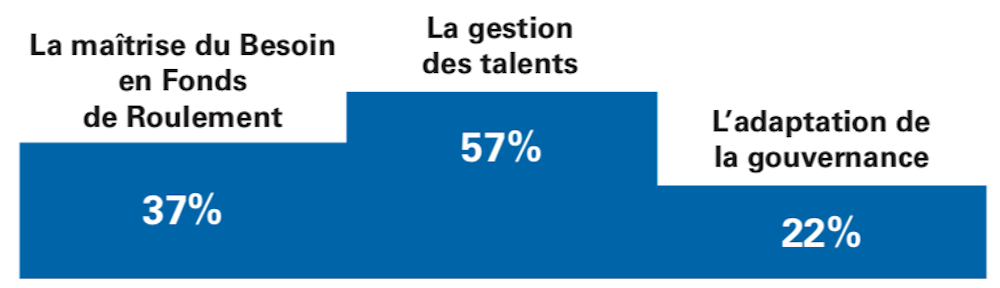
Excerpt from the study “Hypergrowth: The Challenge Facing the French Entrepreneurial Ecosystem” (KPMG, 2018)
Indeed, governance plays a crucial role in managing the delicate balance between the various paradoxes faced by hypergrowth companies. We therefore embarked on a groundbreaking exploratory study of a sample of 10 hyper-growth companies and their ecosystems. Based on this analysis, we present our initial observations and findings on the governance of “hyper-growth” companies.
Different Approaches
Corporate governance is a theoretical concept originally developed for large companies that addresses the balance of power within a company among those responsible for the company’s performance, investors, and other stakeholders.
To put it simply, there are two main types of approaches that seek to understand how relationships among shareholders, stakeholders, and executives within companies are regulated.
The first approach, which is contractual and disciplinary in nature, focuses more on the relationship between shareholders and executives and examines the role of the board of directors and ways to limit the executive’s discretion. This was particularly the case with Carlos Ghosn when he was at the helm of Renault-Nissan.
A second, more recent alternative approach focuses on understanding the knowledge and resources that a leader needs and draws upon to develop the company. It is referred to as a cognitive and behavioral approach.
The statements made by the executives of hypergrowth companies we interviewed reflect this type of cognitive governance, which focuses on the value creation process and places particular emphasis on building competencies, fostering innovation, and adapting to their business environment. The executives emphasize that this approach to governance is preferable to disciplinary governance practices for managing tensions.
The Company in Its Teenage Years
A hyper-growth company must quickly manage conflicting situations, and most of the time it is not prepared to do so. Research sheds light on four major paradoxes within organizations that are particularly pronounced in hyper-growth companies. They concern:
- Learning: Hypergrowth drives the company to explore new knowledge (often with a long maturation period, through trial and error) while continuing to leverage its existing knowledge (that is, putting it into daily practice). The company must be ambidextrous and, consequently, know how to streamline without becoming too rigid, while retaining what has made it strong—often improvisation, innovation, and flexibility;
- Identity: The rapid expansion of the company’s size is not keeping pace with the established teams’ acceptance of these changes, leading to fears that the founding cultural model may begin to unravel;
- An organization that emerges from the delicate balance between control and autonomy, or between stability and change. One executive we interviewed made this illustrative point: “I give them a lot of freedom (referring to employees), but I want to control everything”;
- Performance: Hypergrowth brings with it a wide variety of new stakeholders (such as new partners or employees) whose interests may be contradictory and conflicting.
Amid all these tensions, our study shows that leaders feel they must primarily deal with organizational tensions.
In short, hypergrowth refers to a situation in which a company transitions from childhood to adulthood through an intense, heightened, and accelerated adolescence.
Four Key Factors for Effective Governance
Our exploration has led us to identify four key levers that must be activated to establish a governance structure suited to a situation of hypergrowth:
- Dealing with Tension in the Company: A leader must acknowledge that their behavior and the hypergrowth situation create tension and allow themselves to build their company while managing that tension. Trying to fight this tension would be counterproductive to the well-being of both the leader and the company. The solution lies in skillfully navigating these tensions to find a balance.
- Building a culture of hypergrowth: The arrival of all new employees requires special attention to ensure the company does not lose its identity and values. It may be beneficial to establish routines for sharing information with employees, communicating the company’s vision and purpose, and setting aside time for discussions about upcoming changes. These sessions help synchronize and align employees’ behaviors with those of the company.
- Take the time to establish a governance structure: this involves planning ahead and initiating an internal organizational framework by forming a management team, tailoring the shareholders’ agreement, and selecting your financial partners. This must go hand in hand with strengthening the leader’s legitimacy; at each stage of the process, the leader must reflect on their capabilities and skills: are they the type to do the work themselves or to delegate? Are they more of a manager or a leader? Should they focus on operational matters or strategic ones?
- Ensuring the legitimacy of governance: The governance structure put in place will enable the management of the various paradoxes and tensions encountered. This governance must be both cognitive—to build trust, foster relationships, leverage networks, and provide expertise—and disciplinary, involving the implementation of metrics and financial ratios to inform decision-making and ensure a safe transition out of hypergrowth. As one executive we interviewed pointed out: “In hypergrowth, what’s crucial is having financial and sales metrics. Driving a Formula 1 car blindfolded is all well and good—you’re going 300 km/h—but you don’t know if there’s a turn ahead […]. If you don’t have those indicators, you’ll crash into a wall.” This balance between cognitive and disciplinary governance will facilitate dialogue with all stakeholders and bring the entrepreneurial vision to fruition.
In conclusion, hypergrowth is a phase that can truly jeopardize a company’s survival. This is hard to imagine, since most people associate hypergrowth with success. However, effective governance is essential to ensure that power is distributed appropriately between management and stakeholders, while taking organizational paradoxes into account and not neglecting the company’s culture.
This paper is based on the article titled “Can a Gazelle Be Managed Like an Elephant? A Study of Tensions and Governance in Hyper-Growth Companies,” by Boulmakoul, N., Aldebert, B., and Amabile, S. (2019), presented at the18th conference of the International Association for Strategic Management (AIMS) and supervised by Ophélie Laboury-Barthez.
Bénédicte Aldebert, Associate Professor, Entrepreneurship, Aix-Marseille University (AMU) and Ophélie Laboury-Barthez, Adjunct Instructor in Strategy and Innovation Management, University of Montpellier
This article is republished from The Conversation under a Creative Commons license. Readthe original article.