Prevent, Support, Act: TheUM ’s Commitments to Mental Health
As part of Mental Health Awareness Weeks, taking place October 5–18, 2026,under the theme “For Our Mental Health, Let’s Embrace the Arts,” the University of Montpellier is highlighting the many initiatives it has implemented throughout the year to support the mental health and well-being of its community. Whether it’s prevention, counseling, psychological and psychiatric support, combating isolation, or improving quality of life at work, both students and staff can benefit from a diverse range of services tailored to their needs.

A major public health issue, mental health is essential to success, personal fulfillment, and quality of life at the university. At the University of Montpellier, it is the focus of a comprehensive policy that brings together numerous departments and professionals around a shared goal.
This policy is first and foremost built through day-to-day actions: by fostering connections and community life, encouraging participation in sports and cultural activities, improving study and work conditions, and combating isolation. It then aims to prevent situations of vulnerability, identify them as early as possible, and, when necessary, provide appropriate support.
“Making the university a mentally healthy environment is a collective responsibility and a priority for our institution. This involves not only preventing and identifying situations of vulnerability and supporting those in need, but also creating the conditions for well-being, social connection, and personal fulfillment on our campuses.”
Philippe Augé, President of theUM.
When Art Contributes to Well-Being
“For Our Mental Health, Let’s Embrace the Arts”: The theme chosen for the 2026 Mental Health Awareness Weeks resonates particularly well with the initiatives offered by the University (https://art.edu.umontpellier.fr/).
Throughout the year, the cultural program at theUM offers numerous opportunities to practice, discover, and share: painting workshops (October 5–December 14), embroidery workshops (October 6–December 15), computer-assisted music (October 7–December 16), and botanical drawing (October 8–December 17), as well as a movement workshop led by choreographer Leonardo Montecchia on Saturday, October 17. Exhibitions, museum tours, and meetings with artists-in-residence round out the program, with one event you won’t want to miss: the show “Moby Dick, the Eye of the Sperm Whale” on Thursday, October 8.
The University also participates in the “Art on Prescription at MO.CO.” program. Launched in 2022 by Montpellier Contemporain in partnership with the Montpellier University Hospital, the program was opened in 2025 to students supported by the preventive medicine department of theUM , and the Montpellier University Health Center. Guided by the University’s healthcare professionals according to their individual needs, students can participate, if they wish, in creative sessions with artists at the MO.CO.’s art centers.
Preventing, Building Connections, and Combating Isolation AMONG STUDENTS
Because well-being also depends on social connections and the opportunity to find one’s place within the university community, the “UM ” is developing several initiatives designed to foster social interaction and combat isolation.
Each year, between October and January, a telephone outreach program enables students who have been recruited and trained to reach out to first- and second-year students who are new to the university. The 2026 campaign begins the week of October 12. The goal is to gather their feedback, inform them about existing resources, direct them to the appropriate services, and identify those who may require special attention.
The Program Boost Your English offers free weekend and day-long discovery events, such as trips to Béziers (October 20) and Aigues-Mortes (October 21), or guided tours of Montpellier, as well as creative and hands-on workshops (sewing, ceramics, making eco-friendly household products) conducted entirely in English. Some activities are organized during university breaks, offering students who are far from their families an opportunity to break out of isolation, build social connections, and have enriching experiences. Free movie screenings are also held about every two weeks at the student centers.
At the student centers or at (S)pace, and through a network of more than 140 student organizations, students have many opportunities to meet, interact, and participate in campus life.
In addition to these initiatives, there are workshops focused on stress management and well-being —including sophrology, meditation, and Qi Gong—as well as massage sessions offered in university libraries before certain exam periods. The next sophrology workshop to help students prepare for exams and assessments will take place on October 12 via video conference.
Listen to, guide, and support students
When a problem arises, there are several avenues through which students can be heard and supported by professionals.
At the Joint Office for Preventive Medicine and Health Promotion (SCMPPS), they can, among other things, be seen with or without an appointment by preventive care nurses and physicians through the Health Listening Center, or receive follow-up care from psychologists. In 2025–2026, 357 consultations were conducted through the Health Listening Center, along with 3,267 psychological consultations.
The University is also participating in the national “Santé Psy Étudiant” program and has agreements with 36 psychologists. This program accounted for more than 9,000 consultations in 2025–2026.
The University Health Center (CSU) rounds out these services. During the 2025–2026 academic year, it provided 3,706 mental health consultations (compared to 3,411 the previous year), including 2,268 in psychology and 1,438 in psychiatry. Since 2021, an agreement between the CSU and the Department of Psychiatric Emergency and Post-Emergency Care at the Montpellier University Hospital, led by Prof. P. Courtet, has made it possible to provide psychiatrists to students: a partnership that facilitates access to specialized care directly on campus.
Students with disabilities can also receivepersonalized support provided jointly by the Handiversité office and the SCMPPS to assess their needs and, when necessary, implement accommodations tailored to their academic journey.
In total, the SCMPPS and the CSU together provided nearly 7,500 mental health consultations in 2025–2026.
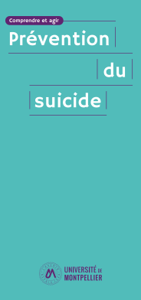
Suicide Prevention
Because prevention also involves a better understanding of warning signs and available resources, the University is making a brochure on suicide prevention available to its entire community. Intended for both students and staff, it provides guidance on better understanding situations of distress, knowing how to respond, and identifying the professionals and resources to turn to.
Students as Active Participants in Prevention
Prevention also involves peer outreach. The Student Health Ambassadors (ERS) work throughout the year at various university campuses to inform and raise awareness among their peers.
In particular, they have developed StandByMental, a prevention tool designed to promote the development of psychosocial skills, provide better information on mental health issues, reduce isolation, and facilitate referrals to medical and social support services. A workshop will be held on Monday, October 12, during the lunch break, at the School of Dentistry.

“What Should You Do When Things Aren’t Going Well?”
ERS also produced the guide “What to Do When Things Aren’t Going Well?”, which provides advice and resources to help identify people to turn to when facing difficulties.
Measures also intended for staff
Mental health in the workplace is another key focus of the University’s efforts, with the implementation of a program designed to improve quality of life at work and prevent psychosocial risks. In 2025–2026, this program comprised 20 initiatives organized around five priority areas aimed at improving working conditions and preventing psychosocial risks.
One of the strengths of the “UM ” is its multidisciplinary support network. As part of a proactive approach to prevention, early detection, and support, occupational nurses and physicians meet with staff during preventive health visits, in accordance with medical confidentiality. These appointments allow them to provide support throughout employees’ careers at the University and, when necessary, guide them in their healthcare journey—particularly toward a psychologist in the preventive medicine department. Two occupational psychologists also work with staff members facing concerns or difficulties related to their professional activities. Two social service assistants are also available to listen to them in complete confidentiality and support them as they navigate personal or professional challenges. Support from a professional coach rounds out this network (all contact information is available in the “Better Living at Work” brochure).
doctoral researchers , for their part, can receive coaching in French or English to support them throughout their doctoral studies, help them better organize their work, and keep them motivated.
In addition, the Handiversité service provides confidential support to employees with visible or invisible disabilities, specifically to advise them, guide them, help them prepare their RQTH application, or arrange for accommodations at their workstation.

A Better Work Life
To help everyone easily identify the people who can provide support, the University also makes the “Better Well-Being at Work” brochure available to its staff. It introduces the various professionals and resources available within the “UM ” and helps employees determine who to turn to based on the challenges or needs they face.
The University is also working to enhance its staff’s ability to identify and provide support in situations of vulnerability. As part of the University’s collective training program and open to all staff members, the “Mental Health First Aid” training (intranet) provides basic knowledge about mental health disorders and helps participants better understand various crisis situations. It also aims to develop the interpersonal skills needed to listen without judgment, reassure, inform, and better handle certain challenging behaviors. Between 2023 and the first half of 2026, 14 sessions were held, with 478 registrations and 183 staff members trained. Two new sessions are scheduled for October 8 and November 2, 2026.
Finally, just like students, staff members can take advantage of programs throughout the year that promote well-being and work-life balance. These include workshops on sophrology, meditation, and Qi Gong, as well as massage sessions. They also have access to a wide range of physical and sports activities, as well as the resources and services offered by the university libraries. All of these initiatives and services—in addition to the support programs—contribute to a better quality of life at work and provide opportunities for relaxation and socializing.
A long-term commitment
Medical and psychological consultations, peer-led prevention, counseling services, social support, efforts to combat isolation, cultural and wellness activities, and the prevention of psychosocial risks: at the University of Montpellier, mental health is addressed through a comprehensive approach and the long-term involvement of numerous stakeholders.
Mental Health Awareness Weeks provide an opportunity not only to raise awareness of these services but also to remind people that they are available year-round. After all, talking about mental health, learning more about the resources available, and knowing where to turn are already the first steps toward taking care of ourselves and others.