[LUM#16] When the City Puts Pressure On
All ecosystems bear the mark of human activity, and the bacterial communities in our rivers are no exception. Researchers have observed the presence of antibiotic-resistant bacteria in waterways that flow through cities. This “urban pressure” has been particularly evident in the Lez River in Montpellier.
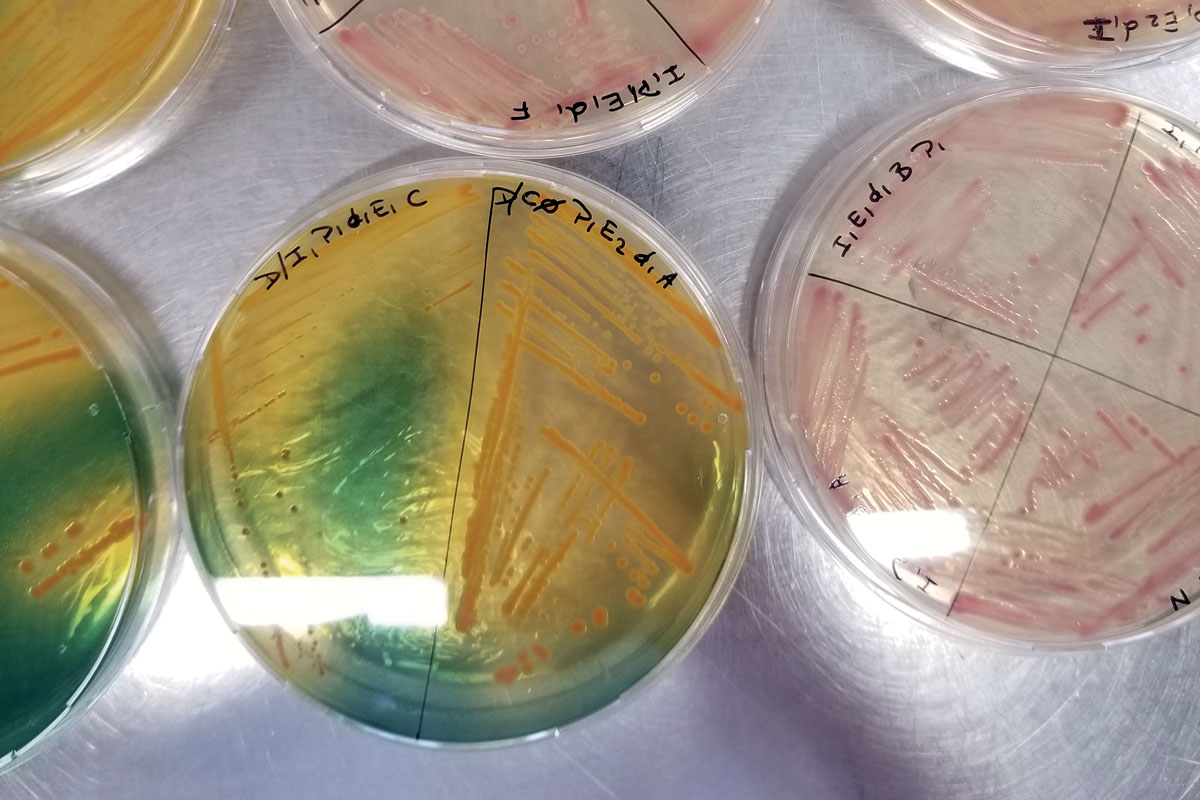
They are naturally present by the millions in our rivers, representing an essential link in the aquatic ecosystem: bacteria. And they, too, are affected by human activities, as demonstrated by the work of Patricia Licznar-Fajardo. The researcher at the Hydrosciences Montpellier* laboratory studied the bacterial communities in the Lez, Verdanson, and Font d’Aurelle—the waterways that flow through the Montpellier metropolitan area. “We were thus able to track the entire continuum from the Lez’s karst spring to the lagoons, which allowed us to assess the impact of the river’s passage through an urban environment on the bacterial communities in these rivers, ” explains the specialist.
Shuttle
Together with her colleagues, she conducted research focused in particular on emerging antibiotic resistance . “We found that many indigenous bacteria—that is, those naturally present in water—were antibiotic-resistant.” How did they acquire this ability? While most aquatic bacteria naturally possess this trait, some instances of resistance are directly linked to human activities. “Initially, resistance is often acquired in the gut microbiota of patients undergoing antibiotic treatment; then these ‘human’ bacteria, having become resistant, are excreted in feces, and some end up in the natural environment, ” explains Patricia Licznar-Fajardo.
There, they will encounter the bacteria naturally present in rivers. “These organisms are capable of exchanging genes with one another, so bacteria released into the water by humans can transfer the gene that confers this resistance to native bacteria, which could then pass it on again; they are said to act as a shuttle, ” explains Patricia Licznar-Fajardo.
One Health
And researchers found more resistant—and even multidrug-resistant—bacteria in urban areas and downstream from the city than at the source. “We also observed variations in community composition along the continuum, with an increase in human and potentially pathogenic bacteria, ” the specialist adds. What’s to blame? Urban runoff, wastewater, overflows caused by heavy rainfall, human activities, hospital operations… “The city has a significant impact on bacterial communities and their resistance; in particular, we found higher levels of resistance downstream from the hospital, ” notes the researcher.
These findings are all the more concerning given that this phenomenon poses a major public health challenge. “We need to give greater consideration to the role of the environment in antibiotic resistance; that is the whole point of the One Health approach, which views human, animal, and environmental health as one,” concludes Patricia Licznar-Fajardo.
* HSM (UM —CNRS—IRD)
Check out theUM podcasts, now available on your favorite platform (Spotify, Deezer, Apple Podcasts, Amazon Music, etc.).