Career Transition: Another Obstacle Course for Military Personnel
Our research on the career transition of military personnel (64 interviews) reveals that it is difficult to leave a profession that demands personal qualities and a strong commitment—qualities that shape the “unique status ” of military personnel, to use the terminology of the High Committee for the Evaluation of Military Conditions.
Dominique Lecerf, University of Montpellier; Anne Loubès, University of Montpellier and Claude Fabre, University of Montpellier

However, professional specificity is not a concept reserved solely for the military; according to the German sociologist Max Weber, it is the result of “any organization or institution with its own purpose.”
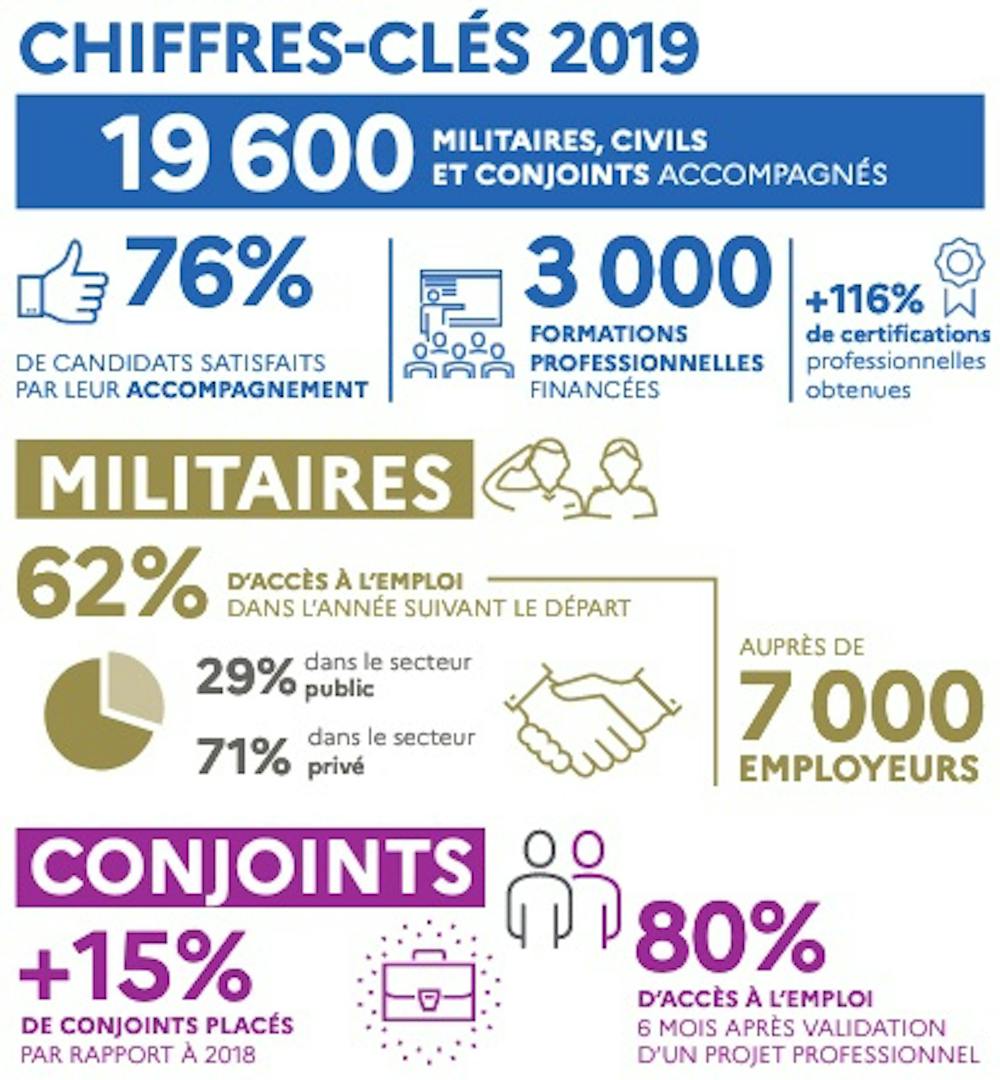
Approximately 16,000 people leave our armed forces each year. The Defense Transition Agency assists 62% of them in finding employment, but securing long-term employment proves challenging. Ultimately, only 37% of those leaving are able to retain the job they found with institutional assistance. The need for a rapid return to work and the pressure associated with placement rates lead service providers to prioritize employability and technical skills. As a result, individuals are constrained—or even essentially reduced—to a set of transferable skills.
Whether involuntary or voluntary, job loss affects a person as a whole, not just in their professional role. Change means taking a step into the unknown; it brings doubt, questions, and fears; and the mindset and resources needed to navigate it are unique.
By examining the core of military transition, this study highlights the need for self-reflection and identity-based support during the transition process. It demonstrates the urgent need for a comprehensive approach that simultaneously leverages both the technical and psychological aspects of transition. The goal is to enable individuals to quickly take control of their career transition by understanding who they are, so they can accept and decide who they want to become.
Before: a soldier, but not just that…
A person’s identity is multifaceted. It rests on three dynamic pillars: personal identity (innate and acquired), role identities within their socioprofessional mosaic, and, finally, group identities. This gives rise to an identity for oneself and an identity for others.
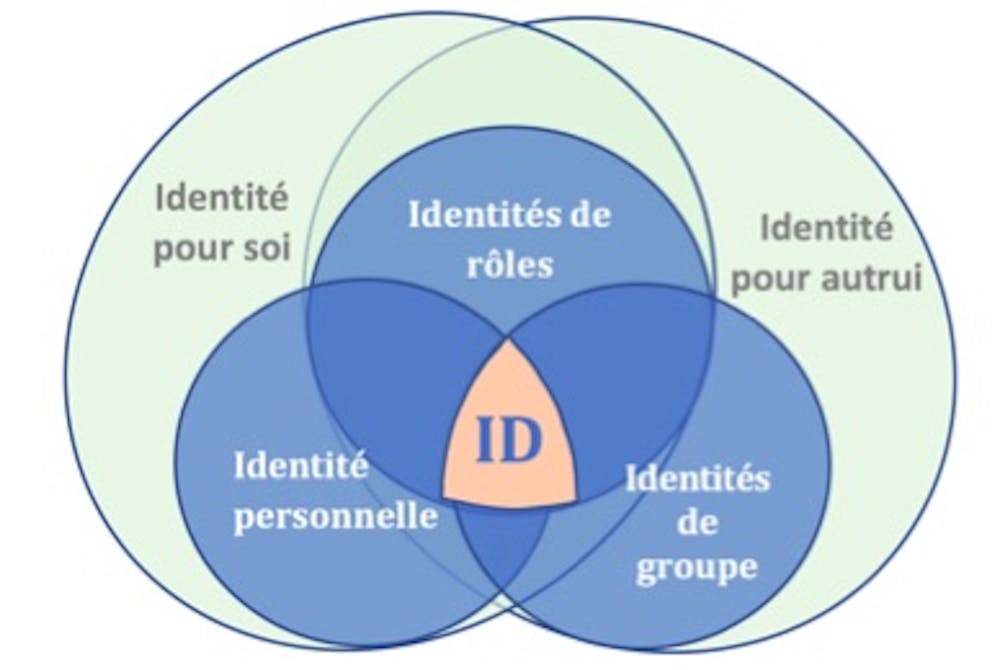
Author diagram
The uniqueness of the military stems from a very specific role—giving and receiving death in the service of arms; a strong attachment to the group—soldiers refer to one another as brothers in arms; and the institution itself— grounded in a system of values. The demands of service can lead to self-sacrifice, to a “blurring” of the personal and the professional, and to “sacrifices” in family life… all of which are summed up in Alfred de Vigny’s maxim: “Military servitude and grandeur.” The difficulty of detaching oneself from a professional and group identity with such a strong hold is a reality found in many fields, including industry, healthcare, education, and labor unions…

Diagram by the authors
First, job loss leads to a “loss of self,” to borrow the sociologist Danièle Linhart’s expression. This change plunges the service member into a state of marginalization—known as the liminal zone—that brings chaos, suddenly intrudes upon their life story, and disrupts its narrative structure, its heroes, and its imagined “denouement.” The anxiety that sets in thus triggers a spiral of doubt similar to the grieving process—a term that comes up frequently among those interviewed, for whom denial, anger, bargaining, and depression lead to the final stage of acceptance: a fresh start.
A former soldier shares his story:
“I had wanted to be in the military ever since I was a little kid, and I had lived out my lifelong dream in my career. My life could have ended right then.”
How can we cope with this anxiety? A process of personalization—based on identity work and the development of a plural identity—can facilitate the transition. In fact, it is a process of re-personalization, a return to the foundation of one’s identity. This process of self-reflection would, in particular, allow for an adjustment of interpersonal relationships and personalcoping strategies to deal with threats, and enable the realization of one’s vision for a new social and professional life.
Identity Distancing
This step back is all the more necessary given the profound nature of the military’s transition, as one interviewee explains:
“When a soldier transitions to civilian life, their relationship with the world changes—it’s not just a change of jobs, it’s a complete change of life. In fact, you go from giving your life to giving your arm; my ability to work consists of offering my arms, which is very different from giving your life.”
If the influence of the group that has been left behind proves to be overbearing, the development of one’s identity is compromised and threatened. Distancing oneself from it facilitates the completion of the identity-building process, in which the individual’s search for meaning is the driving force behind their actions and the key to their career transition. A former military member confirms the importance of this step:
“I had to figure out how to apply my military skills so they would align with the job requirements […] but the challenge was to build something that made sense.”
In other words, military personnel must focus more on who they are than on what they are. At the time of the study, the Army’s recruitment office was promoting its slogan, “Be Yourself ”! All the more so, upon leaving the military, staying, becoming, or becoming again are all part of the imperative “maintenance of self”—not only to achieve the necessary detachment, but also, and above all, to maintain a sense of identity and lay the foundation for a new path. The career transition, in fact, creates a shifting context in which one’s identity to oneself adjusts to one’s identity to others, through a degree of detachment from the group one has left, which facilitates the process of integrating into a new group. Consequently, knowing how to “become” is a key skill to develop.
A former military officer sums up this conclusion:
"We need to take charge of our career transitions and not wait for others to do the work for us."
The Alternative of Learning to Be
But we only become ourselves within a given ecosystemic environment. When environmental reference points change, we must continue to become ourselves! For a smooth career transition, it is essential that the person leaving understand the need to reposition their personal identity— who they are —within their evolving, multifaceted identity— what they are.
To prevent the process of self-definition from stalling, the individual must take a step back from the group they have left, which continues to shape their identity for others: through its modes of operation, its value system, the roles the individual plays or has played within it, the contributions he has made, and the collective narrative he has helped shape—a narrative in which his own personal narrative has found a place.
Gaining a sufficiently healthy sense of distance should make room for writing a new chapter in one’s multifaceted identity. Our findings thus show that the polarization of individual identity by collective identity appears to hinder a rapid return to sustainable employment: of those who left under these circumstances, only 20% retained the job they had initially secured. This trend lessens three years after leaving. In fact, the process of intentionally distancing oneself from one’s identity ultimately provided a 50% higher chance of securing long-term employment.
However, this does not mean making a clean break with the past, but rather “sorting” between the temporary elements of one’s identity as perceived by others and the permanent elements of one’s identity as perceived by oneself. This implies that for some, the transition is a complete career change, while for others it is simply a shift—or even a continuation—of their former profession: the value system associated with the image that has become ingrained in the individual; their normative framework and the resulting habits.
An inexpensive, digital “module” for psychological support, focused on identity development and learning to navigate one’s future, would be a start and a minimum requirement. For the careful engineering of the changing human being—who seeks to maintain a sense of self through a project-oriented approach—requires a profound shift in the economic logic underlying support systems.
“Focusing on people,” as is often emphasized, means putting the individual and their career goals back at the center of these programs, tailoring services and the duration of support to each person’s needs, and giving psychological support services and consultants the necessary resources and autonomy. This requires a review of service providers’ terms of reference and the way their results are measured, looking beyond mere reemployment rates.
For example, the extent to which an individual accepts the new project, the implementation rate of an approved project, or a return to sustainable employment would provide new grounds for support and evaluation.
Unrealistic given the state of the job market? Too costly for the community? How can we answer these questions other than through inaction or denial? It’s all a matter of priorities!
This article is based on the dissertation titled “Breaking Free from a Highly Influential Group Identity to Succeed in a Career Transition: The Case of Military Personnel’s Career Transition,” by Dominique Lecerf, supervised by Anne Loubès, which was defended on October 30, 2020..
Dominique Lecerf, Research Associate at the MRM/GRH Laboratory, University of Montpellier; Anne Loubès, University Professor, Director of IAE Montpellier, University of Montpellier and Claude Fabre, Associate Professor of Management Sciences (specializing in human resources), University of Montpellier
This article is republished from The Conversation under a Creative Commons license. Readthe original article.