A Revolution on the Rails: How Low-Cost Rail Travel Is Challenging the Traditional TGV
In 2013, Ouigo—the low-cost version of the classic TGV—hit the tracks. Intended to revive interest in rail travel, it also created new competition for the TGV, which was renamed inOui. What impact has this new competitor had on the rail market?
Florent Laroche, Lumière Lyon 2 University ; Patrice Bougette, Université Côte d’Azur and Thierry Blayac, University of Montpellier
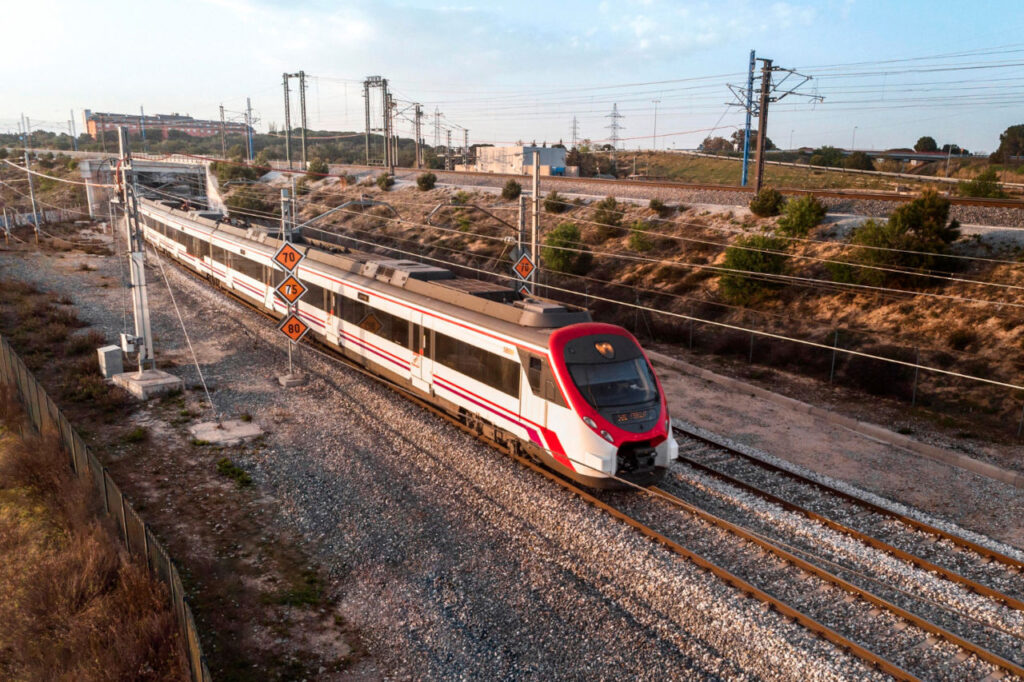
Until recently, high-speedrail service in France was completely unified. Whether painted orange or Atlantic blue, the TGVs offered identical service, managed by a single operator: the SNCF. A major change took place on April 2, 2013: the blue and pink trains branded “Ouigo” were launched at 300 km/h, offering low-cost tickets—though passengers were required to arrive at the station early and travel with limited luggage. This launch came at a time when TGV ridership was declining, driven by growing intermodal competition from carpooling (the creation of Blablacar in 2006) and low-cost airlines (EasyJet on domestic routes starting in 2007). The 2015 Macron Law would subsequently open the market to a new low-cost transportation alternative: long-distance buses.
Is this a return to third class in all but name, according to Dominique Memmi, director of social science research at the CNRS? In any case, Ouigo has been a resounding success, which Alain Krakovitch, head of TGV-Intercités at SNCF Voyageurs, praised in June 2024, calling it “a true turning point for French high-speed rail.”
By 2027, the fleet will expand from 38 to 50 trains, he announced during the same press conference, and all cars will be renovated, with the installation of individual power outlets and the introduction of a new design.
In 2017, the inOui brand and the carmillon livery began to be applied to all standard TGV trains. This came with the promise of “more comfort, services, and connectivity”: Wi-Fi, access to newspapers and movies via an onboard platform, and in-seat dining…
The market is now segmented—not to mention the more recent arrival of Trenitalia’s high-speed trains between Paris, Lyon, and Italy, and Renfe’s high-speed trains between Lyon, Marseille, and Spain. Is it segmented enough to cater to different customer bases? How does inOui compete with Ouigo and other modes of transportation? That was the central question of our recently published research.
How should we interpret this phenomenon?
We examined five routes to and from Paris: Lyon, Bordeaux, Toulouse, Nice, and Brussels. The data covers the period from September 2019 to March 2020, before the COVID-19 pandemic and the arrival of foreign high-speed trains on the network, which allows us to isolate our case study from factors that might have skewed the analysis. Nice and Toulouse are only partially connected to Paris by high-speed rail: part of the journey takes place on the conventional rail network, and it is on routes to these destinations that competition from air travel is most pronounced. The train-to-plane split there is roughly fifty-fifty. The data was collected over 13 Tuesdays for reservations made seven days in advance.
Competition in the transportation sector is assessed primarily on two factors: ticket prices and train frequency. With regard to prices, since the 1990s, the SNCF has practiced yield management, meaning it attempts to maximize its revenue by varying fares for the same route based on different criteria, such as the purpose of the trip (business/leisure) or the date of booking, for example. The literature shows that this is a particularly effective method in sectors with high fixed costs and where some form of regulation is in place, such as the rail industry.
Several variables were taken into account and compared with the price per kilometer in first and second class on the TGV inOui trains, as well as their frequency. We thus considered technical variables related to route characteristics, such as distance, travel time, and service frequency by mode of transportation; variables reflecting the degree of competition (calculated, for those in the know, usingthe Herfindahl-Hirschman Index) from Ouigo or other modes of transportation, as well as service quality (distance-to-time ratio); and finally, variables related to the socioeconomic environment: the proportion of relatively young travelers (ages 15–29) or relatively older travelers (ages 60–74), as well as the size and employment rates of the destination cities.
[There are already more than 120,000 subscribers to The Conversation’s newsletters. What about you? Subscribe today to gain a better understanding of the world’s major issues.]
Is competition putting downward pressure on prices, especially in first class?
The analyses reveal several key findings. In first class, distance has a negative effect on the price per kilometer: all else being equal, the greater the distance, the lower the price per kilometer—which was to be expected. The availability of low-cost train options also has a significant negative effect, particularly during off-peak hours, which may seem more surprising for first class. However, these are times when first class is already less expensive due to yield management practices and the SNCF’s desire to fill as many seats as possible. In fact, it is in the company’s best interest to fill a seat at a lower cost rather than leave it empty.
The higher the quality of service, the higher the price: in other words, the fewer stops along the way, the higher the price per kilometer. Similarly, the less competition there is from other modes of transportation, the higher the price. All else being equal, the price also increases with the size of cities but decreases when the populations of both the origin and destination cities are relatively young.
In second class, we see the same effects of distance and the availability of low-cost train options. However, competition from other modes of transportation has no significant effect; this effect shifts to the least-filled class during off-peak periods, namely first class. The unemployment rate is also a significant factor: the higher it is on a given origin-destination route, the lower the price per kilometer. This would suggest that when setting its second-class fares, the SNCF takes into account the socioeconomic characteristics of the populations in the cities it serves. The factors determining price are thus partly shared and partly specific to first and second class, respectively.
On frequency: substitution or compensation?
As for the frequency of inOui TGVs, it is naturally lower on long distances and when travel times are long. For trips longer than three hours, fewer trains are offered, which can create opportunities for other modes of transportation. Nevertheless, we observe that the frequency of inOui trains increases when the frequency of buses, carpooling, or Ouigo trains also increases in the most dynamic markets. Only low-cost air travel has a significant negative effect on supply. In the former cases, this appears to reflect complementarity between modes, particularly when the dominant inOui service is insufficient to meet the total demand for transportation; with air travel, by contrast, a substitution effect is observed.
In terms of sociodemographic variables, the frequency of TGV inOui use decreases as city size increases and as the proportion of young people—who are more likely to turn to alternatives—rises. Conversely, it increases as the proportion of seniors rises, reflecting this demographic’s preference for traditional TGVs.
In conclusion, there is limited competition between Ouigo and inOui services, which is largely due to a strategic allocation of trains throughout the day. inOui trains are scheduled primarily during peak periods—the most profitable times for the SNCF, thanks to business travelers who are less price-sensitive—while Ouigo trains are scheduled during off-peak periods, when leisure travelers are more price-conscious. This system has the advantage of limiting substitution between the two services. While it allows as many people as possible to travel at a price that suits them, passengers sometimes have to accept less convenient departure times, which spreads demand more evenly throughout the day and fills the trains to a greater extent—to the carrier’s greatest benefit.
Florent Laroche, Associate Professor of Economics, Lumière Lyon 2 University ; Patrice Bougette, Professor of Economics, CNRS, GREDEG, Université Côte d’Azur and Thierry Blayac, Professor of Economics, Montpellier Center for Environmental Economics (CEE-M), University of Montpellier
This article is republished from The Conversation under a Creative Commons license. Readthe original article.