Food Risks and Hazards: The Great Confusion
In light of recent news reports (the fire at Lubrizol, the death of a young boy in the Oise region who contracted Escherichia coli, and students falling ill after a school cross-country race), I would like to use this article to explain as simply as possible the difference between risk and hazard in the food sector—two concepts that are often confused and that hinder consumers’ understanding of the information disseminated by social media and the media.
Didier Montet, University of Montpellier
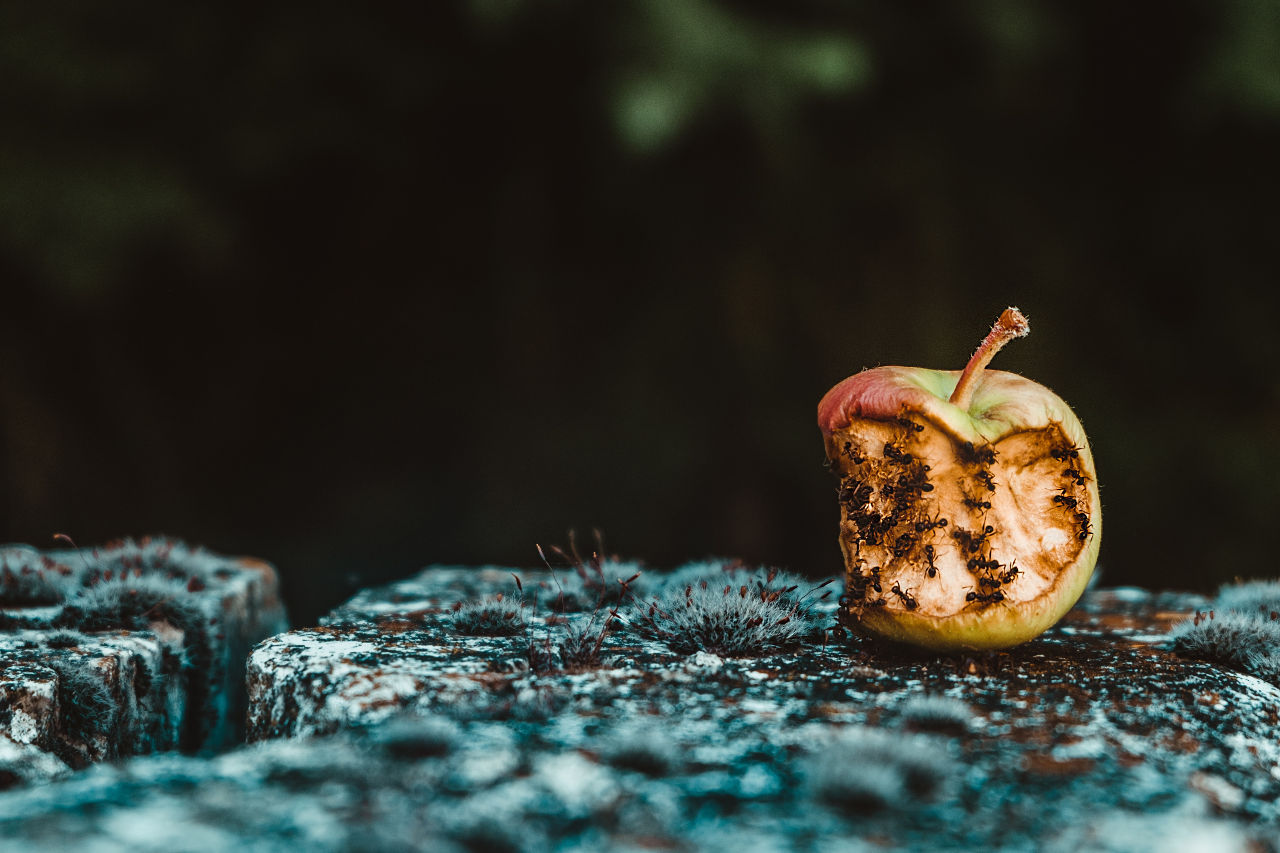
The definition of a hazard is relatively simple. Risk is more difficult to grasp because it refers to the probability of encountering a hazard. If the hazard is not present, the risk is zero; if the hazard is very present, the risk is proportional to the magnitude of the hazard.
In food, you will encounter chemical hazards (pesticides, certain additives, toxins, hormones, etc.), biological hazards (pathogenic bacteria, toxin-producing molds, viruses, prions, etc.), and heavy metals (mercury, lead, cadmium, copper, sulfur, etc.). These foreign substances pose a risk to consumers and become a danger as soon as they are present in sufficient quantities to cause either a severe, acute reaction (toxins, metals, viruses)—such as in the case of botulism poisoning—or a chronic reaction, such as cancer.
Where are the toxic molecules?
These toxins are often present in very small amounts in food and are regulated by strict standards that have been globally accepted by experts from the Codex Alimentarius. The Codex Alimentarius is a joint program of the Food and Agriculture Organization of the United Nations (FAO) and the World Health Organization (WHO) that compiles standards, guidelines, and recommendations related to food production and processing, with the aim of ensuring food safety. Experts consider that these standards provide significant safety for consumers. The values of health standards for food toxins are in the range of one microgram (µg) per kilogram of food. This quantity is extremely small (one millionth of a gram), but analytical equipment makes it possible to quantify them. For educational purposes, I calculated what one µg/kg represents in terms of time for a talk I gave to some lawyer friends. In terms of time, 1 µg/kg represents one second over 32 years. It is rare in everyday life to be this precise in one’s activities.
The newspaper *20 minutes* reported on October 10 that dioxin levels (which are banned for consumption) in soil in the Rouen area were four times the standard limit. The World Health Organization recommends a maximum tolerable daily intake of 10 pg/day/kg of body weight (i.e., one millionth of a millionth of a gram per day per kilogram), which is a precautionary threshold for daily exposure over a lifetime. That isn’t much—and four times that amount isn’t much either! At these levels, it is extremely difficult to assess the actual danger.
What is the difference between risks and hazards?
I will now give a few examples to clarify the terms “risk” and “danger.” In Europe, health agencies focus on calculating risk—that is, on the potential presence of a danger—whereas in Africa, where I often work, food-related dangers are very real. When a European consumer hears the word “risk,” they interpret it as “danger,” even though the danger may not actually be present.
Pesticides include herbicides—such as the well-known Roundup (produced by Monsanto, which recently became Bayer in Europe)—fungicides (anti-mold agents), and insecticides. This category comprises approximately 500 chemicals approved by the European Union, some of which are hazardous to health, particularly for farmers who handle them in large quantities.
For consumers, the levels found in food in Europe are very low, generally below 5 µg/kg for 95.9% of foods produced using conventional and organic farming methods.
The report states that 96.2% of the 84,657 samples analyzed complied with legal limits. 50.7% were free of quantifiable residues, while 45.5% of the samples analyzed contained quantifiable residues that did not exceed the maximum residue limits (MRLs). The assessment of acute and chronic food risks showed that the likelihood of European citizens being exposed to concentrations of pesticide residues that could cause adverse health effects was therefore low.
This risk is difficult to assess because it involves the toxicology of trace molecules, the toxicity of which to humans is virtually impossible to calculate using current methods. In countries with lax regulations, banned pesticides are still in circulation. Other pesticides are being used on unintended targets.
In response to the sharp rise in antibiotic resistance, particularly among certain pathogenic bacteria, the EU banned the use of antibiotics in animal feed in 2005, even though these antibiotics are still permitted in most other countries around the world—some of which have trade agreements with Europe (Southeast Asia, the U.S., Mercosur). In Europe, antibiotics remain authorized for treating animal diseases in both conventional and organic farming. The danger, therefore, is the development of antibiotic resistance in pathogenic bacteria. This risk is poorly controlled because there are currently no health standards regarding antibiotic resistance, and monitoring is limited to antibiotic levels alone.
Mycotoxins are toxins produced by certain molds, some of which are carcinogenic. They are very common in warm, humid environments, where they can reach extremely high levels. In Europe, certain toxin-producing molds are present, but the levels of mycotoxins measured are generally below the thresholds that experts consider hazardous to health. The danger is therefore recognized in Europe, but the risk is difficult to calculate and can be considered low. It depends on the use of chemical fungicides, of which copper sulfate is well known in organic farming. The general public is not yet aware of this danger, which can kill entire families acutely in Africa and more insidiously through cancer.
Pathogenic bacteria, which can be deadly, occur naturally and are found everywhere—particularly in soil, but also in the intestines of animals. No one can escape this danger, and it is virtually impossible to quantify their presence in fresh food before it reaches the market, given the rapid global flow of food. Only strict hygiene measures and controlled processes can prevent their presence.
The risk will therefore depend not only on the initial bacterial load but also on the processing methods (sterilization, cold chain), distribution, and, above all, consumer behavior. A few incidents are still caused by inadequate consumer education.
Certain minerals (lead, arsenic, mercury, copper) may occur naturally in food or result from the manufacturing process. They are toxic and pose a danger that must be strictly avoided in the diet. Some older fish contain high levels of heavy metals because they accumulate these metals in their internal organs. The risk is not easy to estimate because it depends not only on the food’s content but also on the amount consumed.
Consuming large amounts of sugar increases the risk of obesity and, consequently, mortality from metabolic diseases. This is an example of a low-level hazard and a high risk.
It is interesting to note that in our countries, people are more afraid of risk than of danger, because risk is often misunderstood and poorly explained, whereas danger is managed by professionals.
In Europe, experts meet roughly once a month to assess the risks associated with certain products, such as GMOs, novel foods, and food additives, which can only be placed on the market after receiving a positive opinion from the relevant agencies.
Didier Montet, Senior Researcher in Food Safety, University of Montpellier
This article is republished from The Conversation under a Creative Commons license. Readthe original article.